
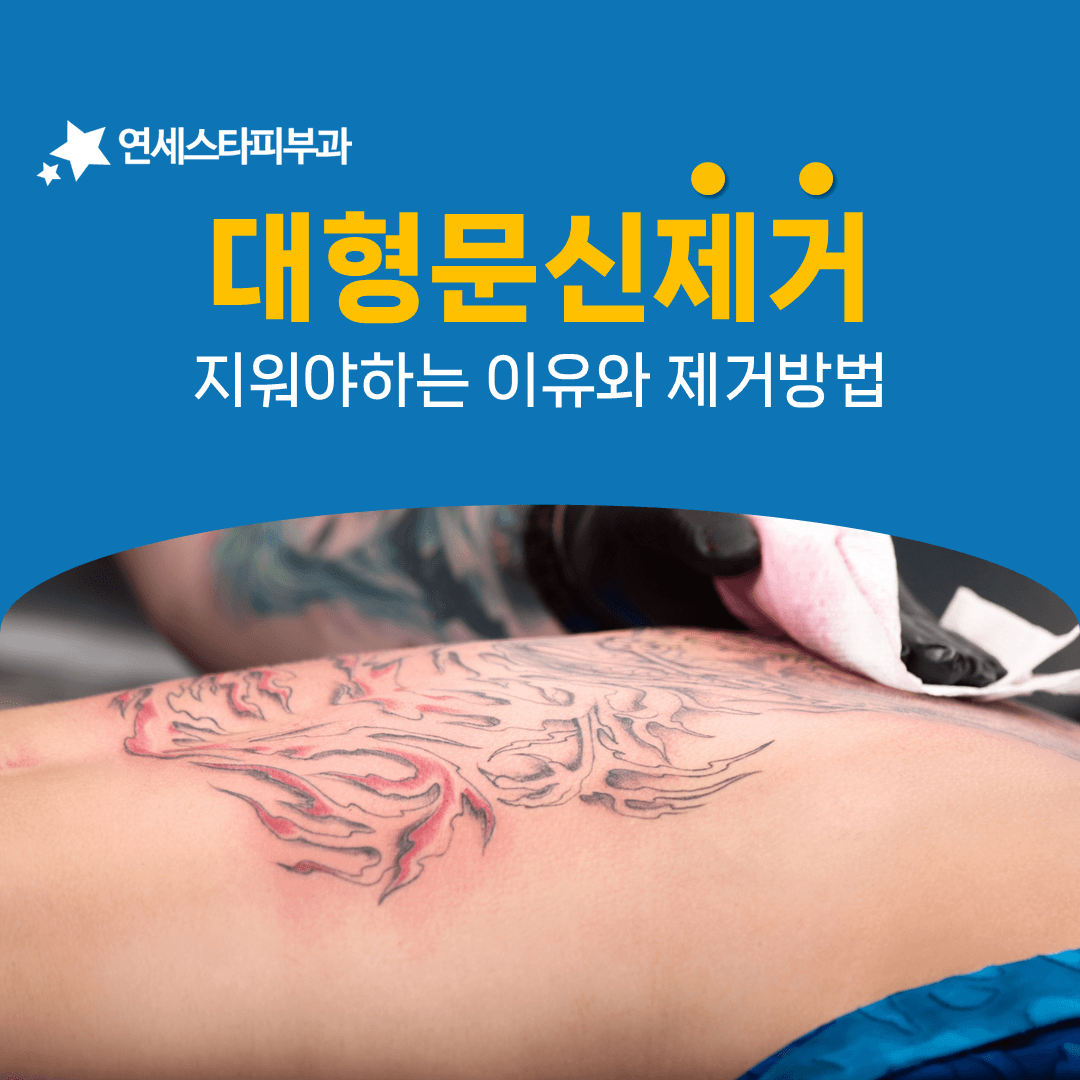
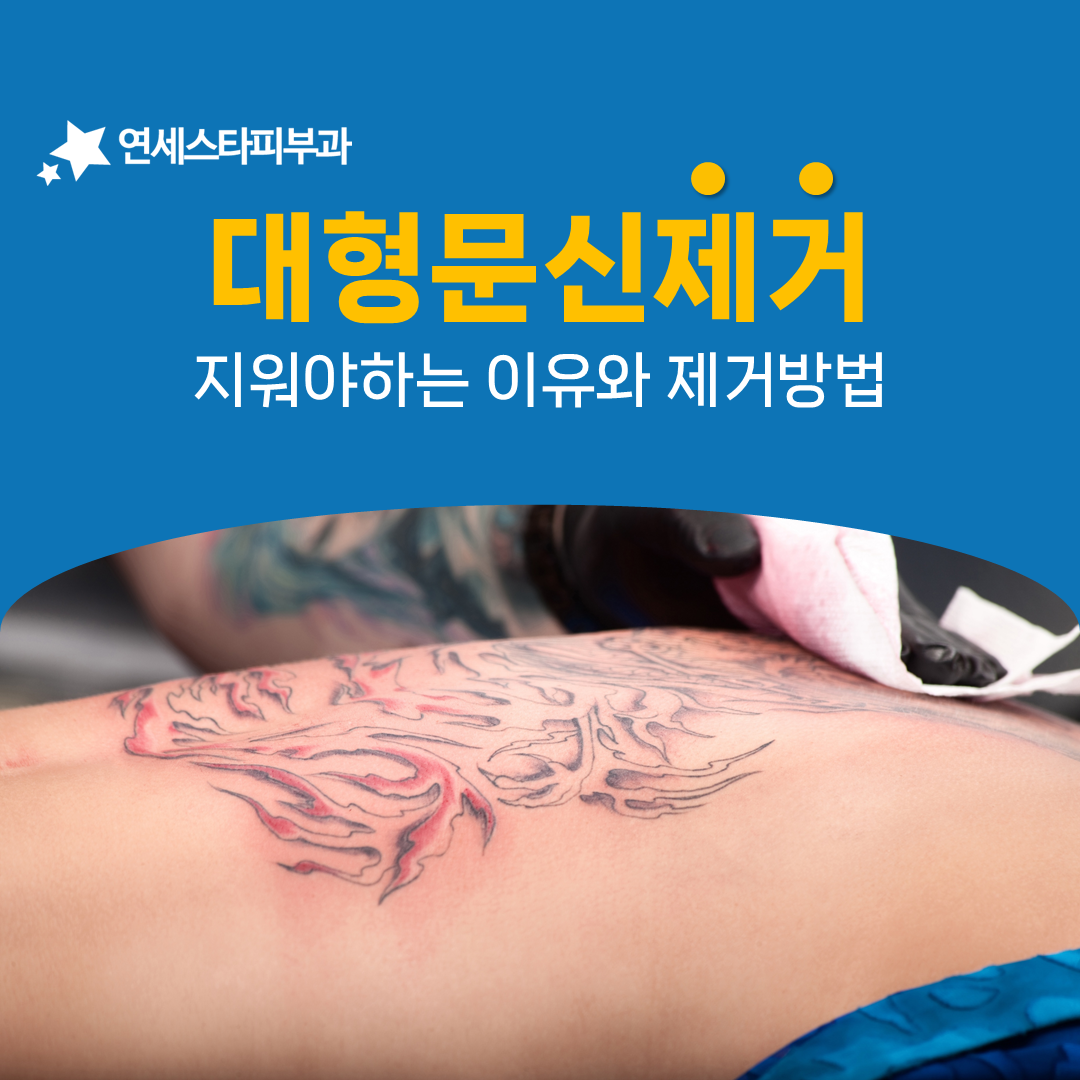
While tattoos are no longer an unusual choice, the number of people considering removal has also increased over time. For large-area tattoos in particular, the concern of whether it can actually be removed often comes first.
This article explains why large tattoos are challenging, the approach dermatologists take, and how to determine the number of sessions and intervals.
What's Different About Large Areas?
It is true that removing large tattoos can be difficult. Several reasons contribute to this:
- There is often a large amount of pigment, and it is often deeply embedded.
- Multiple colors are often mixed.
- The wide area of skin irritation can increase the risk of side effects.
However, with a dermatologist experienced in tattoo removal and advanced lasers, large tattoos can be effectively treated in a dermatology clinic.

High-Output Multi-Wavelength Lasers for Color-Specific Treatment
High-output, multi-wavelength devices are used to remove tattoos by dividing them by color, rather than general lasers. Pico laser is a representative example commonly used today, and PicoWay is considered an advanced version in that category.
The method of using different wavelengths and the treatment sequence can be found together in the R-Zero Pico-Frectat Tattoo Removal guide.
Why Precise Pre-Treatment Diagnosis is Especially Important for Large Tattoos
We first analyze the skin condition, tattoo ink responsiveness, and skin thickness to create a personalized treatment plan.
The larger the tattoo, the more significant the variation in the planning stage.
Since it is difficult to remove a large area all at once, the procedure is performed sequentially by dividing it into several sections.

Cases Where Laser Treatment Alone is Not Enough
For larger areas, laser treatment alone may have limitations. Calming care or scar prevention treatments may be performed concurrently.
For scar prevention, the Pinhole Technique using a CO2 laser is combined. The detailed method is outlined in the Pinhole for Burn & Surgical Scar treatment guide.

How Sessions and Intervals are Determined
| Item | Standard |
|---|---|
| Number of sessions required | Often requires 10 or more sessions |
| Treatment method | Performed sequentially by dividing into several areas |
| Treatment interval | Typically 4 to 8 weeks apart |
| Variables | May vary depending on the size and color of the tattoo, and individual skin condition |

What to Check When Choosing a Clinic
In conclusion, large tattoos can be removed in a dermatology clinic. The important factors are a dermatologist with extensive experience in tattoo removal, possession of advanced lasers, and a systematic treatment plan.
The overall treatment flow can be found in the Tattoo Removal Treatment Guide. If you would like to consult about the size of your tattoo, please use Chat with us now.

Authored and Medically Reviewed by Representative Director Dr. Jinmoon Kang (Dermatologist) Graduated from Yonsei University College of Medicine · Resident in Dermatology at Severance Hospital · Former Professor at Bundang CHA Hospital Currently Adjunct Professor, Department of Dermatology, Yonsei University College of Medicine · Member of the Korean Society for Medical Lasers View Medical Staff Profile
First Published 2025-08-01 · Last Reviewed 2026-07-29
This article contains general medical information and does not substitute for individual diagnosis and treatment. Results and recovery may vary by individual.