

As the weather gets colder, more people experience skin tightness, itchiness, or flaking than usual. The first thing that usually comes to mind for dry skin care is moisturizing cream, but surprisingly, many are confused about "which moisturizer to apply and how."
To get straight to the point, the foundation of dry skin care is choosing a moisturizer that suits your skin type and applying it consistently in the correct way. Today, we'll review moisturizer selection and usage together.

Why is Moisturizing the Starting Point for Skin Health?
We believe that proper moisturizing is the fundamental basis for achieving the best skin. If moisturizing is done correctly, your skin can meet all the conditions for being called good skin. When skin is well-hydrated, it tends to look brighter and more vibrant, with a smooth texture and a strong barrier, leading to more elastic skin with fewer fine lines.
It's important to remember that the most fundamental basis determining skin condition is not fancy nutritional ingredients, but sufficient moisturizing.

Despite moisturizing being so crucial for skin health, surprisingly many people do not use moisturizers correctly.

So today, we'll help you check how correctly you're using moisturizers for dry skin care and explain how to improve your routine.

Should Oily and Acne-Prone Skin Avoid Oil-Based Moisturizers?

Many people believe that acne-prone or oily skin should completely avoid oil-based moisturizers. However, this is a misconception.

Moisturizer ingredients are broadly divided into two types:
- Humectant: Ingredients that attract moisture to keep the skin hydrated, such as hyaluronic acid, urea, glycerin.
- Occlusive: Ingredients that form an oil film to prevent moisture from evaporating from the skin, maintaining hydration, such as petroleum jelly.
- Oil-free aqua gels, aloe gels, etc., are typical humectants.
- The key is to choose a moisturizer that appropriately balances both types.

Gel formulations, which are oil-free and preferred by those with oily skin, are typical humectants.

While these humectants can provide a feeling of hydration, the moisture may evaporate quickly, potentially leaving the skin even drier than before application. Furthermore, if the skin becomes too dry, it might produce more sebum to compensate. Even for acne-prone or oily skin, it is a good dry skin care method to use a moisturizer that appropriately balances a humectant with a barrier agent to prevent moisture loss. Similarly, pore concerns often become more prominent when the skin barrier and oil-water balance are compromised.

Which Ingredients are Suitable for Dry Skin?
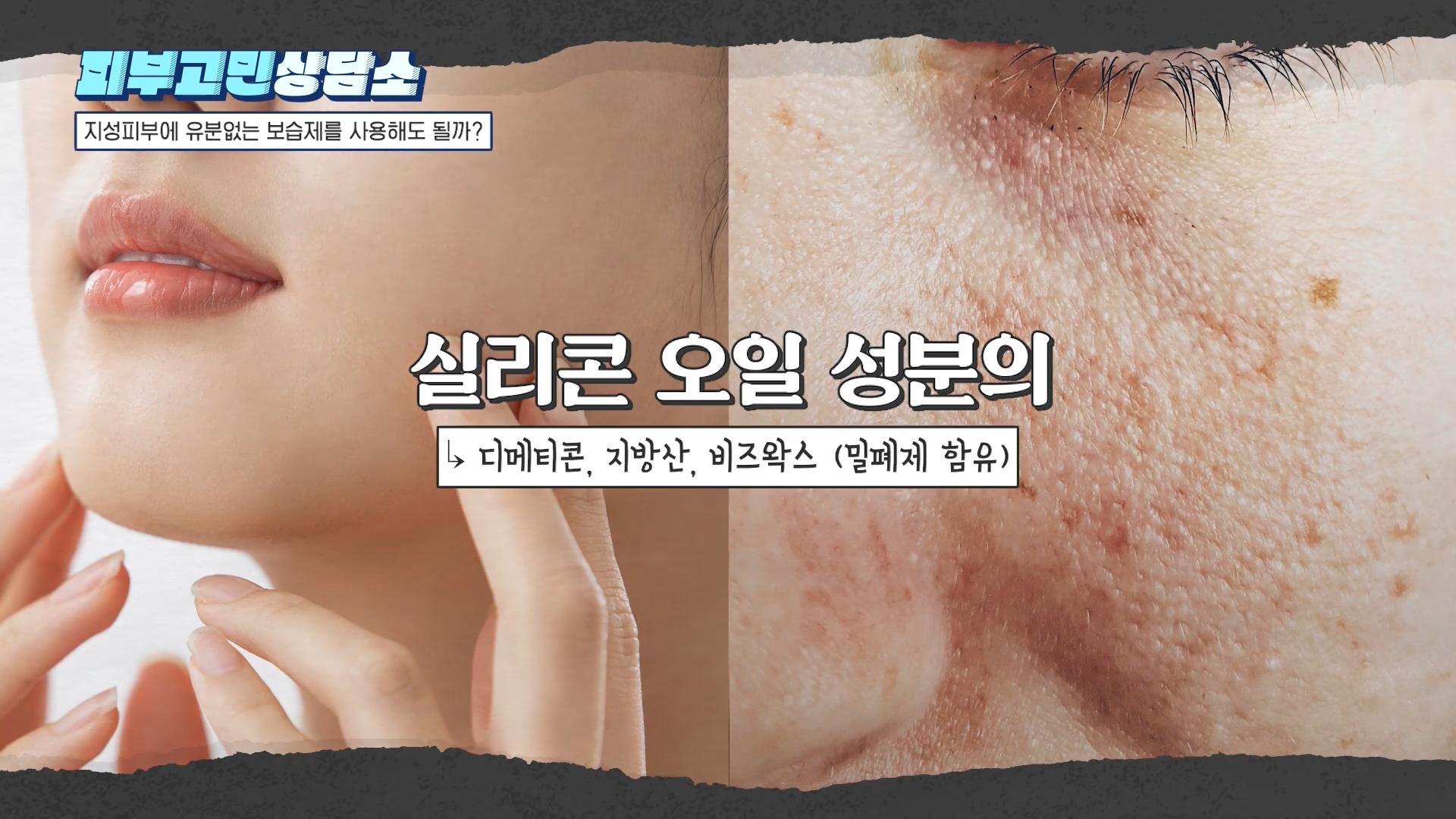
Conversely, if you use a moisturizer that only creates an oil film on dry skin, it may not be sufficiently moisturized due to a lack of moisture to attract, and the texture may not look good. For dry skin, it is common for moisturizers to contain some oil, such as mineral oil or petrolatum. Depending on the skin type, lighter-feeling silicone oil ingredients like dimethicone, fatty acids, or beeswax may also be included.
Even among oil-based ingredients, products containing ceramides or pseudoceramides, which can provide some occlusive effect and act as materials to regenerate the skin barrier, are being developed. It is also a good idea to check the product's ingredient list to see if humectant ingredients like hyaluronic acid, urea, and glycerin, which attract moisture, are also present in a balanced combination.
If you have any questions, feel free to ask via chat consultation regarding dry skin care.

How You Apply Moisturizer Matters
Once you've chosen the right moisturizer for you, applying it correctly is also important.
After cleansing, gently wipe away any remaining impurities with a toner, then lightly spread the moisturizer over your entire face. Some people continuously rub it with their hands or a device to increase absorption. However, this can irritate the skin, and more of the product might be absorbed by the device or your palms, so it is not recommended.

Another common misconception is applying moisturizer and then immediately putting on makeup due to being busy in the morning. After applying moisturizer, you should allow about 3-5 minutes for it to fully absorb into the skin, which helps makeup apply smoothly without caking. However, for dry skin care, it can be beneficial to mix a drop of essence with your foundation when spreading it for a smoother application.

Here's a brief summary of the correct moisturizing routine:
- After cleansing, gently prep your skin with toner.
- Lightly spread moisturizer over your entire face without rubbing.
- Allow 3-5 minutes for absorption before applying makeup.
- Reapply as needed whenever your skin feels dry.
- Consistently manage your skin with a single product suited to your skin type.

Is Applying Multiple Rich Creams Better?
Some people with severely dry skin apply various rich creams generously before bed.

Does this really provide a moisturizing effect for dry skin?

While it's certainly not without any effect, it's practically difficult for all the ingredients from multiple rich creams to be absorbed into the skin.

Ultimately, this creates multiple oil films that sit on the surface, and can even clog pores, leading to acne.

Therefore, if you're not wearing makeup, instead of applying multiple moisturizers generously at once, we recommend choosing just one moisturizer that suits your dry skin type and reapplying it frequently whenever your skin feels dry. A simple routine that reduces irritation can also help prevent acne.

When Moisturizer Alone Isn't Enough: Skin Boosters
In the clinic, we often see that for individuals with severe dryness, moisturizers alone may not be sufficient.

In such cases, skin booster treatments like Rejuran Healer can help improve skin dryness.

Rejuran Healer directly injects polynucleotide extracted from salmon into the skin to improve damaged and dry skin tissue and barriers. Because it strengthens the tissue itself and balances oil and moisture, it is sometimes referred to as a skin booster that addresses the 'inner dryness' of dry skin. If a water-luminous effect is desired, Water-Luminous Injection may also be considered.

While the term 'inner dryness' may not always be perfectly appropriate when considering only dry skin issues, Rejuran Healer is reported to be an effective skin booster for making skin healthy and hydrated. Individual results and responses may vary.
In Conclusion
Today, we looked at dry skin care methods through the proper use of moisturizers. As the season brings large temperature differences and cooler weather, we hope you cultivate healthy skin with a moisturizing routine that suits you.
If you have any further questions, feel free to consult below.
💬 Consult Now
Chief Director Lee Sang-joo (MD, PhD, Yonsei University College of Medicine and Graduate School, Completed Dermatology Residency at Severance Hospital, President of the Korean Dermatological Association) Chief Director Lee Sang-joo's Profile First published 2024-10-04 / Last reviewed 2026-06-16
This article is for general information purposes only, and as skin conditions and responses can vary individually, please consult with medical staff for an accurate diagnosis and treatment plan.