
Many people wish to eliminate melasma, stretch marks, tattoos, dark circles, and scars all at once. Perhaps for this reason, there has been a significant increase in demand for covering them with skin-colored cover-up tattoos rather than treating them.
In this article, we will examine the actual effects, disadvantages, and side effects of scar cover-up tattoos.
Reasons for Choosing to Cover Up
Melasma, stretch marks, dark circles, scars, and tattoos can be sufficiently removed with dermatological treatments. However, because these treatments often require multiple sessions, many people prefer to cover them with skin-colored cover-up tattoos.
Treatment approaches for pigment concerns are summarized in Pico·Dual·Gold-Diamond Toning Information, and for scars, in Pinhole for Burn & Surgical Scar Treatment Information.

Matching Skin Color is More Difficult Than Expected
During the process of creating a skin-colored cover-up tattoo, the tattoo artist mixes various colors to achieve a shade as close as possible to the skin tone.
However, it is commonly reported that even with the injection of similar pigments, many people are dissatisfied after the procedure because the color does not match their skin tone. This is especially true when covering an existing tattoo with a skin-colored tattoo, as the colors often mix, resulting in a blotchy appearance.

Even if Matched Well, Seasons Change
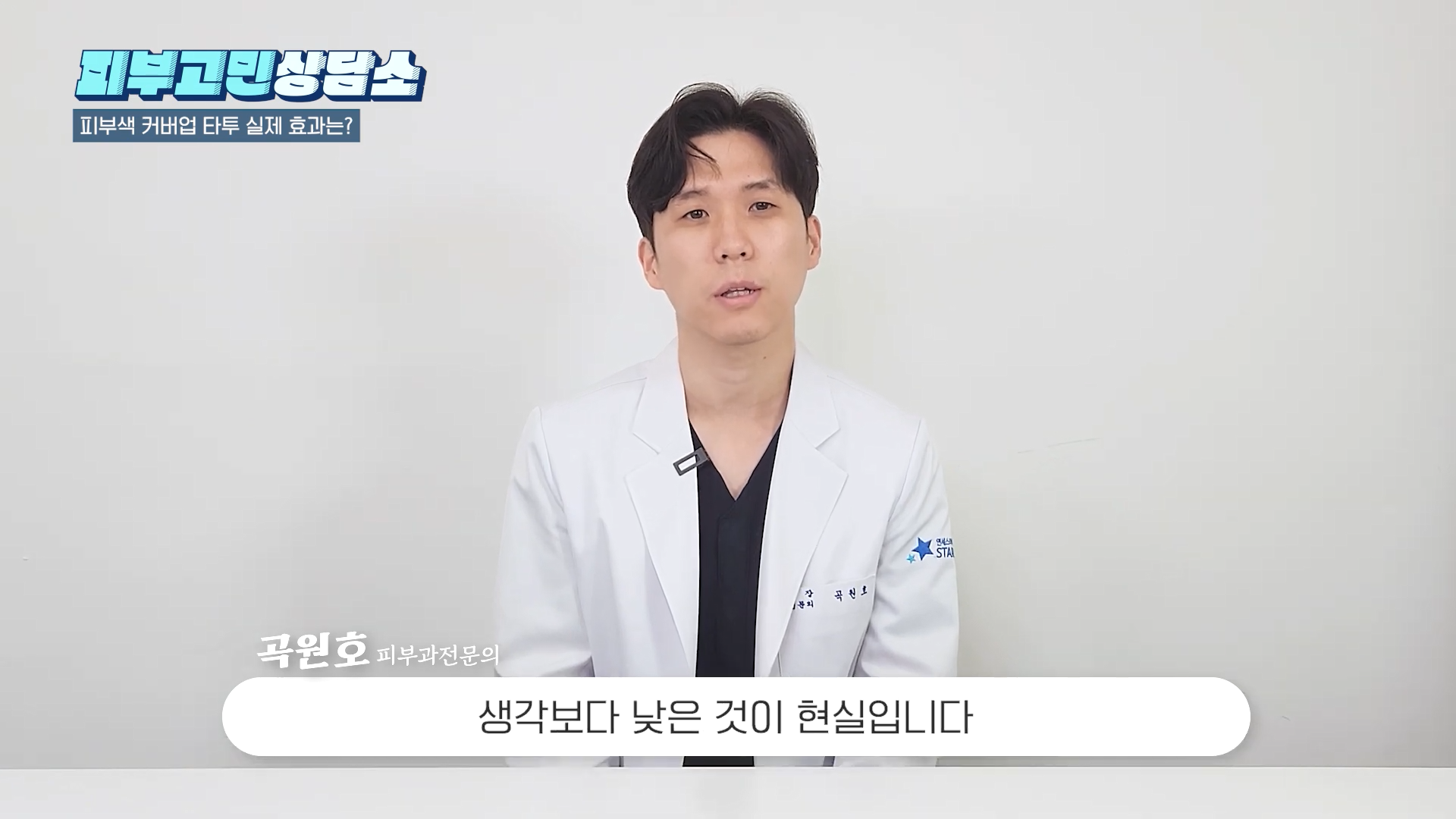
Even if you receive a skin-colored cover-up tattoo from a highly skilled artist and achieve an unnoticeable result, problems can still arise.
Our skin color changes slightly with the seasons.
Even if the initial result was good, many people regret it over time as the cover-up tattoo area becomes noticeable.

Another Meaning of Mixing Various Colors
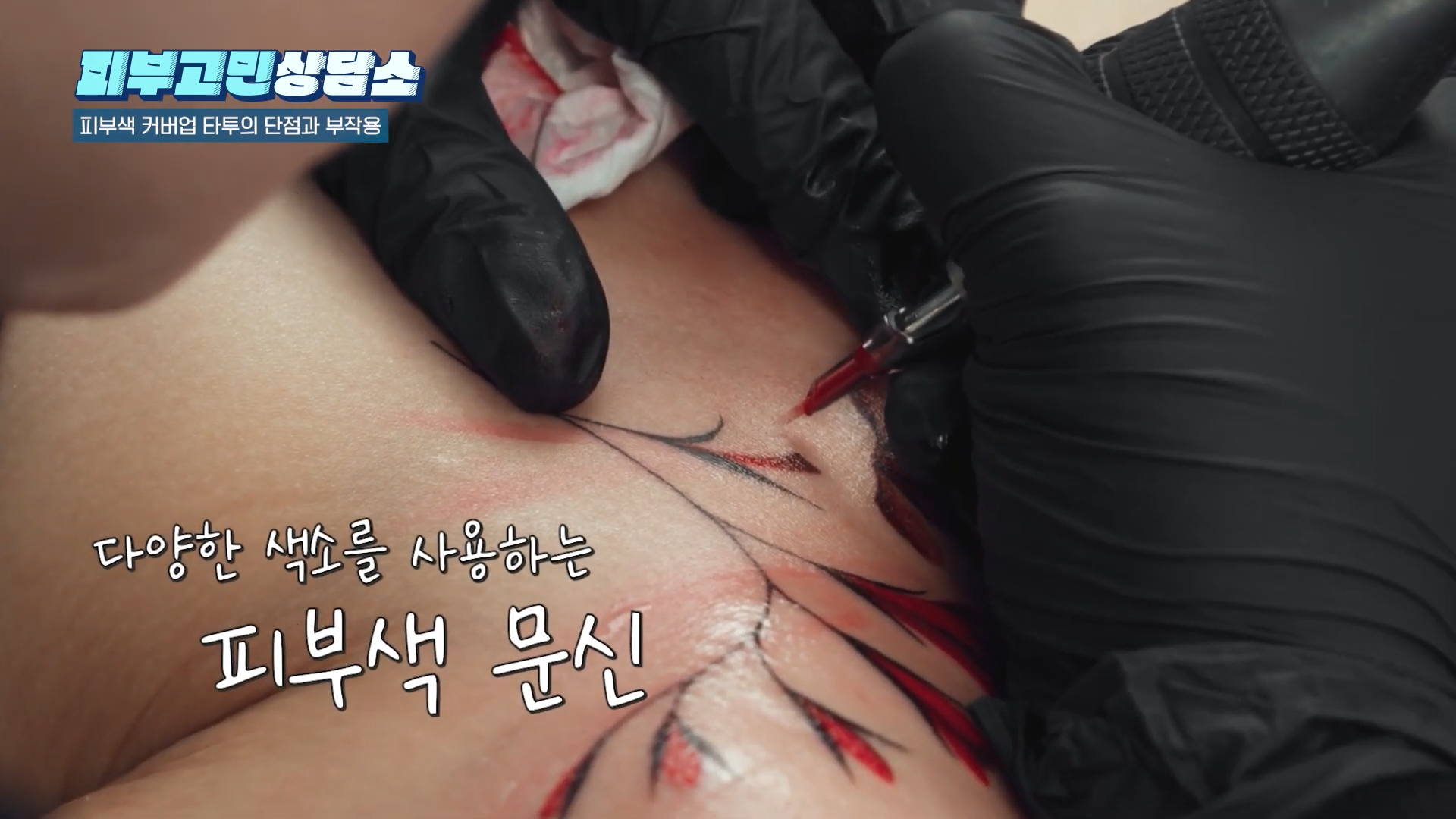
Skin-colored tattoos use a mixture of various tattoo pigments to achieve a similar shade. Because so many different colors are used, there is a possibility that some pigment substances included may cause allergic reactions in certain individuals.

Removal Becomes More Complicated
Due to these disadvantages and side effects, getting a cover-up tattoo can lead to a situation where you need to remove the tattoo and treat the original skin concern.
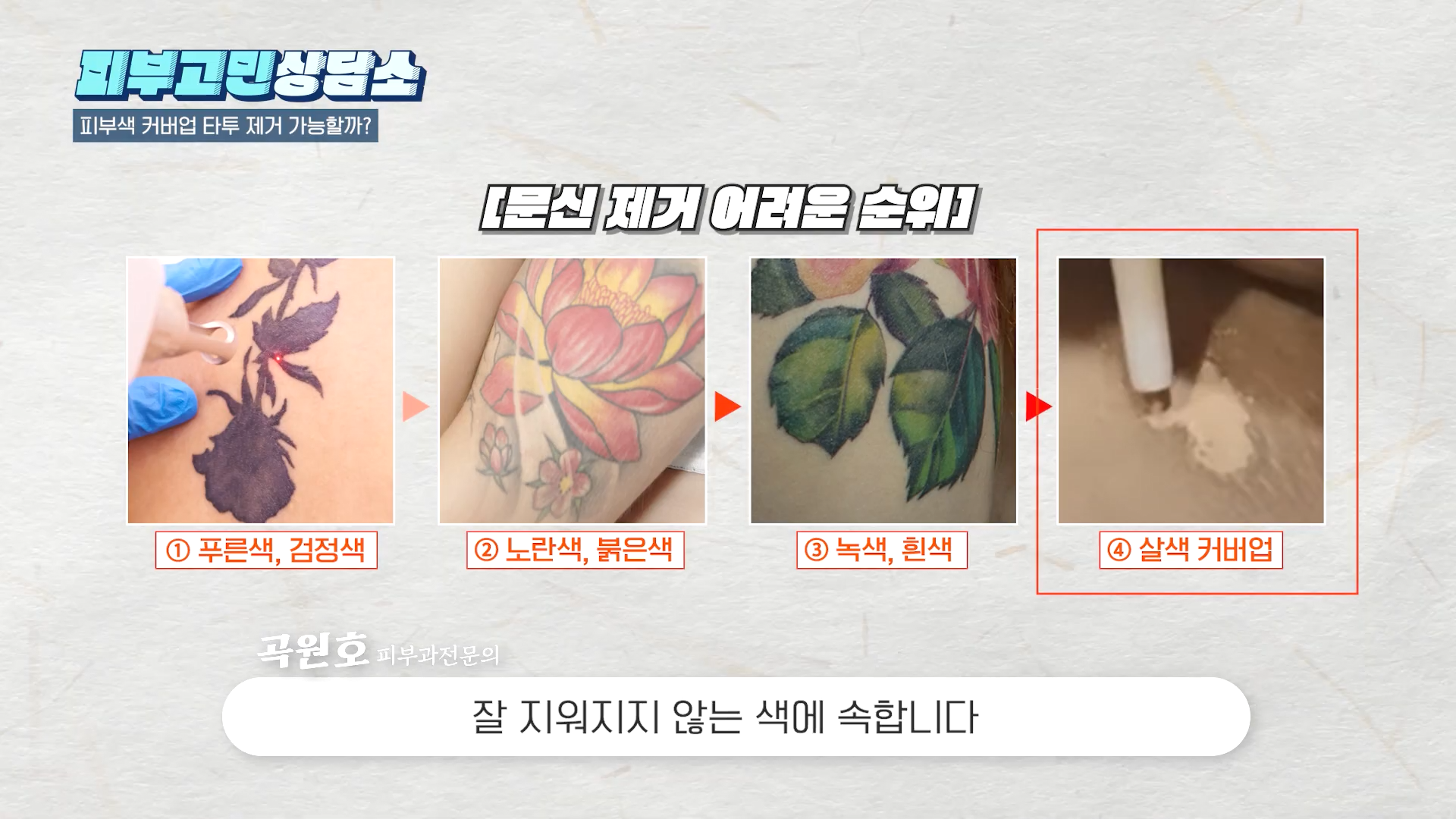
Skin-colored tattoos are among the difficult colors to remove. It takes a very long time to remove them. Furthermore, during the removal process, the color may become slightly darker or turn green, often resulting in a blotchy appearance.
| Timepoint | Reported Problem |
|---|---|
| Immediately after procedure | Dissatisfaction due to mismatch with skin tone |
| When covered over an existing tattoo | Blotchiness due to mixing with existing tattoo colors |
| Over time | Area becomes noticeable as skin color changes with seasons |
| Pigment composition | Possibility of containing pigments that cause allergic reactions |
| During removal | Becomes darker or turns green, resulting in blotchiness |
Consistent treatment can gradually remove it, but it may require dozens of sessions and might not be completely removed. Therefore, you should make a careful decision before getting a cover-up tattoo.


If You Need to Remove an Already Covered Area
If you have a cover-up tattoo over an existing tattoo, it means pigment has been layered on top of pigment, requiring much longer removal time. Therefore, methods to reduce the removal period become crucial.
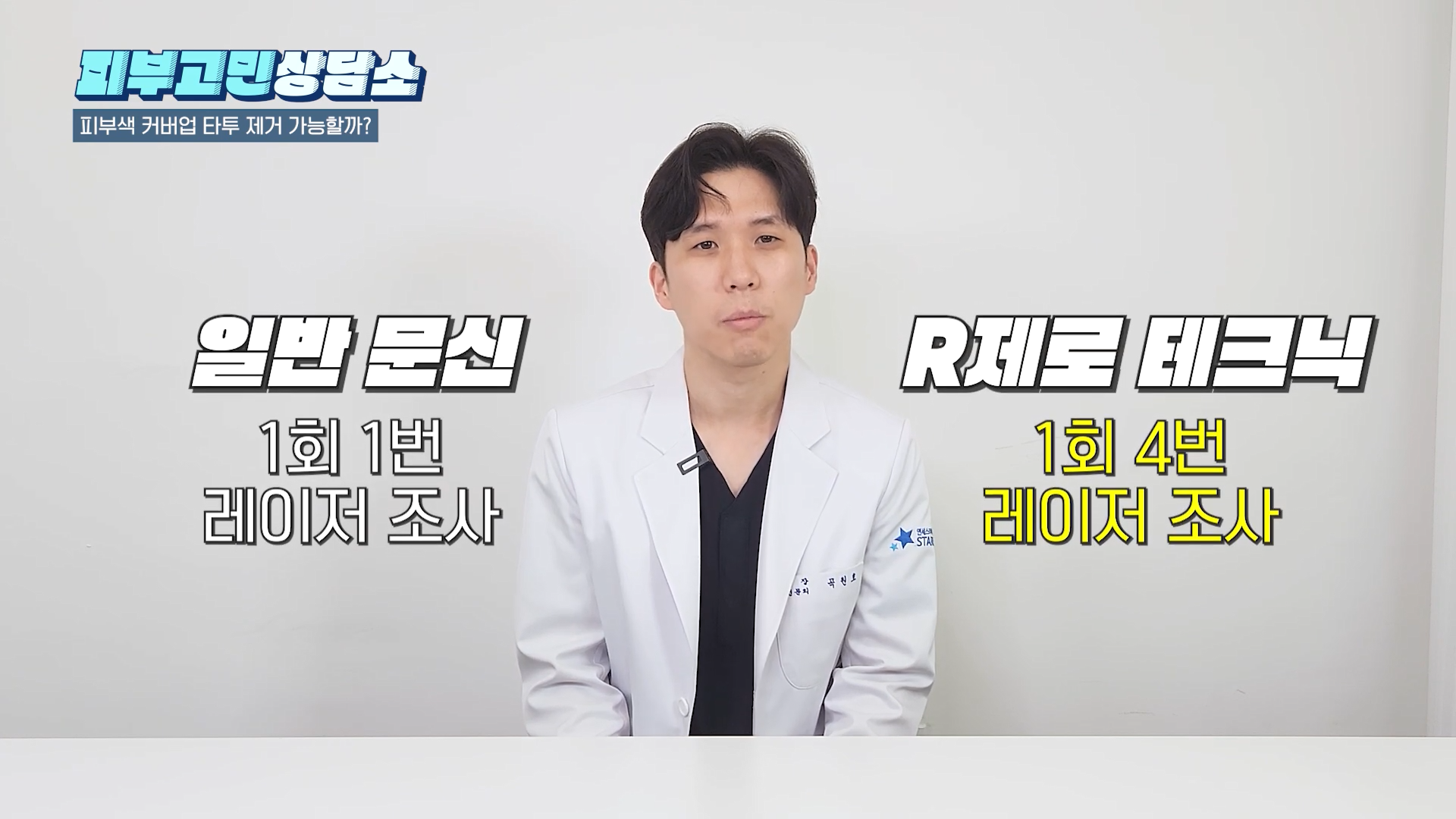
In conventional methods, when a tattoo area was irradiated with a laser, white bubbles would appear, allowing only one irradiation per session for general tattoo removal.
- The R-Zero procedure applies a special medication to treat the bubble layer.
- This makes it one of the treatment methods that allows for up to 4 repeated irradiations.
Detailed information can be found in R-Zero Pico-Frectat Tattoo Removal Information.

Think Twice Before Covering Up
If you get a scar cover-up tattoo, trying to solve a skin concern easily might lead to having to deal with both tattoo removal and skin concern treatment. This inevitably means more than double the time and cost. It's like adding a burden while trying to remove one.
If you are considering a cover-up tattoo, it is advisable to receive dermatological treatment for the underlying concern. It is best to consult with a dermatologist who has extensive experience in treating your specific skin concerns.
The treatment flow is summarized in Tattoo Removal Treatment Information, and if you are curious about your tattoo's condition, please use Leave a chat consultation.

Authored · Medically Reviewed by Dr. Jinmoon Kang, Chief Director (Dermatologist) Resident in Dermatology at Severance Hospital · Current Adjunct Professor, Department of Dermatology, Yonsei University College of Medicine Member of the Korean Dermatological Association · Korean Society for Aesthetic and Dermatologic Surgery View Medical Staff Profile
First Published 2024-07-12 · Last Reviewed 2026-07-29
This article contains general medical information and does not substitute for individual diagnosis and treatment. Results and recovery progress may vary by individual.