
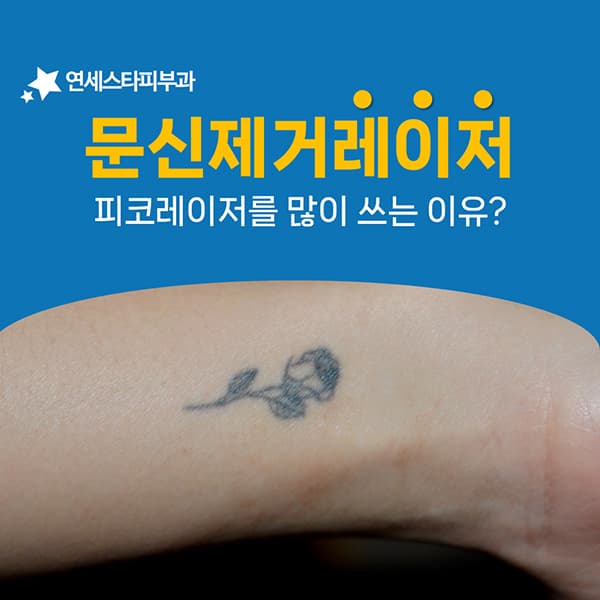
People looking to remove tattoos usually search for two things: how to remove them quickly and with less pain.
Laser equipment plays a significant role in achieving this. In the past, repeated treatments and long recovery periods were burdensome, but with the advancement of PicoWay Laser technology, more precise and efficient treatment has become possible.
1 Trillionth of a Second Pulse Duration
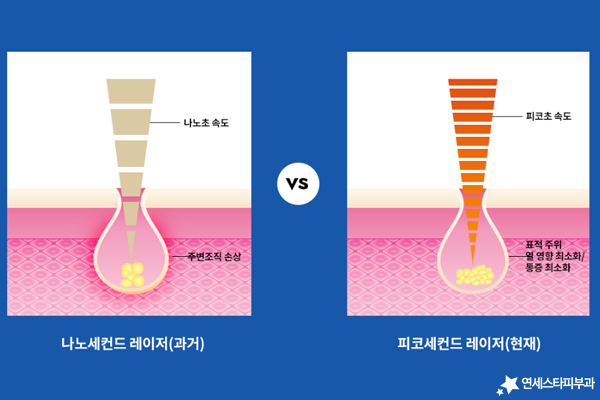
PicoWay Laser delivers strong energy in extremely short pulses, measured in picoseconds (one trillionth of a second). This characteristic has made tattoo removal lasers much more accessible.
Compared to traditional nanosecond lasers, PicoWay Laser is characterized by its ability to break down pigments into finer particles. By finely fragmenting pigment particles, it can help reduce damage to the surrounding skin, thereby minimizing skin burden even with repeated treatments.
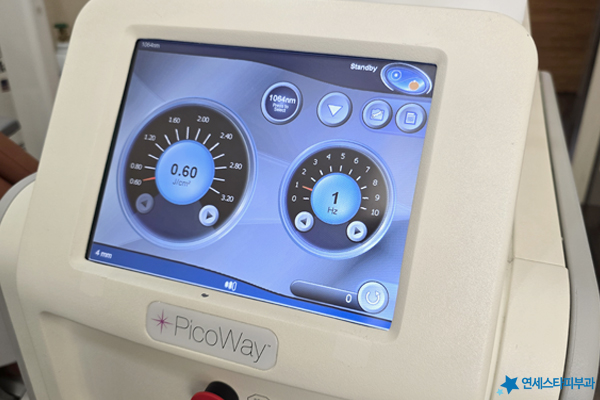
PicoWay Configuration
PicoWay Laser continues to evolve in various versions. The features of PicoWay include:
- More stable output
- Utilization of various wavelengths
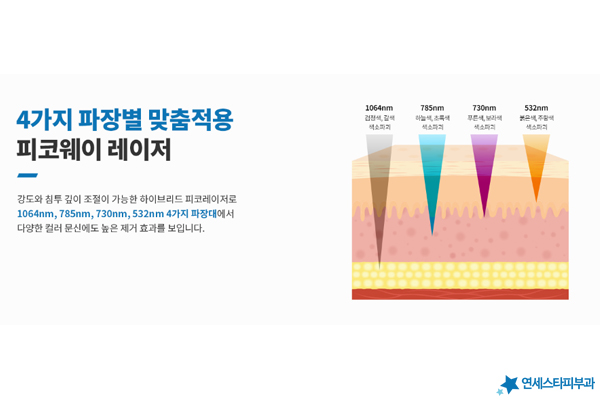
- Precise treatment using four wavelengths
Why Wavelength Selection is Important for Color Tattoos
Color tattoos or deeply embedded pigments require multiple wavelengths depending on the color. This makes them more time-consuming and challenging to remove than black and white tattoos.
This is where the range of wavelengths available on the equipment becomes a crucial factor in the treatment plan.
Up to Four Consecutive Shots in One Spot
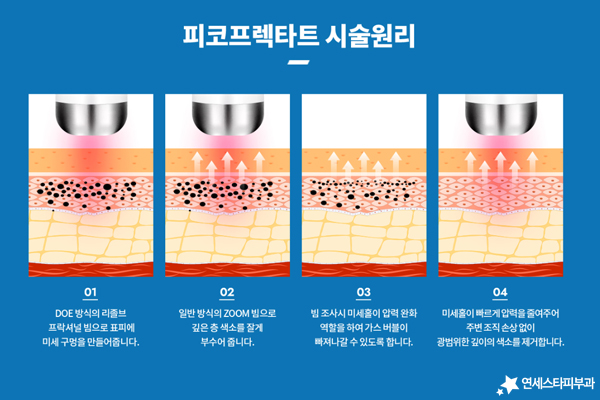
Typically, it's difficult to perform multiple consecutive laser shots for tattoo removal in one session. This often requires multiple visits to the clinic, and complete removal can take a long time.
The R0 method uses a special ampoule to remove bubbles that interfere with continuous laser irradiation, allowing for up to four repeated shots. This is noted for its ability to more efficiently break down pigments and reduce the time required for removal.
However, even with a maximum of four repeated shots, the applicability may vary depending on the skin condition, so thorough consultation and diagnosis must precede. The equipment and method configuration are summarized in the R-Zero Pico-Frectat Tattoo Removal guide.
How to Care for Skin After Repeated Laser Treatments
Scars or wounds that may occur after removal are also major factors that make people hesitate about the procedure. Nowadays, the Pinhole Technique, known for scar treatment, is sometimes combined with tattoo removal to reduce skin damage and aid recovery.
The Pinhole Technique is a method that induces skin regeneration by creating microscopic holes, which can help improve the recovery environment. If you are concerned about your skin condition after repeated laser treatments, it is advisable to proceed at a clinic that utilizes this method. You can find information on the method in the Pinhole for Burn & Surgical Scar treatment guide.

The Result is Not Made by a Single Factor
| Factor | How it affects the outcome |
|---|---|
| Equipment performance | Degree of pigment breakdown and range of colors that can be treated |
| Treatment method | Techniques like R0 that enable repeated irradiation |
| Scar management | Whether the Pinhole Technique is combined and the recovery environment |
| Aftercare | Thorough care after the procedure |
| Medical staff's experience | Planning and judgment tailored to skin condition |
Tattoo removal is not a one-time treatment; a phased approach tailored to your skin condition is necessary, without overdoing it for quick results in the short term.
If you are curious about the method suitable for your current skin condition and tattoo characteristics, please refer to the Tattoo Removal Treatment Guide, and if you have any questions, please leave them in Inquire via chat now.
Authored and Medically Reviewed by Dr. Jinmoon Kang, Chief Director (Dermatologist) Graduated from Yonsei University College of Medicine · Completed Dermatology Residency at Severance Hospital · Former Professor at Bundang CHA Hospital Currently Adjunct Professor, Department of Dermatology, Yonsei University College of Medicine View Medical Staff Profile
First Published 2026-02-13 · Last Reviewed 2026-07-29
This article contains general medical information and is not a substitute for individual diagnosis and treatment. Results and recovery progress may vary by individual.