

It's easy to think that once a wound has healed and the bleeding has stopped, everything is over. However, whether a scar remains or not is actually decided from that point on. Patients often ask a similar question first: "Will this red mark that has appeared now harden into a scar?" To put it simply, the red stage immediately after a wound has healed is the most important period for effectively lightening scars.
Why Scars Remain Even After a Wound Has Healed
When the skin is wounded, our body creates a scab to prevent the invasion of bacteria and viruses, and rapidly builds up collagen to fill the damaged tissue. If this recovery process is excessive or goes awry, the tissue can remain uneven, or changes in pigment or blood vessels can occur, causing it to harden into a scar.
Depending on an individual's constitution, the degree of scarring can vary even for wounds of the same size. It is reported that improper initial care or forcibly removing scabs can increase the likelihood of scarring.
What is the Early Scar, or Prescar, Stage?
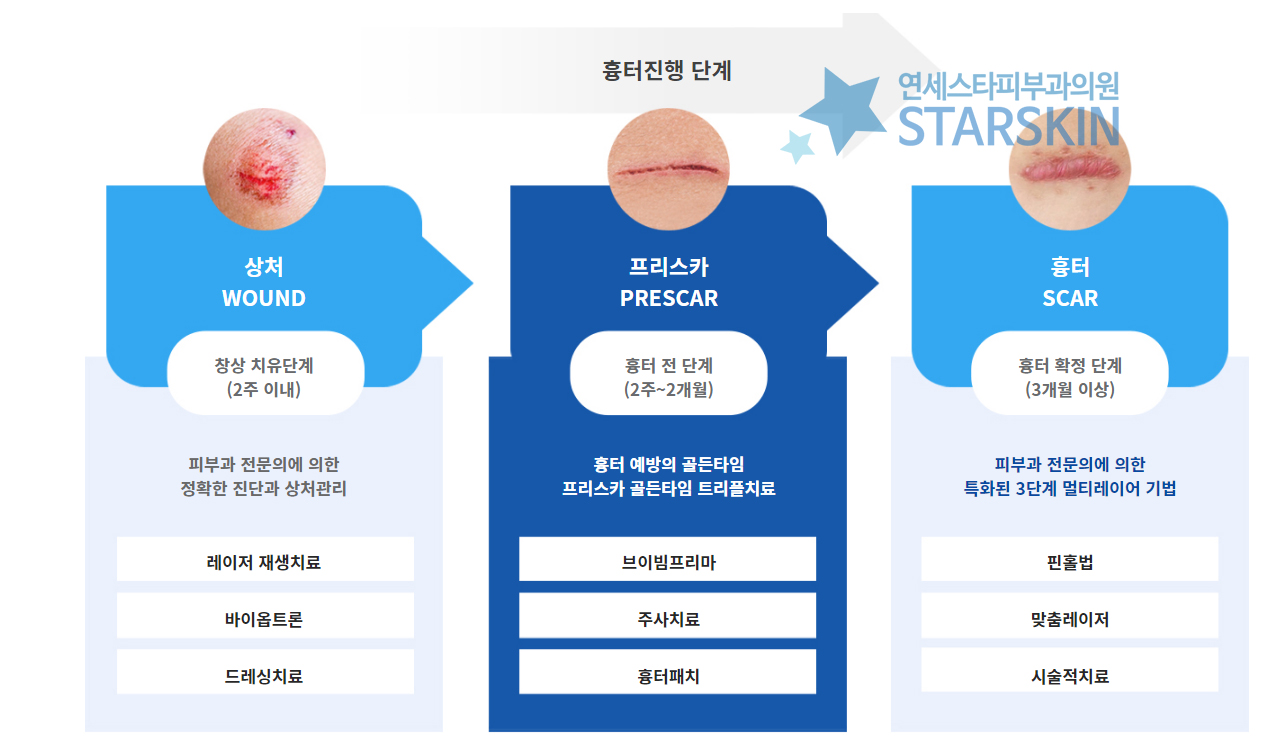
In dermatology, the state immediately after a wound has healed but before it fully develops into a scar is considered the early scar, or prescar, stage.
The early scar stage is approximately between 2 weeks and 2 months after the wound occurs, and this period is considered the golden time for scar management.
Scars at this stage are typically healed in the epidermal layer of the skin and appear red when viewed externally. Since the tissue has not yet hardened, appropriate intervention during this red stage can help reduce the progression to severe scarring.
Immediate Home Care After a Wound Occurs
Before progressing to an early scar, the most important thing immediately after a wound occurs is to create a moist environment. This is because the skin forms a scab to protect itself from external stimuli, and these scabs often lead to scarring.
Therefore, maintaining the wound area moist with a hydrocolloid dressing is recommended. However, it is important to follow the steps:
- Before applying the hydrocolloid dressing, clean the wound area thoroughly with saline solution.
- After completely drying the area, apply the dressing to fit the size of the wound.
- Replace the dressing when a lot of exudate has been absorbed.
- Even if a scab forms, do not forcibly remove it.
- If side effects such as adhesive allergy occur, stop use and consult a doctor.
Allergic reactions to adhesive components may occur depending on individual constitution, so it is best to stop use if the skin becomes itchy or red and swollen.

If home care alone is not sufficient or if you feel the scar is swelling, we recommend consulting a dermatologist before the red stage passes. You can find answers to your questions by inquiring via chat consultation regarding early scar management.
How Dermatologists Treat Early Scars
Dermatological treatments performed during the red early scar stage generally fall into two main categories:
| Treatment Direction | Conditions Primarily Addressed | Approach |
|---|---|---|
| Vascular Laser | Redness, excessive blood vessel formation | Reduces redness and vascular proliferation in the scar area |
| Scar Injection | Swelling scars | Suppresses proliferation and lowers the raised height |
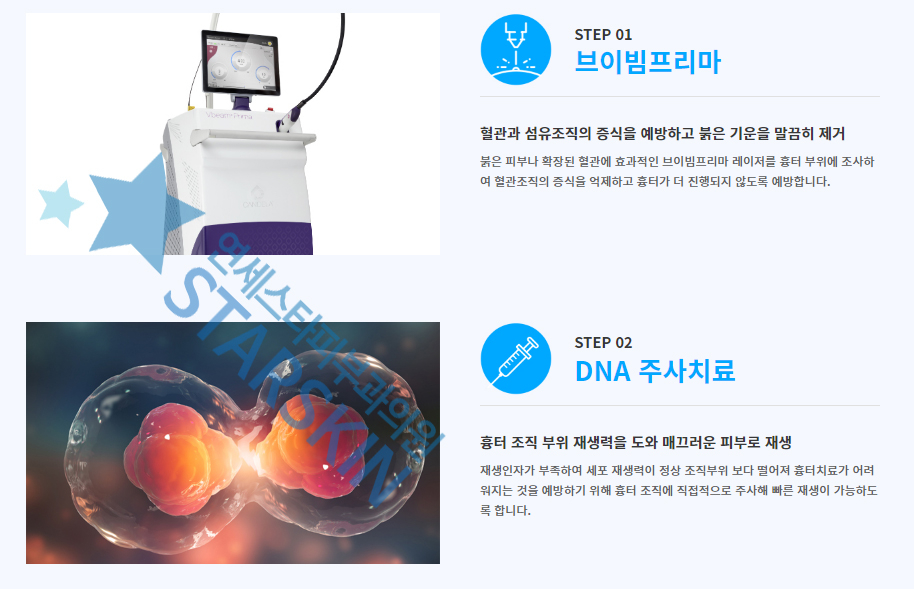
The first is a vascular laser such as Vbeam Prima. It helps prevent excessive blood vessel formation in the scar area and reduces redness.
The second is scar injection. If the scar area swells, it can progress to keloid scars or hypertrophic scars. In such cases, depending on the scar condition, the approach is to suppress tissue proliferation and lower the height of the raised scar with Triamcinolone Scar Injection.
In clinical practice, it is common to combine lasers and injections according to the condition, considering both redness removal and height adjustment.
When is the Best Time to Start Treatment?
Many people wonder when to start dermatological scar treatment. The criteria are simple:
- If there is a scab or exudate, start after they have all disappeared.
- If the skin has completely healed without a scab, that is the good time to start treatment.
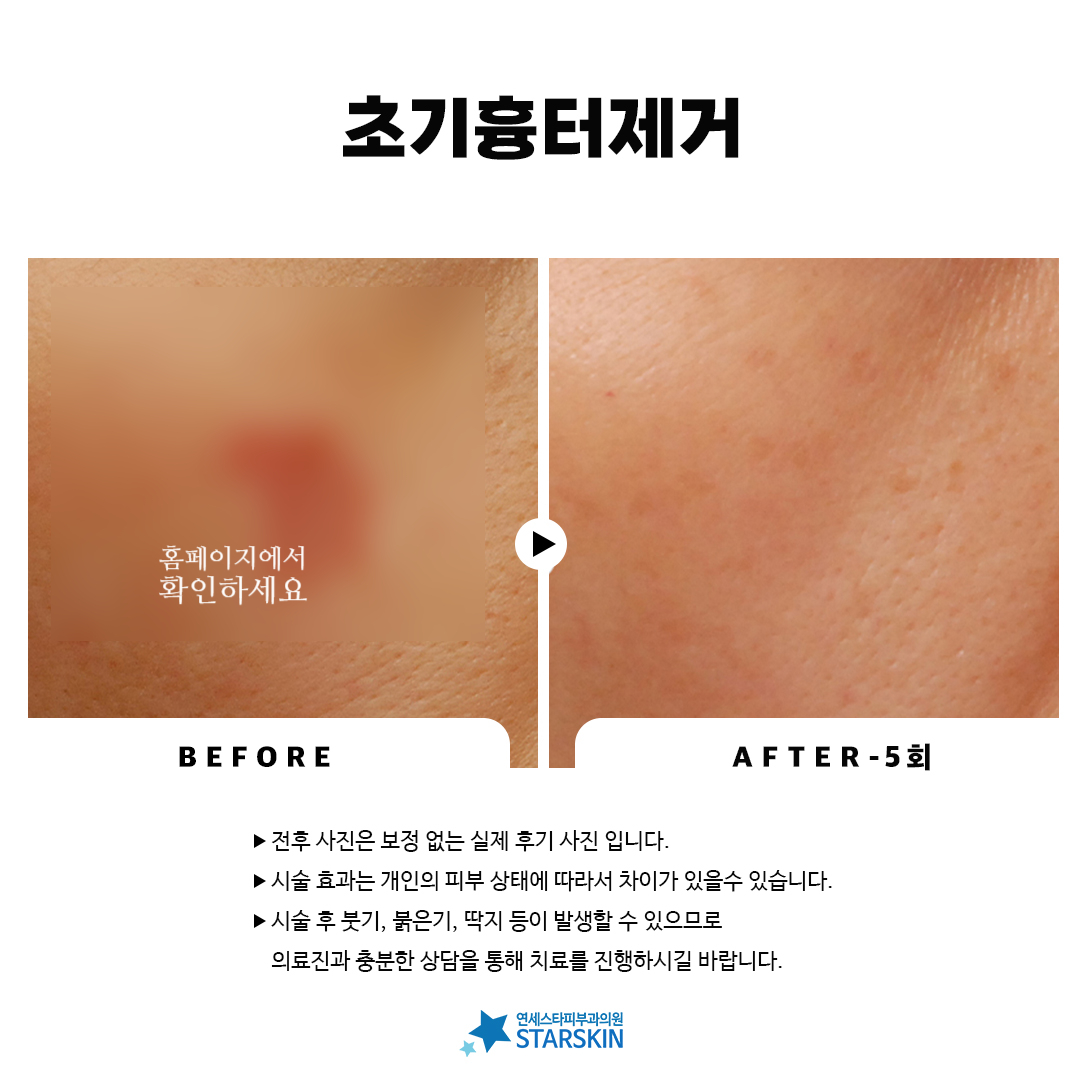
Starting treatment during the red stage can help prevent progression to severe scarring, and the number of necessary treatments tends to decrease. Conversely, if this period passes and old scars are treated, the recovery period and number of treatments may increase.
Therefore, not missing the golden time is key. Even for the same scar, the approach differs depending on the cause and condition, such as surgical scars or burn scars, so it is best to visit a dermatologist as soon as possible to establish a suitable plan.
If the Scar Has Already Hardened
Even if the red stage has passed and the mark has firmly settled, there are still options. For depressed or widened scars, or scars with altered shapes, approaches such as Surgical Scar Revision that refine the scar itself can be considered depending on the condition. However, this often requires more time and sessions compared to managing it in the early stages, so starting management before the scar hardens is advantageous in many ways.

In Summary
Today, we looked at the management of early scars, the prescar stage, immediately after a wound has healed. The key is not to miss the golden time of the red stage and to appropriately continue with moist wound care at home and dermatological treatment if necessary. There may be individual differences in results depending on the cause of the scar and individual constitution.
If you have a scar you wish to remove, don't hesitate to get your condition checked.
💬 Chat for scar condition consultation
Sang-Joo Lee, Chief Director (MD, PhD, Yonsei University College of Medicine and Graduate School, Completed Dermatology Residency at Severance Hospital, President of the Korean Dermatological Association) Dr. Lee Sang-Joo's Profile First Published 2023-08-04 / Last Reviewed 2026-06-16 This article provides general information, and individual recovery patterns for the same scar may vary. Accurate diagnosis and treatment direction are determined through consultation with medical staff.