
![Deep Second-Degree Burn Scars Can Lead to Pigmentation, Contractures, etc. | [Yonsei Star Dermatology Sinchon]](/_next/image?url=https%3A%2F%2Fagqdgbuateknhwpocrgu.supabase.co%2Fstorage%2Fv1%2Fobject%2Fpublic%2Fsources%2Fbbf3bebe-45b6-4415-bd04-bda18b2cac0f%2Fblog-images%2F223901215498_00_79de755138e2.jpg%3Ftype%3Dw966&w=3840&q=75)
Burn accidents can occur unexpectedly in daily life. Common causes like hot water or oil, or heated cooking utensils, can surprisingly leave deep wounds. The first question people with burns often ask is, "Will this scar disappear on its own over time?" However, deep second-degree burns that damage the dermal layer are difficult to heal naturally and are reported to leave traces such as pigmentation or contractures.
Why Do Deep Second-Degree Burn Scars Occur?
Burn scars are the result of the healing process of wounds caused by burns. Our skin is broadly divided into the epidermis, dermis, and subcutaneous fat. If the damage extends deeper than the dermis, the likelihood of scarring increases.
If deep damage occurs to the dermis, there is a high probability of progressing to a deep second-degree burn scar, which is difficult to heal naturally. While the time it takes for a wound to heal after a burn does not absolutely determine the scar, a prolonged recovery period can be seen as a sign of severe damage or reduced skin regeneration.
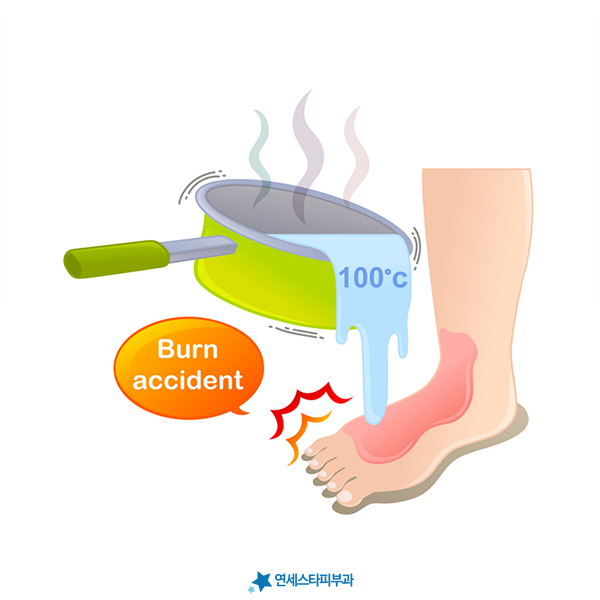
Regardless of the size of the wound, once a burn occurs, skin appendages such as sweat glands and hair follicles are destroyed, and collagen abnormally and excessively fills that space. In this process, changes in skin color, texture, and wrinkles can occur, making the scar prominent.
Factors Determining the Extent of Scarring
The severity of scarring is not determined by a single cause. Various factors, such as the size and depth of the wound, the temperature of the causative agent, and the exposure time, combine to produce the result. Higher temperatures and longer exposure times can lead to deeper skin damage and ultimately larger scars.
In the clinic, even with similar accidents in the same area, the recovery patterns vary from person to person. Therefore, for burn scars, a judgment tailored to the condition is more important than a standardized answer.
Scars appear in various forms depending on the degree of the burn. The representative types are summarized as follows:
| Type | Characteristics | Commonly Observed Changes |
|---|---|---|
| Hypertrophic Scar | Raised due to excessive collagen | Redness, stinging, itching |
| Hyperpigmentation | Excessive melanin production | Brown, dark, dull complexion |
| Contracture Scar | Collagen fiber contraction | Skin tightness, restricted joint movement |
Red, Raised Hypertrophic Scars
The most common form is the hypertrophic scar. It is characterized by the scar rising and appearing red due to excessive collagen produced during the skin's healing process.
During the period of redness, treatment with vascular lasers like Vbeam Prima can be helpful. If sufficient treatment is not provided, the scar may not improve and will continue to show red pigmentation, and the affected area may sting, itch, and become noticeably red. If left untreated, it can progress to a harder hypertrophic scar form, such as turning white, so it is advisable to start treatment as early as possible.
For inquiries, please contact us via chat for burn scar treatment direction
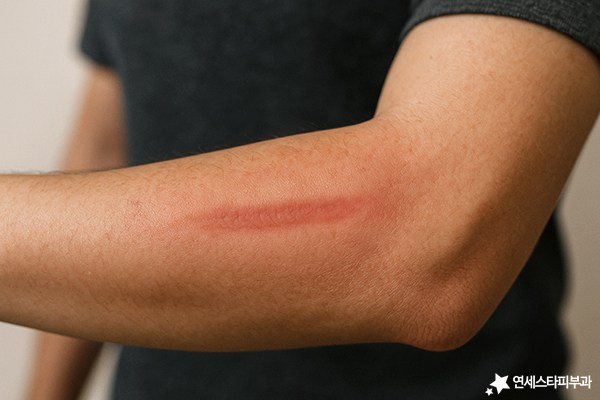
Dark Hyperpigmentation
Hyperpigmentation can also appear in deep second-degree burn scars. During the healing process, a large amount of melanin pigment is produced, causing the skin color to change to dark brown or a dark, dull complexion. At this time, a common treatment is whitening laser methods that address epidermal pigment.
Some people wish to quickly resolve pigmentation and desire strong, single treatments with whitening lasers like PicoWay. However, if melanocytes themselves are destroyed by overly strong stimulation, hypopigmentation, where the skin turns white, may occur.
Once melanocytes are destroyed, it is difficult to regenerate them, making it challenging to restore the skin to its normal color if there is a significant difference. It is advisable to continue treatment safely and consistently with low output, even if it takes a little longer.

Contracture Scars That Pull the Skin
Another form to consider is contracture scars. This form can occur in severe cases of deep second-degree burns, where collagen fibers contract over time, pulling the surrounding skin. As a result, the skin's appearance can become wrinkled, and in severe cases, it can progress to a state that restricts joint movement.
Burn scars tend to form more easily in areas with frequent movement and folding, such as joints, around the mouth, or the neck. If you sustain a burn in these areas, it is advisable to pay even more careful attention to treatment and management.
Here are some items to check when managing burn scar areas:
- Observe if redness, stinging, or itching persists for a long time after recovery
- Check for changes such as the scar rising or hardening
- Record pigment changes, such as the color turning dark or white
- Check for tightness in areas with frequent movement, such as joints, around the mouth, or the neck
- Maintain a healing environment with UV protection and moisturizing

Can Old Scars Also Be Treated?
When treating deep second-degree burn scars, it's important to remember that management often continues for a much longer period than expected. While it may be difficult to fully restore the skin to its original state before the burn, applying laser treatments that help activate the skin's regenerative power, such as the Pinhole for Burn & Surgical Scar, and utilizing devices like ProFractional, StarLux, and Ultrapulse Encore as appropriate for the condition, can lead to a more natural burn scar improvement that feels less burdensome in daily life.
Even with old scars, if you don't give up, you can experience gradual improvement through laser treatment. If the scar is deep and firmly established, combining it with precise treatments like Pinhole Alpha may also be considered.

Not to Miss the Golden Time
Accidents that can leave burn scars are surprisingly common in daily life. However, many people miss the initial management period, believing that the scars will heal on their own over time, leading to significant lasting marks.
The intensity of the accident and the scar do not necessarily correlate. If you experience prolonged pain, persistent redness or blisters, and slow recovery, we recommend promptly seeking necessary treatment before a larger mark is left. The shape and depth of scars vary greatly from person to person, so it is important to determine the appropriate course of action with medical professionals based on your condition.
For inquiries, please contact us via chat for burn scar condition check


Chief Director Lee Sang-ju (MD, PhD, Yonsei University College of Medicine and Graduate School, Completed Dermatology Residency at Severance Hospital, President of the Korean Dermatological Association) Chief Director Lee Sang-ju's Profile First published 2025-06-16 / Last reviewed 2026-06-16 This article is for general information purposes only, and recovery patterns and treatment results may vary individually. Accurate diagnosis requires consultation with medical professionals.