
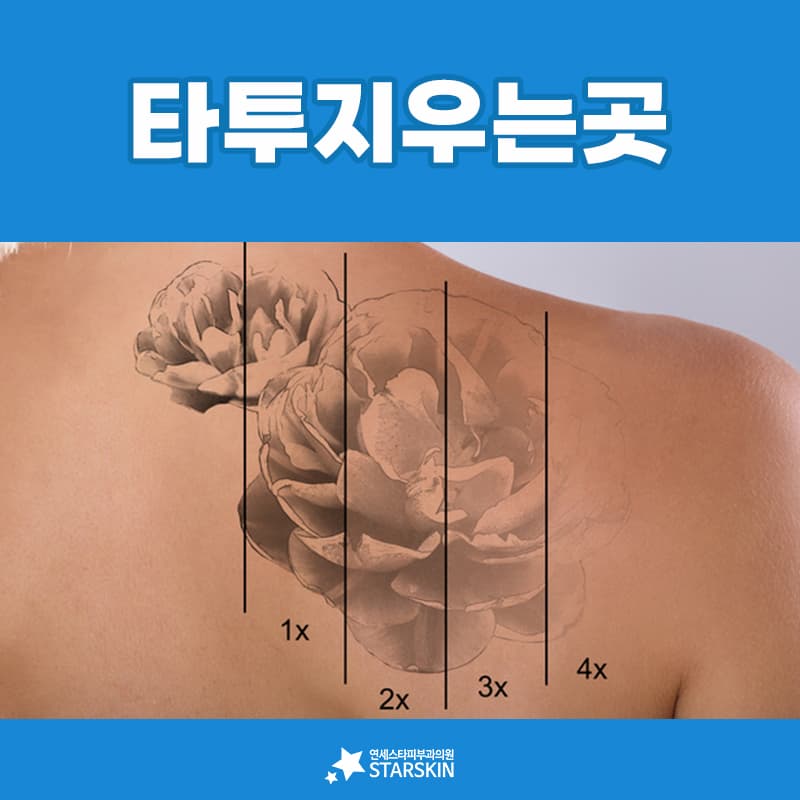
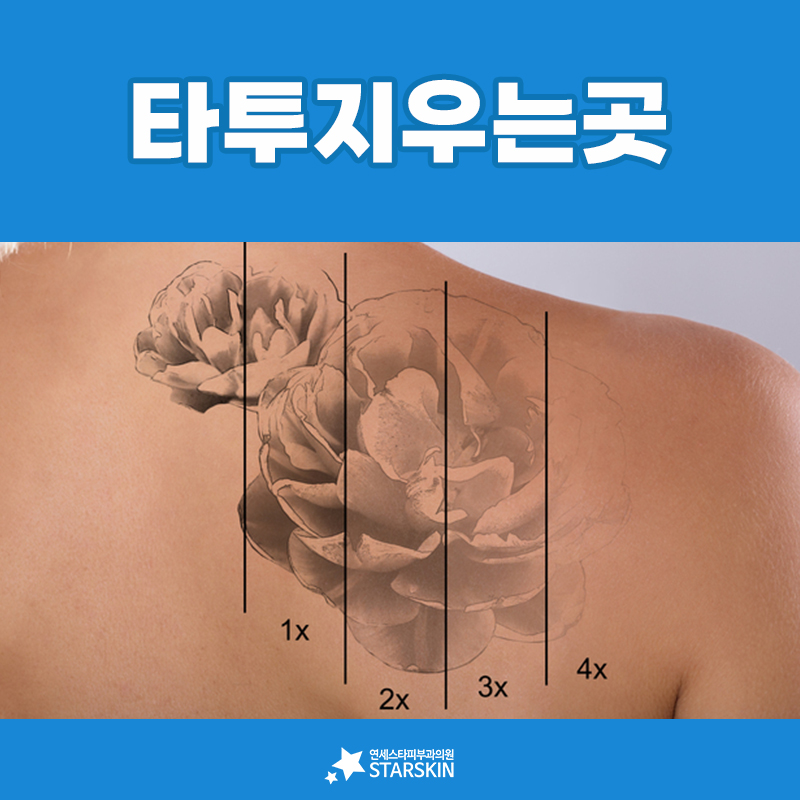
It's not uncommon to see people with tattoos in their daily lives, whether they are semi-permanent, decorative, or skin tattoos. Since tattoos are usually done in shops, many people assume that removal should also be done in a shop.
However, tattoo removal should be performed at a dermatology clinic with a board-certified dermatologist. We've compiled a list of items to check before deciding where to get your tattoo removed.
Tattoos at a shop, removal at a dermatology clinic
Since it's a procedure that requires multiple visits, people often look for the cheapest option first. However, for a safe and scar-free procedure, you should first verify the expertise.
If removal is performed at a place without a board-certified dermatologist, the procedure may be carried out without a sufficient understanding of skin structure and function. Improper treatment can lead to laser burns, which may result in blisters and scarring.
Criteria that precede price
At Yonsei Star Dermatology Sinchon, you can receive one-on-one consultation and treatment from a board-certified dermatologist. We have handled various cases, from semi-permanent to large tattoo removals.
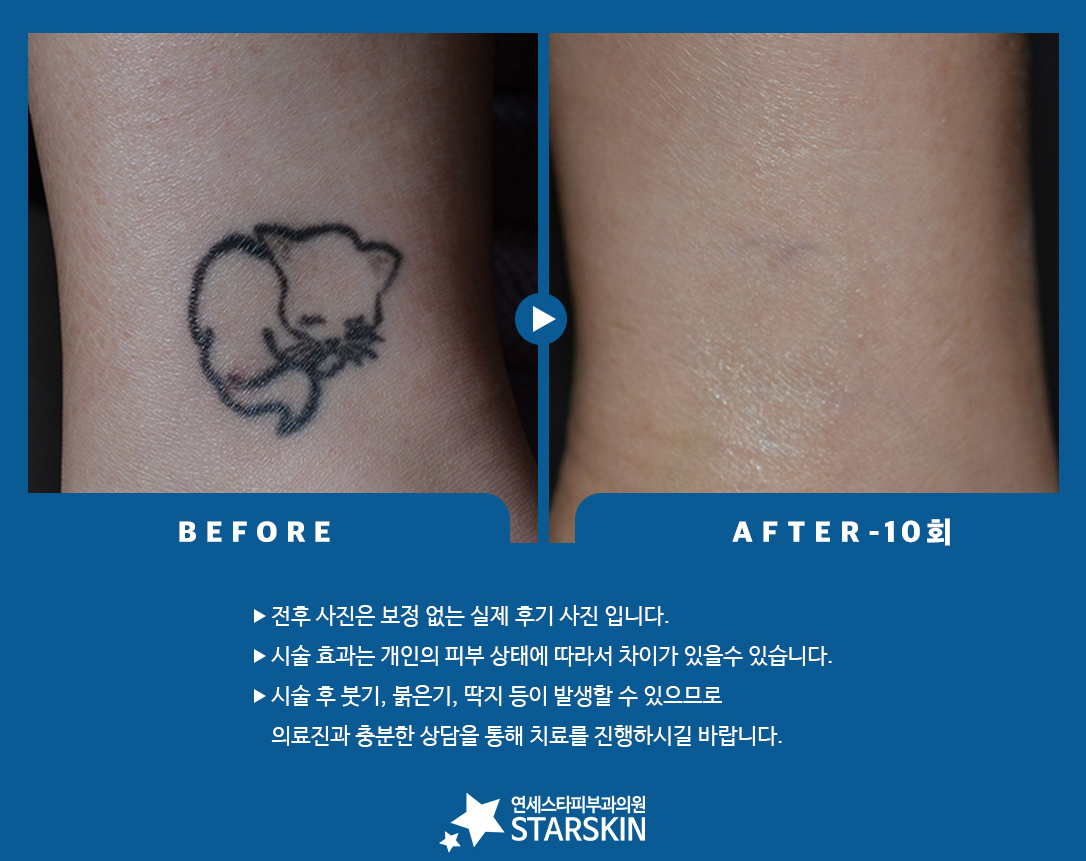
We proceed by considering your individual skin type, the amount of pigment, and the depth of the tattoo. You can see actual results through before-and-after photos on our website.
| Check Item | What to look for |
|---|---|
| Medical Staff | Whether a board-certified dermatologist directly consults and performs the procedure |
| Experience | Whether they have handled cases ranging from semi-permanent to large tattoos |
| Equipment | Whether it's the latest equipment that selectively reacts to pigment |
| Procedure Method | Whether there's a finishing process to minimize scarring |
Check what equipment is used
If the procedure involves lasers, it's advisable to check if the clinic has the latest equipment. Typically, picosecond lasers, capable of firing in one-trillionth of a second, are used.
Yonsei Star Dermatology Sinchon has chosen the PicoWay Laser.
- It reacts only to pigment without damaging surrounding skin.
- With four handpieces (532, 730, 785, 1064nm), it can be adjusted for various colors.
For equipment configurations including color tattoos, please refer to R-Zero Pico-Frectat Tattoo Removal. For methods using different wavelengths, please see Nd:YAG Tattoo Removal.

The reason for removing bubbles and firing up to four times
When a tattoo is treated with a laser, a white bubble layer rises above the tattooed area. This bubble layer obstructs laser penetration, making it difficult to repeat the laser treatment multiple times.
By using PFD specialized medication, the laser can be fired up to four times in a single session. This method is called R-Zero.
When pigment is broken down into smaller particles through repeated laser passes, immune cells transport the pigment out of the body more quickly. This can help reduce the total number of sessions required.
Creating a pathway for blisters to exit as a finishing touch
The reason our clinic can alleviate concerns about scarring is that we incorporate the Pinhole Technique at the end of the procedure. This creates space for blisters to exit quickly.
A separate explanation of the Pinhole Technique itself is provided in the Pinhole for Burn & Surgical Scar guide. Recovery progress may vary by individual.
The final condition is willpower
There is something more important than good medical staff and good equipment: the will to remove the tattoo.
Tattoo removal is not a one-time process. If you persevere, Yonsei Star Dermatology Sinchon will be with you to help you achieve good results.
If you don't know where to start, you can inquire via chat now.

Authored and Medically Reviewed by Representative Director Dr. Lee Sang-joo (Board-Certified Dermatologist) Graduated from Yonsei University College of Medicine · Ph.D. in Medicine from the same graduate school · Dermatology Resident at Severance Hospital Currently an Adjunct Professor at Yonsei University College of Medicine, Department of Dermatology · President of the Korean Dermatological Association in 2026 View Medical Staff Profile
First Published 2024-01-09 · Last Reviewed 2026-07-29
This article contains general medical information and does not substitute for individual diagnosis and treatment. Results and recovery progress may vary by individual.