

Many people say that while the surgery went well, the remaining scars from the sutures are more bothersome. To get straight to the point, scars formed at the suture site after surgery may not fade over time and can remain. Reports indicate that these surgical scars can be improved in color and texture with lasers, without incision. However, the timing of treatment and choice of equipment determine the outcome, so an approach tailored to the wound condition is important.
What are suture scars?
Suture scars refer to the marks left after a surgical site has been sutured. Even with the same suturing, the size, shape, and depth can vary depending on the type of surgery. In the clinic, while they may initially look similar, the way scars settle during the recovery process can appear quite different depending on the area.
Common surgeries that tend to leave suture scars include:
- Abdominal and cervical surgeries such as C-sections, thyroid surgery, and hernia surgery
- Scars after cosmetic surgery such as double eyelid surgery, rhinoplasty, and ptosis correction
- Suture of traumatic areas such as hands and feet
- Suture after removal of skin tumors, moles, and cysts
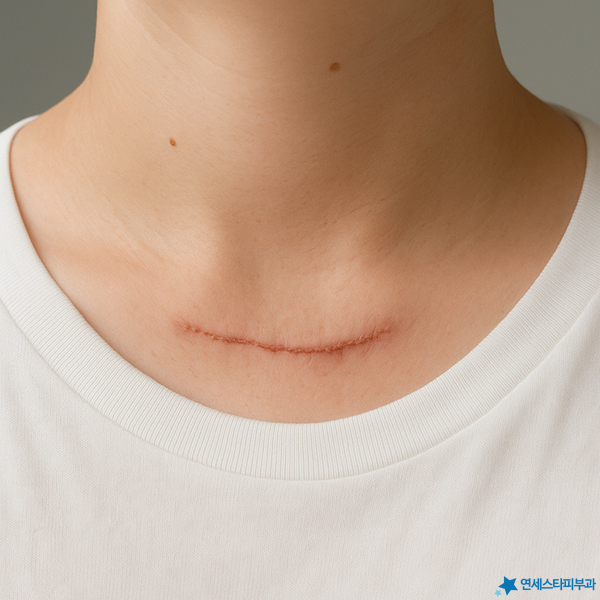
Why do suture marks stand out?
During the skin's healing process after surgery, excessive collagen production or tension in the wound area can make the marks appear more prominent. Especially in areas with high skin tension or around frequently moving joints, scars can remain thick or redness can persist for a long time. If collagen accumulates excessively, it can develop into keloid scars, which is why early management is important.
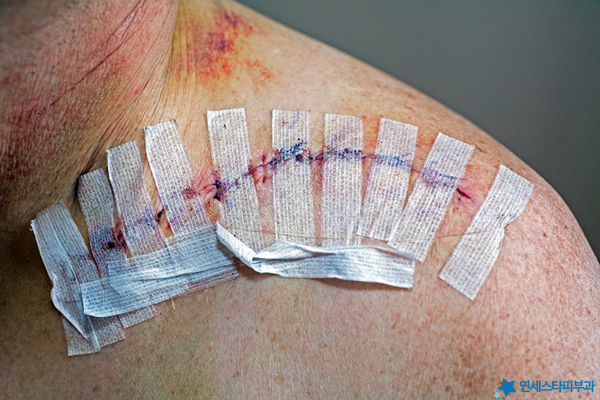
Can suture scars be improved with laser?
In the past, surgical scars were often removed by re-excising them. Recently, an approach to improve both the color and texture of the skin through laser treatment has been reported. Typically, two types of lasers are used depending on the nature of the scar.
Ultrapulse Alpha uses a microscopic laser beam to precisely remove scar tissue while inducing skin regeneration. It stimulates both the epidermis and dermis simultaneously to smooth rough and uneven suture scars, and is known to have less thermal damage than conventional CO₂ lasers, leading to faster recovery.
Vbeam Prima is a vascular laser used for suture scars accompanied by redness or pigmentation. It helps alleviate residual erythema (red marks) and vascular discoloration in the scar area, allowing the scar's color to blend naturally with the surrounding skin tone.
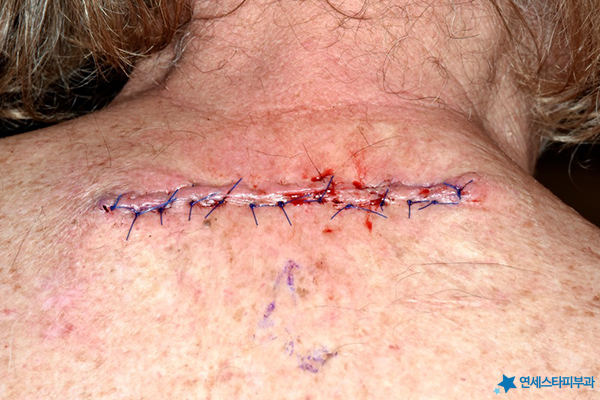
Combined treatment to address both color and texture
Depending on the situation, two or more lasers or procedures may be combined for better results. Since color and texture are different issues, a single laser alone may not be sufficient.
| Category | Main Problem Addressed | Equipment Used |
|---|---|---|
| Color (redness·pigmentation) | Residual erythema, vascular discoloration | Vbeam Prima |
| Texture (unevenness·thickness) | Uneven surface, firm tissue | Ultrapulse Alpha |
Combining the two lasers can address both the color and texture of the scar, allowing for more natural results. In cases of deep scars or significant tension, Surgical Scar Revision may also be considered.
If you are curious about the appearance of suture scars, you can easily check by contacting us via chat for scar treatment consultation.
When can laser treatment begin after surgery?
Generally, laser treatment can begin approximately 2-3 weeks after suture removal. However, in the early stages when the wound is still red and not firmly settled, the skin often appears red. At this time, treatment often begins with Vbeam Prima, which can improve blood vessels normally to prevent scar development and restore skin tone.
After some time, once the scar has stabilized, fractional lasers like Ultrapulse Alpha or StarLux, or CO₂-based lasers, are used to gradually promote active skin regeneration. Depending on the area, the Pinhole Alpha method may also be considered.
While it is known that starting scar treatment early is advantageous, the situation is slightly different after surgery.
Since bleeding must stop and sutures must be removed, and overall skin recovery must proceed first, it is more important to approach treatment according to the wound condition rather than starting prematurely.
It's okay not to rush. The timing will be adjusted based on the medical team's judgment.
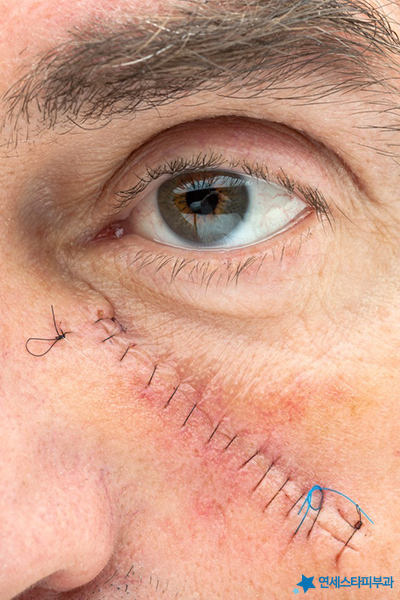
Things to check before treatment
If you are planning suture scar treatment, organizing the following beforehand can make the consultation much smoother:
- Date of surgery and time of suture removal
- Whether the scar area is red, firm, or has pigmentation
- Whether you tend to form thick scars (keloid tendency)
- Any current medications or skin conditions
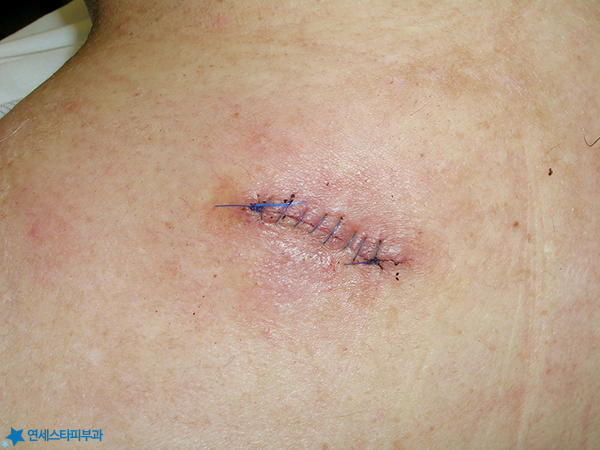
If you are hesitating again due to suture scars
Many people hesitate again not because of the surgery itself, but because of the remaining scars. However, related equipment has advanced to the point where scars can be improved with non-incisional laser methods, and it continues to improve.

Even if some time has passed, significant changes can be seen with the right laser selection and combination. While individual results may vary, starting proper scar treatment rather than trying to hide it can reduce stress. If you are curious about a treatment plan tailored to the shape or area of your scar, please feel free to inquire below.
💬 Consult NowChief Director Lee Sang-joo (MD, PhD, Yonsei University College of Medicine and Graduate School, completed dermatology residency at Severance Hospital, President of the Korean Dermatological Association) Chief Director Lee Sang-joo Profile First published 2025-10-17 / Last reviewed 2026-06-16
This content is for general informational purposes only, and since scar conditions and treatment responses can vary by individual, please consult with medical staff for an accurate diagnosis and treatment plan.