
![Burn Blister Management and Treatment Approaches for Burn Scars | [Yonsei Star Dermatology Sinchon]](/_next/image?url=https%3A%2F%2Fagqdgbuateknhwpocrgu.supabase.co%2Fstorage%2Fv1%2Fobject%2Fpublic%2Fsources%2Fbbf3bebe-45b6-4415-bd04-bda18b2cac0f%2Fblog-images%2F224011786384_00_296bf6693bfe.jpg%3Ftype%3Dw966&w=3840&q=75)
Anyone would be flustered to see water-filled blisters on their skin immediately after a burn. The first question that comes to mind is usually one: "Should I pop this blister, or leave it alone?" To put it simply, it is best to preserve blisters as much as possible. Improper management can lead to burn scars, so it is important to understand both initial treatment and subsequent treatment directions.
Why do burn blisters form?
When skin damage occurs due to a burn, fluid accumulates between the epidermis and dermis, forming blisters depending on the extent of the damage. This is a physiological response that protects the damaged skin and prevents infection, acting as a natural protective barrier.
Therefore, it is best not to touch blisters carelessly. It is generally recommended to be careful to avoid external irritation and allow them to naturally subside or burst over time.

The most common mistake: popping blisters
One of the most common mistakes made when burn blisters appear is inadvertently popping them. When a blister bursts, the skin's protective barrier disappears, increasing the risk of bacterial infection, which in turn delays wound healing. The slower the healing, the higher the likelihood of developing burn scars.
Blisters are a natural protective barrier covering damaged skin, and artificially removing them can increase the risk of infection and scarring.
Emergency first aid to follow at home immediately after a burn
Responding immediately after a burn is a crucial starting point that determines whether a scar will form. Carefully follow these steps:
- Immediately cool the burned area with running cold water for 10-20 minutes.
- Do not pop blisters; keep them clean.
- Cover and protect the damaged area with sterile gauze or similar.
- If the damaged area is wide or there is severe oozing, visit a medical institution immediately.
In the examination room, the recovery patterns often differ significantly between cases where these steps were followed well and those where they were not. Initial management is reported as the most realistic way to reduce scarring.
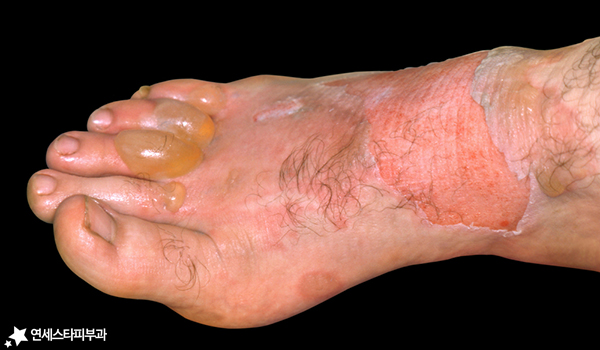
Why burst blisters lead to scars
When blisters rupture, damage to the dermal layer intensifies, reducing the skin's regenerative capacity. If the skin surface becomes uneven or hyperpigmentation occurs at this point, it can lead to long-term scarring. Especially if infection is involved, it can develop into discoloration or hypertrophic forms, making subsequent burn scar management even more challenging, so caution is needed.
The key to preventing scars ultimately lies in initial management. Protecting blisters, keeping the wound clean, aiding skin recovery with regenerative ointments and dressings, and preventing hyperpigmentation with UV protection are all part of one process. While this process alone can reduce scar formation, if scars have already settled on the skin, more active treatment may be considered.
For any questions, please inquire through Burn Scar Treatment Consultation.

Treatment approaches vary by scar type
Burn scars require different treatment methods depending on their shape and depth. It is more natural to approach each scar type individually rather than using a single method for all scars.
| Scar Type | Characteristics | Treatment Approach |
|---|---|---|
| Erythematous Scar | Appears red due to blood vessel dilation | Vascular lasers like Vbeam Prima |
| Depressed Scar | Skin sinks due to dermal damage | Inducing regeneration with Pinhole Technique |
| Hypertrophic, Keloid Scar | Thick and raised | Combined laser and injection treatment |
For depressed forms, Pinhole Alpha laser treatment creates micro-holes in the affected lesion to induce faster skin regeneration and rearrange clumped collagen, helping the skin return to a state similar to normal skin. If hyperpigmentation is also present, pigment lasers can be combined to improve dark marks.
For thick, raised hypertrophic and keloid scars, Triamcinolone Scar Injection can reduce the thickness of the scar. In the case of keloids, which have a high recurrence rate, combining this with laser treatment can manage them more stably and extend the maintenance period, thereby increasing treatment satisfaction.
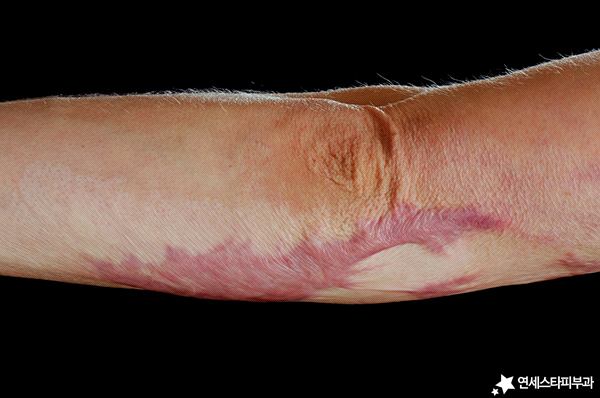
It's not too late for old scars
Scar treatment responses vary depending on individual skin characteristics and the extent of damage, so a customized approach is necessary. How burn blisters are managed significantly affects whether they leave scars, and even for existing scars, the degree of improvement can vary through laser and skin regeneration treatments. Generally, starting early is reported to yield better results.
In the stage where redness remains, it is possible to use vascular lasers to alleviate redness early on and restore the skin to a state similar to normal skin. Even if a long time has passed or the skin is clumped and adhered, laser treatment using the Pinhole Technique induces regeneration, so there is no need to give up prematurely.

The key is customized treatment and consistency
Two important points emerge when dealing with burn scars: treatment tailored to the scar type, and the mindset of not giving up halfway. If you are concerned about deep scars or large areas, it is safer to review various options, including Surgical Scar Revision, with medical staff rather than self-diagnosing.
We hope this article serves as a small guide for those who have been injured by burns and wish to return to their former appearance.
💬 Consult Now


Dr. Lee Sang-joo, Chief Director (MD, PhD, Yonsei University College of Medicine and Graduate School, completed dermatology residency at Severance Hospital, President of the Korean Dermatological Association) Dr. Lee Sang-joo's Profile First published 2025-09-17 / Last reviewed 2026-06-16
Treatment responses and recovery patterns may vary by individual, and accurate diagnosis and treatment plans must be determined through consultation with medical staff.