
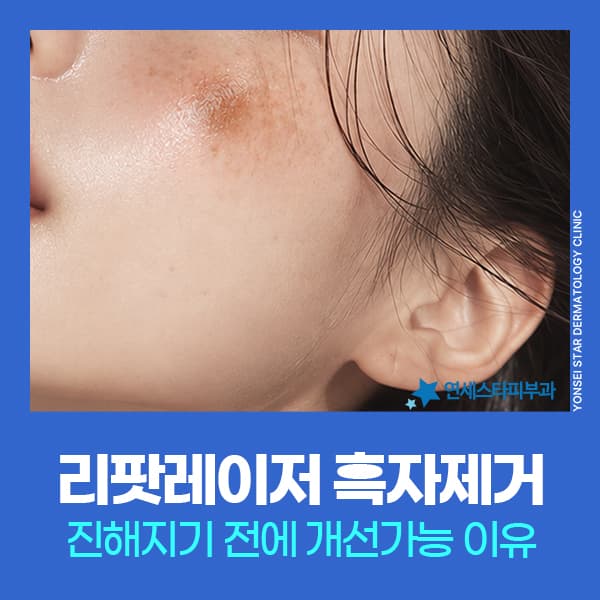
As the seasons change, there is a noticeable increase in the number of people visiting clinics due to age spots and solar lentigines on their faces or the backs of their hands. This is because skin exposed to ultraviolet rays throughout the summer remains in a state where melanin is actively produced, and as autumn arrives, these traces become clearly visible. During summer, it can be difficult to reapply sunscreen in a timely manner due to sweat, and frequent, inadvertent sun exposure until early autumn, when UV index is still high, can lead to further darkening of pigmentation. Furthermore, as one ages, the skin's regeneration rate slows, making it difficult for established pigmentation to fade easily. This is why many people seek medical attention for pigmentation concerns around this time.
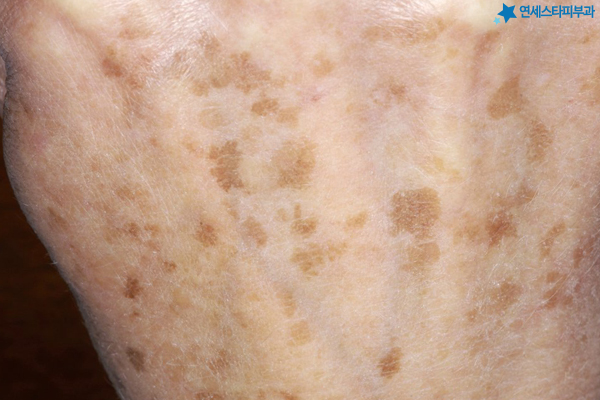
Pigmented lesions often appear across multiple layers, from the epidermis to the dermis, so it is important to first receive a diagnosis and establish a treatment direction rather than immediately starting treatment. Recently, there has been growing interest in LIPOAT Laser, which is said to be able to help address superficial pigmentation relatively quickly.
In this article, we will explain how LIPOAT Laser, used to treat solar lentigines, works, and compile a checklist of things to be aware of before and after the procedure. We hope this information will be helpful for those who are concerned about pigmentation that does not fade easily and becomes more prominent over time.
Causes of Solar Lentigines and Melanin: Why Don't They Disappear on Their Own?
Melanin underlies pigmentary disorders such as melasma, freckles, and solar lentigines.
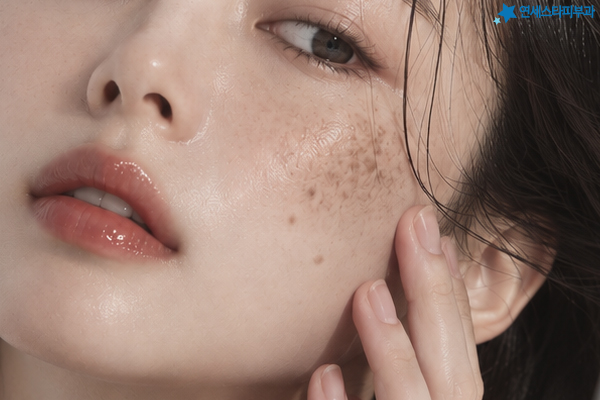
Melanin is a substance originally produced to protect the skin from ultraviolet rays, but if exposure is excessively prolonged, it can be produced beyond the necessary amount and appear as concentrated pigmentation in one area. Once pigmentation settles in the skin layers, it is difficult to expect it to completely disappear on its own. Therefore, a diagnosis that distinguishes the location and depth of the lesion should precede treatment.
Especially if you lead an active outdoor lifestyle, it is advisable to pay more attention to UV protection. While the causes and age of onset of solar lentigines are often easily considered only as a sign of aging in middle-aged and older adults, they can appear across a wider age range than expected, requiring proactive management.
LIPOAT Laser's 532nm Wavelength and Two Specialized Technologies
For those who are new to LIPOAT Laser, let's elaborate a bit more.
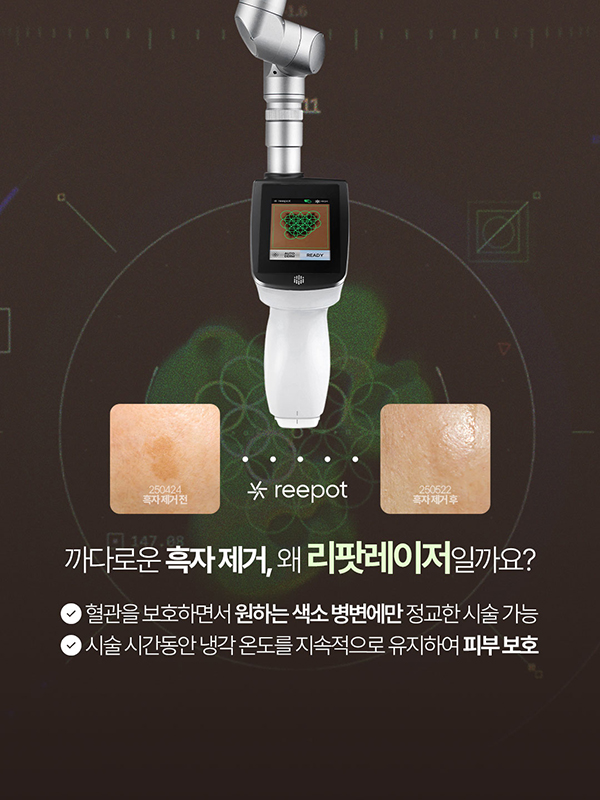
LIPOAT Laser is a device that uses a 532nm wavelength, which is well absorbed by melanin. This wavelength has the property of much better distinguishing areas where pigmentation is concentrated than healthy skin, thereby focusing energy only on those areas. Therefore, it can be utilized to target pigmentation located in relatively superficial layers, such as solar lentigines that are shallowly located in the epidermis.
In addition, LIPOAT Laser incorporates two specialized technologies.
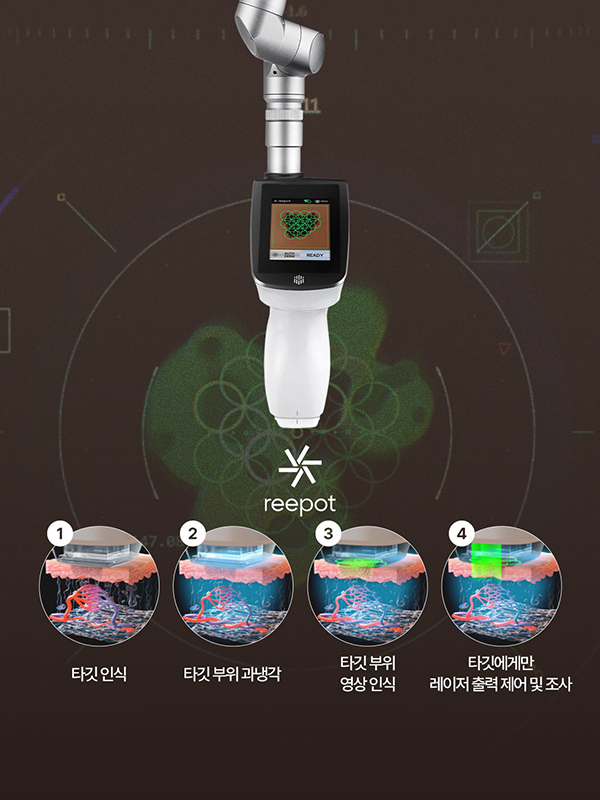
In summary, the process involves first cooling the skin to constrict blood vessels, and then precisely irradiating only the pigmented epidermis in that state. By preemptively removing conditions that could easily damage blood vessels, it can help reduce irritation and damage that may occur during pigmentation treatment. As a result, it is characterized by the potential to expect improvement with relatively fewer sessions. However, since it is a device that handles strong wavelengths, the energy intensity and number of irradiations should be determined by a specialist's judgment.
Pre- and Post-Procedure Checklist
- Before the Procedure
It is common to undergo a process of carefully identifying the lesion area and confirming the depth and extent of the pigmentation. If you have recently been exposed to a lot of UV rays or your skin condition is subdued, it is advisable to discuss this thoroughly with your doctor in advance.
- After the Procedure
Generally, a moist dressing such as DuoDERM is applied to aid recovery. It is recommended not to remove it arbitrarily and to observe the progress for at least two weeks. During this period, it is important to consistently apply sunscreen and avoid irritating the area by rubbing or scratching. If the moist dressing seems like it might fall off during daily life, instead of forcibly removing it, it is better to apply a new, larger DuoDERM over it to maintain an environment that promotes rapid healing of the treated area.
Depending on your skin type, the area where the dressing was applied may swell, itch, or feel prickly. In such cases, it is advisable to visit the clinic where you received LIPOAT Laser treatment as soon as possible to receive safe follow-up care.
Even when using the same equipment, the treatment direction can vary depending on the operator's skill and ability to interpret the lesion. Since LIPOAT Laser handles strong wavelengths, receiving treatment based on an accurate diagnosis at a dermatology clinic with accumulated experience in treating pigmentary disorders is the starting point for safe management.

In Summary
Solar lentigines are a common skin concern that can affect anyone, regardless of age or history of UV exposure. Since the causes of solar lentigines and the depth of pigmentation vary from person to person, a diagnosis tailored to your skin condition should take precedence. If you are concerned about pigmentation, we recommend consulting a dermatologist to find a treatment method suitable for you. If you would like to learn more about the LIPOAT Laser treatment process and recovery period checklist, you can find out through consultation inquiry.

Author · Chief Director Lee Sang-joo / Dermatologist As the chief director of Yonsei Star Dermatology Sinchon Main Branch, he provides treatment for various skin procedures including skin boosters, scars, and pores. Detailed career history can be found in his medical staff profile. · Last reviewed September 26, 2026
This article is intended for general medical information and the effects of procedures and downtime may vary depending on individual skin conditions. Please confirm an accurate diagnosis and treatment plan through consultation with a dermatologist.