
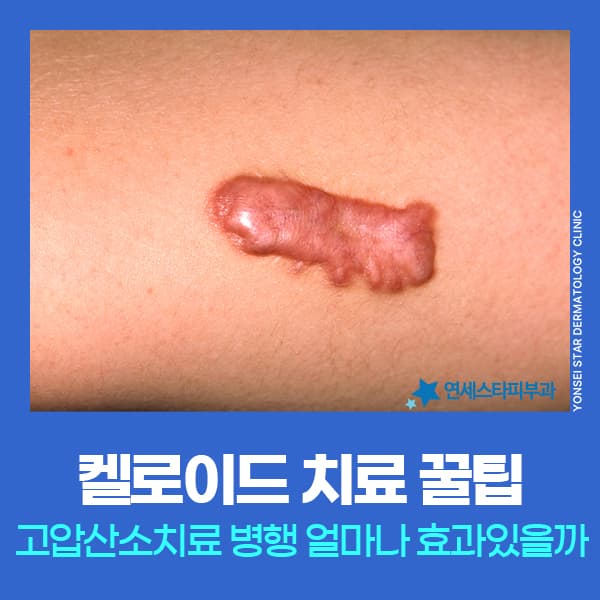
Some people struggle because even long after a wound has healed, the area gradually rises and hardens, or the itching and stinging sensation doesn't subside. This type of scar may not be an ordinary scar, but a keloid. Keloids can be difficult to manage with just one method, so the current trend is to plan several treatments together. We will examine what kind of help can be expected when Hyperbaric Oxygen Therapy, known to aid in wound and skin condition recovery, is added to this, along with the general framework of keloid scar treatment.

Keloids are a state where collagen does not stop
When the skin is wounded, it produces collagen to fill the open area. Generally, when a wound heals, collagen production also stops, and the scar gradually flattens over time. A keloid is a condition where this process is not stopped, and collagen continues to be produced beyond the necessary amount. This can manifest in the following ways:
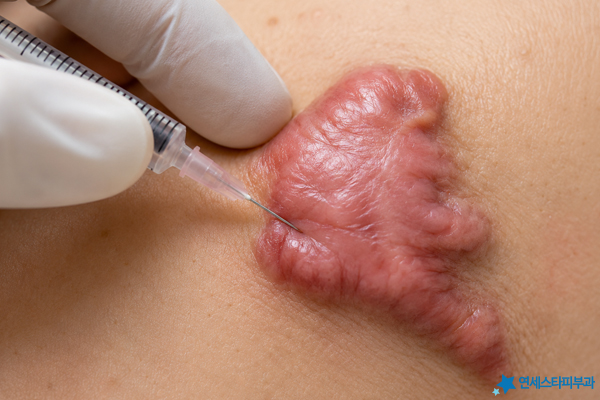
They tend to form easily in areas where the skin is easily stretched, such as the ears, shoulders, chest, and jaw, and may be linked to one's constitution or family history. Keloids are difficult to expect to subside on their own, and they can reappear even after treatment, requiring continuous management. Therefore, methods with different characteristics, such as injections and lasers, are often combined to suit the individual's condition.

Keloid scars are not lesions that are resolved at once, but rather a disease that gradually improves over a long period. By continuing treatment consistently, it may be possible to reduce pain and lower the likelihood of recurrence. Keloid scar treatment methods are also gradually expanding, such as combining injections that reduce the burden of pain with laser treatment.
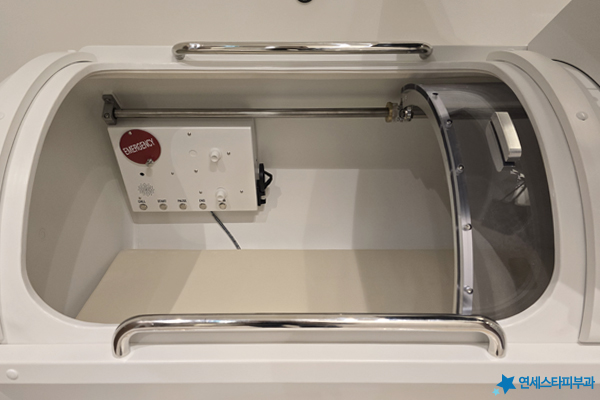
The principle of Hyperbaric Oxygen Therapy and why it is mentioned with keloids
Hyperbaric Oxygen Therapy (HBOT) is a treatment where highly concentrated oxygen is inhaled inside a special chamber pressurized to a higher level than atmospheric pressure. The air we normally breathe contains about 21% oxygen, and oxygen is primarily carried throughout the body by red blood cells in the blood. When pure oxygen is inhaled in a high-pressure environment, more oxygen dissolves not only in red blood cells but also in the plasma, the liquid component of blood, which can help increase the amount of oxygen reaching tissues.
Originally, it was used for urgent situations such as decompression sickness or carbon monoxide poisoning, but now its scope of use is expanding to include wound recovery management. So why is hyperbaric oxygen mentioned in relation to keloids? Scar tissue sometimes has less adequate blood circulation and oxygen supply than normal skin. For tissue to recover, cells must move diligently, and oxygen is used in that movement.
Recently, some studies have reported observing changes in the course of treatment and discomforts such as itching and pain when Hyperbaric Oxygen Therapy was added to the keloid treatment process. Based on these findings, there is growing interest in combining hyperbaric oxygen.
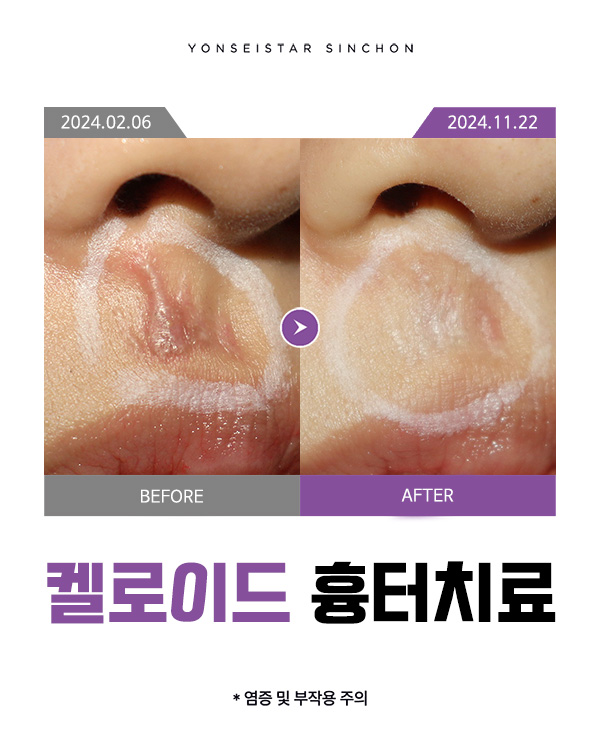
Expected scope and precautions to check in advance
However, keloids vary in size, location, progression, and individual constitution, so results may differ from person to person. The reported studies also have limited subjects and treatment conditions, so more research needs to be accumulated in the future. Nevertheless, the possibility that these results could broaden treatment options is worth anticipating.
The role of Hyperbaric Oxygen Therapy is not to replace the main treatment, but to assist in creating an environment for tissue recovery after treatment. Therefore, the core of keloid scar treatment is to accurately diagnose the scar condition and plan appropriate injections and laser treatments, and hyperbaric oxygen should be considered as an additional method.
If you have been consistently receiving keloid scar treatment for a long time, you may consider the option of elevating the treatment process by combining Hyperbaric Oxygen Therapy. Before deciding on a procedure, please consult with a dermatologist to confirm if your current condition is suitable for combined treatment and what intensity is appropriate. If you need more information about combined treatment plans and sessions, you can check through consultation inquiry.

Author · Chief Director Lee Sang-joo / Dermatologist As the Chief Director of Yonsei Star Dermatology Sinchon Main Branch, he provides comprehensive dermatological treatments including skin boosters, scars, and pores. Detailed history can be found in the Medical Staff Profile. · Last reviewed September 26, 2026
This article is intended to provide general medical information, and treatment effects and downtime may vary depending on individual skin conditions. For an accurate diagnosis and treatment plan, please consult with a dermatologist.