


It is common for semi-permanent eyeliner, drawn for cosmetic purposes a few years ago, to fade or spread with a bluish tint over time, leaving a result completely different from when it was first completed. Even if you try to conceal it with makeup, the eyeliner can appear awkwardly prominent, or you might want to remove it because your preferences or trends have changed, and you no longer like the old design. For these reasons, many people look into eyeliner tattoo removal, but the actual procedure, the level of pain, and how many sessions it takes vary from person to person and condition, making it difficult to establish clear criteria.

The Principle of Pigment Pulverization with Picosecond Laser
Picosecond laser is now widely used for tattoo removal, including semi-permanent eyeliner. This method involves delivering strong energy in ultra-short pulses, measured in trillionths of a second, to finely break down pigment particles within the skin. These fragmented pigment pieces are then gradually discharged over time through the body's metabolic processes, including macrophages, slowly lightening the tattoo. A key advantage is that energy is delivered in a much shorter time than with conventional nanosecond lasers, which can efficiently break down pigment while reducing thermal damage to surrounding tissues. However, the area where eyeliner is located has very thin eyelid skin with a dense concentration of nerves and blood vessels, requiring more precise power control and procedural experience than when removing tattoos from other parts of the body.


Why Eyeliner Tattoo Removal is Difficult to Complete in One Session
Since the depth, shade, and area of pigment penetration vary from person to person, it is rare for semi-permanent eyeliner to be completely erased in a single session. Some people, eager to see results quickly, try to complete eyeliner tattoo removal in one session with strong output. However, this increases the likelihood of side effects such as blisters, burns, scars, or hyperpigmentation, so it is better to plan for multiple sessions from the start.
Thin and sensitive skin, like that around the eyes, requires even more careful consideration. Increasing the output excessively does not necessarily break down pigment more effectively; instead, it often adds unnecessary irritation to healthy tissue. Therefore, proceeding with appropriate output, divided according to the pigment condition and skin recovery speed, may lead to a safer and more satisfactory outcome in the long run, even if it takes a bit more time.
If the color of your semi-permanent eyeliner has faded or turned bluish, if the initial shape and thickness no longer match your desired eye shape, or if you wish to remove existing pigment before getting a new eyeliner tattoo, these are all situations where eyeliner tattoo removal might be considered. However, in any case, it is important to first get an accurate diagnosis of the pigment condition before establishing a treatment plan.
Pain Management and Eye Protection Equipment Must Also Be Checked
The area around the eyes is more sensitive to pain than other parts of the body, so many people postpone the procedure due to concerns about eyeliner tattoo removal pain. The procedure may involve applying ample anesthetic cream to the treatment area and, depending on the situation, using a cooling device to reduce momentary pain and heat sensation.
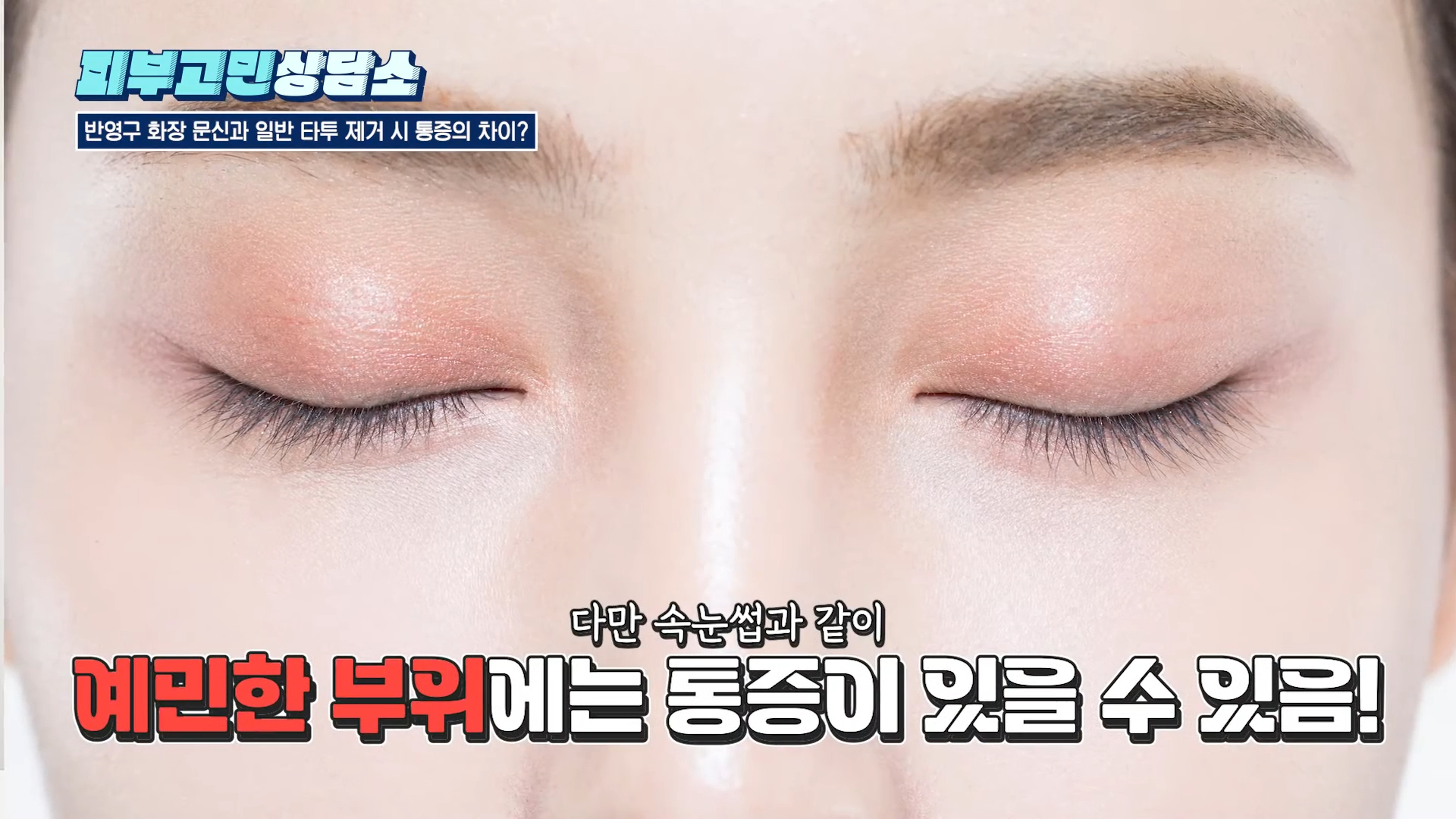
In this area, it is just as important to check if eye protection equipment is available as it is to manage pain. It is advisable to confirm in advance, before deciding on the procedure, whether ophthalmic ointment and eye drops are used to protect the conjunctiva and eyeball during the procedure, and whether special eye protection caps that directly cover and protect the cornea are prepared.

In Summary
Since eyeliner tattoo removal is a procedure that deals with a sensitive area like the eyes, safety should be prioritized over rushing for results. By choosing a clinic equipped with eye protection devices and proceeding in multiple sessions according to a customized plan that considers pain management and recovery time, you can reduce the risk of side effects and achieve a more satisfactory outcome. If you are curious about the detailed plan, including the clinic, equipment, and procedure methods, you can inquire through consultation.

Author · Chief Director Lee Sang-joo / Dermatologist As the chief director of Yonsei Star Dermatology Sinchon Main Branch, he treats a wide range of skin procedures including skin boosters, scars, and pores. Detailed career history can be found in his medical staff profile. · Last reviewed September 20, 2026
This article is intended for general medical information and the effectiveness of the procedure and downtime may vary depending on individual skin conditions. For an accurate diagnosis and treatment plan, please consult with a dermatologist.