

Arm wounds, such as abrasions, burns, lacerations, and dermatitis, are surprisingly common in daily life. Once a wound heals, the first question that comes to mind is usually one: Will it disappear on its own over time, or will it leave a scar? To answer directly, if the wound is deep or occurs repeatedly, it is more likely to leave a mark rather than fade naturally.
Why Arm Wounds Tend to Scar Easily
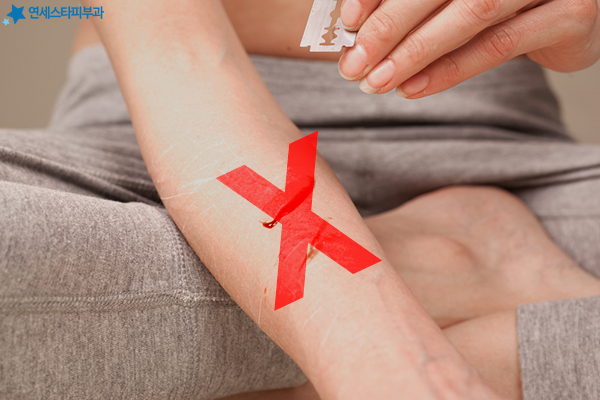
As a wound deepens, the skin surface becomes uneven, and the scar appears more prominent than the surrounding area. In particular, self-harm arm wounds often involve deep damage and occur repeatedly in the same area, making it easy for marks to remain over time.
In the clinic, many people struggle more with the impact of the marks on their daily lives than with the wound itself. The burden of potential exposure to others' gazes significantly weighs on the recovery process.
Covering Has Its Limits
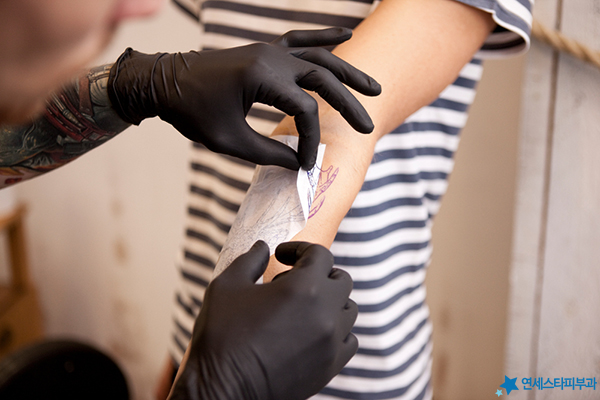
During seasons like summer when short sleeves are worn, it's difficult to cover arm wounds with clothing. Even if covered with cosmetics or tattoos, they can be noticeable due to light reflection or differences in skin texture.
Here are the limitations of covering methods:
- Foundation or concealer easily wears off with sweat and friction.
- Tattoo covers may reveal boundaries due to differences in skin texture.
- Covering with clothes is restricted by season and situation.
- The scar tissue itself remains unchanged while being covered.
It is more stable to approach scars as skin changes that need early management rather than something to be covered.
If you wish to reduce scars cleanly, it is best to start proper management as early as possible.
Early Stage: Redness and New Skin Growth
If an arm wound is still red and new skin is growing, it is a period of active skin regeneration. At this time, blood vessels and inflammatory reactions are active, so vascular lasers like Vbeam Prima may be helpful.
Vascular lasers can reduce redness and inflammation and help even out the skin tone around the wound. They work to slow down the progression to deep scars and promote smooth skin regeneration. Managing red skin changes like facial redness, which approaches with a similar principle, can be understood in the same context.
For Old Scars That Have Settled White
Old scars that have faded and settled white become more challenging to treat. At this stage, lasers that organize clumped fibrous tissue and induce skin regeneration are needed.
Fractional CO₂ lasers like Ultrapulse Encore create microscopic holes deep in the skin to help new skin grow. This type of Mild Pinhole laser treatment for scars is used to reduce scar depth and smooth skin texture. Rather than a single treatment, multiple sessions are expected to gradually fill in the skin. In cases where the scar depth is significant and the shape is complex, Surgical Scar Revision may also be considered.
Since the approach varies depending on the scar stage, if you are curious about your scar's stage, we recommend checking through chat consultation for scar stage-specific treatment directions.
If It Has Developed into a Hard, Raised Keloid Scar
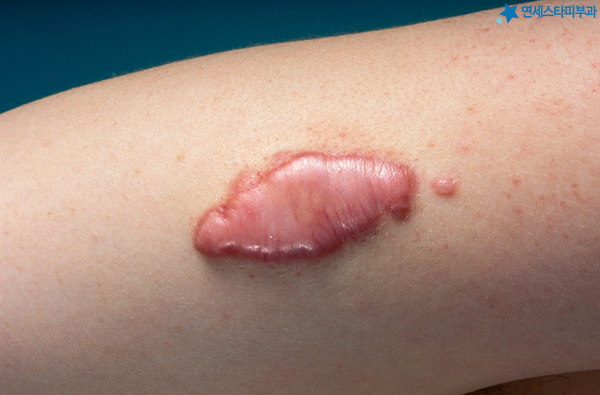
Self-harm arm wounds can sometimes develop into keloid scars that become red and hard over time. Keloids are scars that grow larger than the original wound due to excessive production of elements like collagen during the regeneration process, and they can sometimes be accompanied by itching or pain.
| Scar Stage | Skin Condition | Primary Approach |
|---|---|---|
| Early | Redness and new skin growth | Vascular laser to alleviate redness and inflammation |
| Old Scars | Hardened and depressed white | Fractional laser to induce skin texture regeneration |
| Keloid | Hard and raised | Combined approach of injections and lasers |
In this case, a combination of injections and laser treatment may be used. Triamcinolone Scar Injection can suppress excessive collagen production, and vascular lasers can reduce redness, allowing the scar to soften and flatten. This combined approach is used to prolong the effect and lower the risk of recurrence, and it is reported to have high patient satisfaction. Burn Scars resulting from burns also have their approach adjusted according to the stage and depth.

Recovery That Cares for Both Skin and Mind
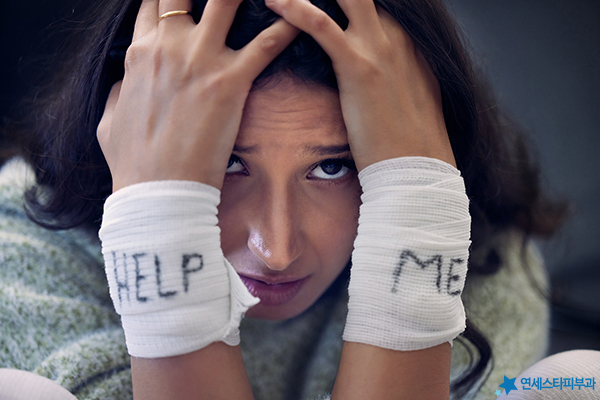
Self-harm wounds on the arms or wrists can be more than just skin problems; they can be psychological signals. The process of healing existing scars must go hand-in-hand with the process of nurturing the mind.
Here are some aspects to consider during the recovery process:
- Professional help through psychiatric counseling
- Examining repetitive patterns through psychotherapy
- Alleviating isolation by participating in support groups
- Warm attention from family and close friends
Facing Treatment Rather Than Covering
Rather than covering arm wounds, reducing the marks through treatment is a more stable approach. Especially for self-harm marks, careful attention is needed, as assistance from others is also required.
Before a wound settles into a deep scar, easily check what kind of management is needed now through chat consultation for arm wound scar treatment. We will help you find a direction so you no longer suffer from arm wounds.



Sang-Joo Lee, Chief Director (MD, PhD, Yonsei University College of Medicine & Graduate School, Completed Dermatology Residency at Severance Hospital, President of Korean Dermatological Association) Chief Director Sang-Joo Lee's Profile First Published 2025-08-08 / Last Reviewed 2026-06-16
Even for the same scar, the prognosis varies from person to person depending on its depth and timing. Therefore, it is recommended to consult with medical staff through a consultation to determine the exact condition and treatment direction.