
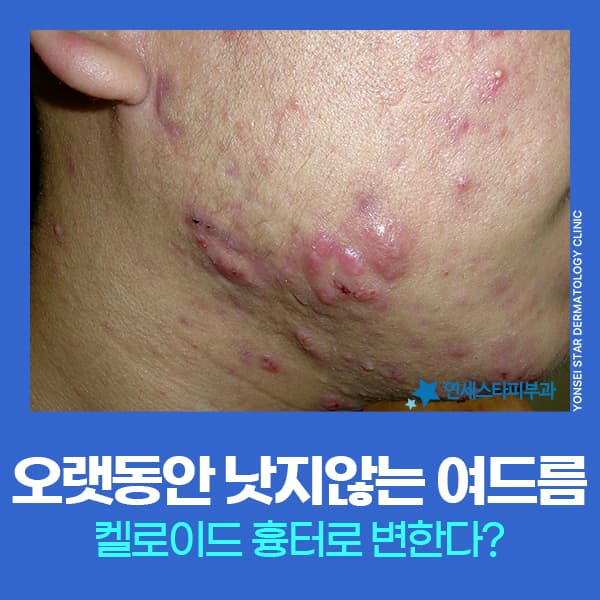
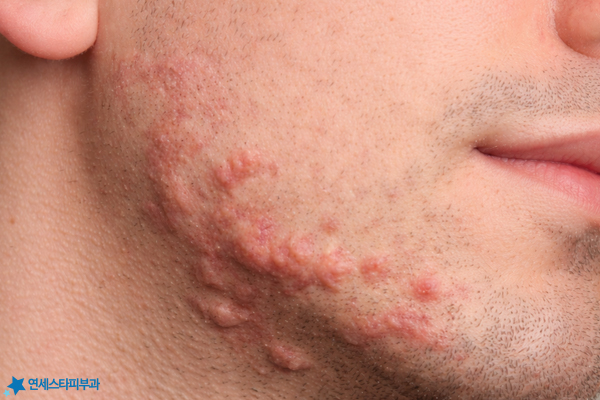
If an acne spot doesn't flatten out after several months but instead hardens and protrudes, it might not be a common acne scar but an acne keloid. Typical signs include prolonged redness, recurrent itching or stinging sensations, and a gradual increase in size. If not addressed early, the tissue can become increasingly firm, making later intervention much more difficult, so distinguishing the type of lesion first is crucial. In this article, we will summarize the background of acne keloid formation and how combined keloid laser treatment plays a role in preventing recurrence.

Why Do Acne Keloids Form?
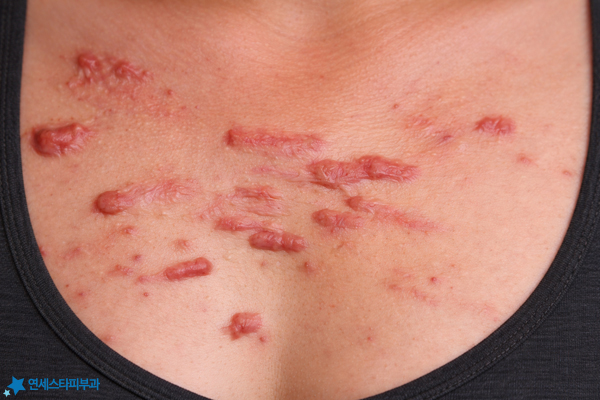
Keloids refer to a condition where, during the wound healing process, collagen accumulates excessively, causing scar tissue to grow beyond the original boundaries of the wound. Since acne is also an inflammatory wound, acne keloids can form in the same way in areas where an excessive inflammatory response occurs.
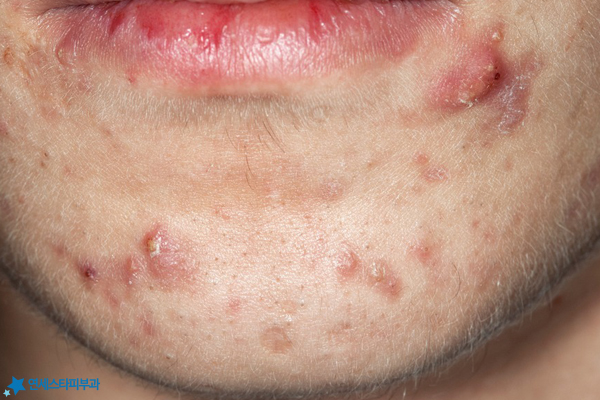
In terms of location, they are often observed in areas with significant skin tension and active sebum secretion, such as the jawline, chest, and shoulders. For individuals with a constitutional predisposition to keloids, even a small blemish can trigger such a reaction, and the possibility increases with manual squeezing or prolonged neglect that deepens the inflammation.
What Happens if Left Untreated?
Keloid lesions rarely shrink on their own. Over time, blood vessels around the lesion tend to proliferate, causing it to grow in size and deepen in redness. When a raised form is accompanied by chronic itching and pain, one may unconsciously scratch or touch it, easily leading to a vicious cycle where this stimulation further exacerbates the symptoms.
As the period of neglect lengthens, the tissue hardens, increasing the difficulty of treatment. Therefore, if an acne spot persists unusually long or feels like it's rising, early examination is advantageous for expecting recurrence prevention effects.
Limitations of Steroid Injection Monotherapy
The most widely used method is injection treatment, where steroids are injected into the lesion. This helps to lower the raised height by suppressing collagen production within the lesion, and the procedure is relatively simple.
However, repeated injections alone have several limitations. Although the height may decrease in the short term, recurrence, where it rises again over time, is frequent, and many individuals experience significant pain when the medication enters the lesion. It is also difficult to adequately address redness and dilated blood vessels with injections alone.
Why Combined Keloid Laser Treatment Helps Prevent Recurrence
To compensate for these limitations, combined treatment using injections and keloid laser is performed. The vascular laser used here selectively targets the proliferated blood vessels around the lesion, reducing redness and decreasing blood flow. This effectively reduces the basis for scar tissue to regrow, and thus can be expected to lower the likelihood of recurrence.
The difference between injection monotherapy and combined treatment is clear. While monotherapy is effective in the short term for scar height, its sustainability is weak. In contrast, combined keloid laser treatment can be expected to provide more sustained improvement. The likelihood of recurrence is relatively high with monotherapy and is comparatively lower with combined treatment. Redness and vascular improvement are limited with injections alone, but can be addressed together when a vascular laser is added. The burden of pain can also be significantly alleviated during combined treatment if a low-pain injection method is applied.
Summary
Acne keloids are often easily overlooked initially because they are not very noticeable, but over time, both the risk of recurrence and the difficulty of treatment increase. If an acne mark remains unusually long or a raised area feels like it's growing, we recommend not delaying and checking your condition through a consultation. The combination and number of sessions for combined treatment with injections and keloid laser may vary depending on the size and redness of the lesion, as well as your constitution, so it is best to consult with a dermatologist to create a plan. If you have any questions, you can check through consultation inquiry.
Author · Chief Director Lee Sang-joo / Dermatologist As the Chief Director of Yonsei Star Dermatology Sinchon, he provides treatment for all skin procedures, including skin boosters, scars, and pores. Detailed history can be found in the Medical Staff Profile. · Last reviewed September 14, 2026
This article is intended for general medical information purposes, and treatment effects and downtime may vary depending on individual skin conditions. Please consult with a dermatologist for an accurate diagnosis and treatment plan.