
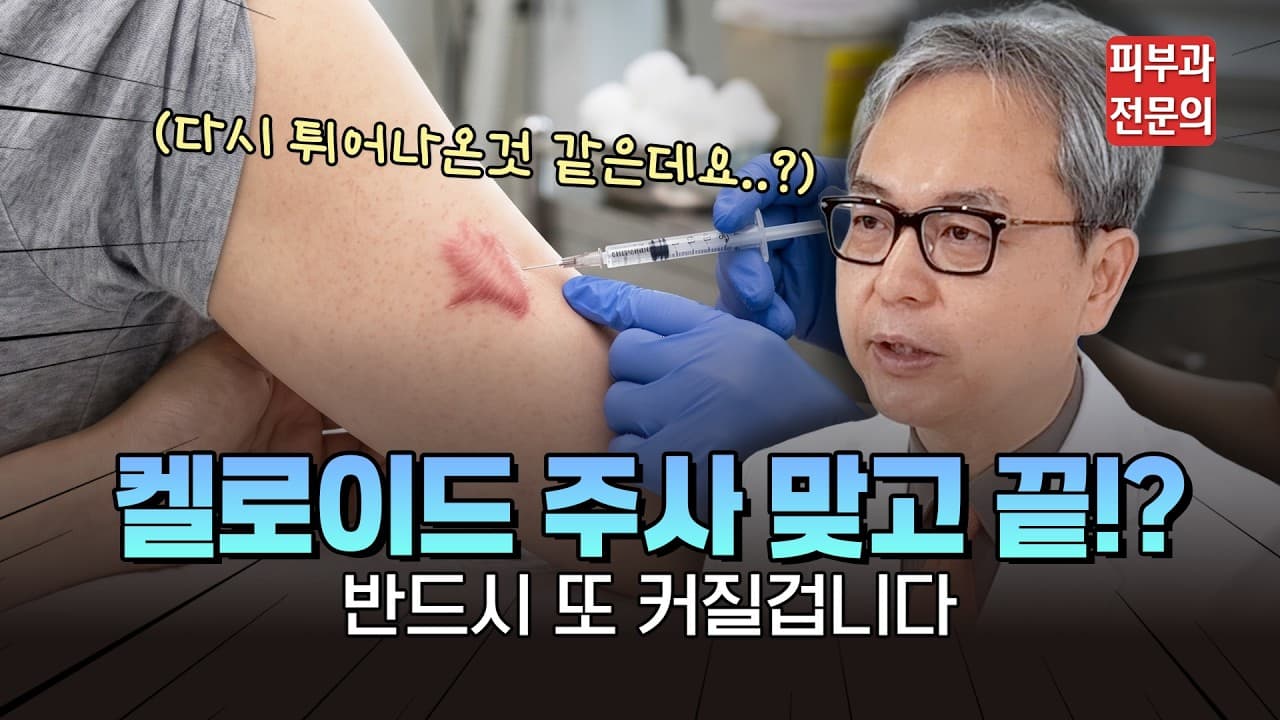
We often hear that injections temporarily flatten keloids, but they reappear shortly after. Keloids are not scars that can be resolved by shaving them down. In fact, if mishandled, they can return larger than before.
Three Common Locations for Keloids
There are specific areas on the body where keloids are particularly prone to forming.
- Ears — Often appear if inflammation occurs at an earring or piercing site
- Chest and Shoulders — Childhood vaccination marks and chest acne scars are typical examples
- Jawline — A common area for adult acne, and touching it can easily lead to keloids
If you develop a wound or acne in these three areas, you should treat it differently from the start.
Three Factors Causing Recurrence
First, the underlying cause remains. What promotes keloid growth is the tension pulling on the skin. If you overdo upper body exercises while having keloids on your chest, treatment may be slower, and recurrence more frequent. Acne on the chest or jawline can become a seed for keloids, so you should treat it actively in the early stages.
Second, stopping treatment midway when it seems to have improved. Many people stop treatment when the raised area has subsided to some extent, believing the symptoms have decreased. This period is when recurrence is most frequent.
Third, insisting on only one method. Injection therapy works well for internal keloids but is difficult to access for external ones.
We use a method of approaching keloids with lasers from the outside and injections from the inside. Treating both the inside and outside together yields better results and reduces recurrence.
Different Approaches for Ears and Body
Even for the same keloid, the approach varies depending on its location.
Keloids on the ears are primarily removed in one go with surgery or lasers. For keloids on the body, it is often better to suppress them with lasers and injections rather than excising them all at once.
Three Lifestyle Rules to Prevent Recurrence
Avoid irritation. You should refrain from self-extracting acne or creating wounds with unnecessary piercings.
Reduce exercise while symptoms are present. Tension promotes keloid growth. However, once stable, there is usually no significant hindrance to exercise or daily life.
Smoking and alcohol cessation are necessary. Smoking can impair blood circulation and increase inflammatory substances, while alcohol consumption can dilate blood vessels and potentially worsen keloids.
In Summary
Keloids are not an incurable disease. With consistent management, they can be brought to a level where they do not interfere with daily life, and their appearance can become similar to the surrounding skin.