
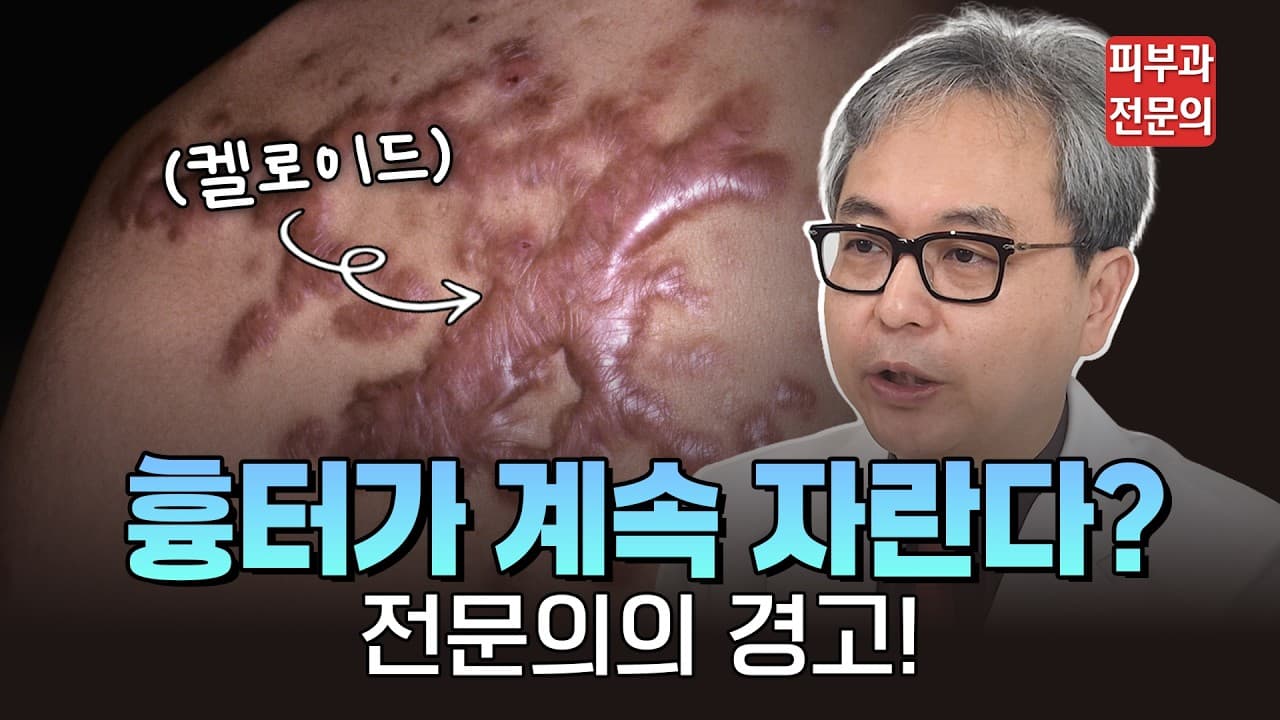
Why does a healed wound keep swelling? Early treatment to save time and money
Have you ever been surprised when a healed wound site gradually swelled and turned red? If left untreated, what might seem like a minor issue can quickly grow out of control – this is a keloid scar. Today, we'll clearly distinguish whether a scar is a simple scar or a keloid requiring urgent treatment, and we'll also cover actions that can worsen scars.
Do I have a keloid? 3 ways to distinguish between hypertrophic scars and keloids
To differentiate between a simple hypertrophic scar and a keloid, it's good to remember three main points:
- Scar Extent:
- If the scar merely protrudes upwards within the injured area, it can be considered a simple hypertrophic scar.
- However, if the scar grows beyond the original wound boundaries, it may be a keloid.
- Scar Color and Texture:
- Keloid scars tend to be redder and feel more rubbery and firm compared to hypertrophic scars.
- Associated Symptoms:
- It's good to remember that keloid scars often come with itching or pain as they grow.
Keloid Scars: Absolutely avoid these!
There are several actions keloid patients should absolutely avoid.
Do not pick at or irritate the scar area with your hands, as this can create secondary wounds. Once a scar forms, that area is prone to keloid formation, so avoiding new injuries is paramount.
Additionally, it's best to avoid unnecessarily creating wounds through ear piercing, body piercing, tattoos, etc. In particular, areas prone to keloids, such as the ears, jawline, chest, and shoulders, should be protected from intentional injury.
Why is early treatment important for keloid scars?
Keloid scars often continue to grow. Therefore, treating them when they are small yields better results and can save time and money. In other words, keloids are scars for which early treatment is crucial.
Keloid Scars: 3 daily life management tips
Lifestyle habits and aftercare are also very important for keloid scars.
- Compression Therapy:
- Applying scar ointments and silicone gels to compress the scar area and maintain moisture can help flatten the scar somewhat and reduce its further growth to a certain extent.
- Reducing Skin Tension:
- It's important to reduce the pulling force on the skin. Especially during the acute phase, when a keloid scar is growing or symptomatic, it's best to avoid exercises that stretch the skin around the keloid scar.
- Heat Management and UV Protection:
- Keloid scars can worsen when blood vessels dilate. Therefore, heat management is necessary, and alcohol or saunas, which dilate blood vessels, can have a negative impact on keloids.
- Also, for those sensitive to UV rays, consistently using sunscreen can help prevent pigmentation in the scar area.
Keloid treatment: Consistency is key
While some keloid scars disappear completely, this is not the case for everyone. First, setting realistic goals is important. Rather than aiming for 100% cure, if the scar is flattened and secondary symptoms like itching or pain are reduced, the treatment goal can be considered partially achieved.
Furthermore, injection or laser treatments often require multiple sessions. Consistent treatment can reduce recurrence and lessen symptoms, making consistency very important in keloid treatment and management.
Consult a keloid specialist before it's too late
Managing keloids early is the way to save time and money. We recommend consulting a keloid specialist about that scar that bothers you when you look in the mirror, before it gets any bigger.