
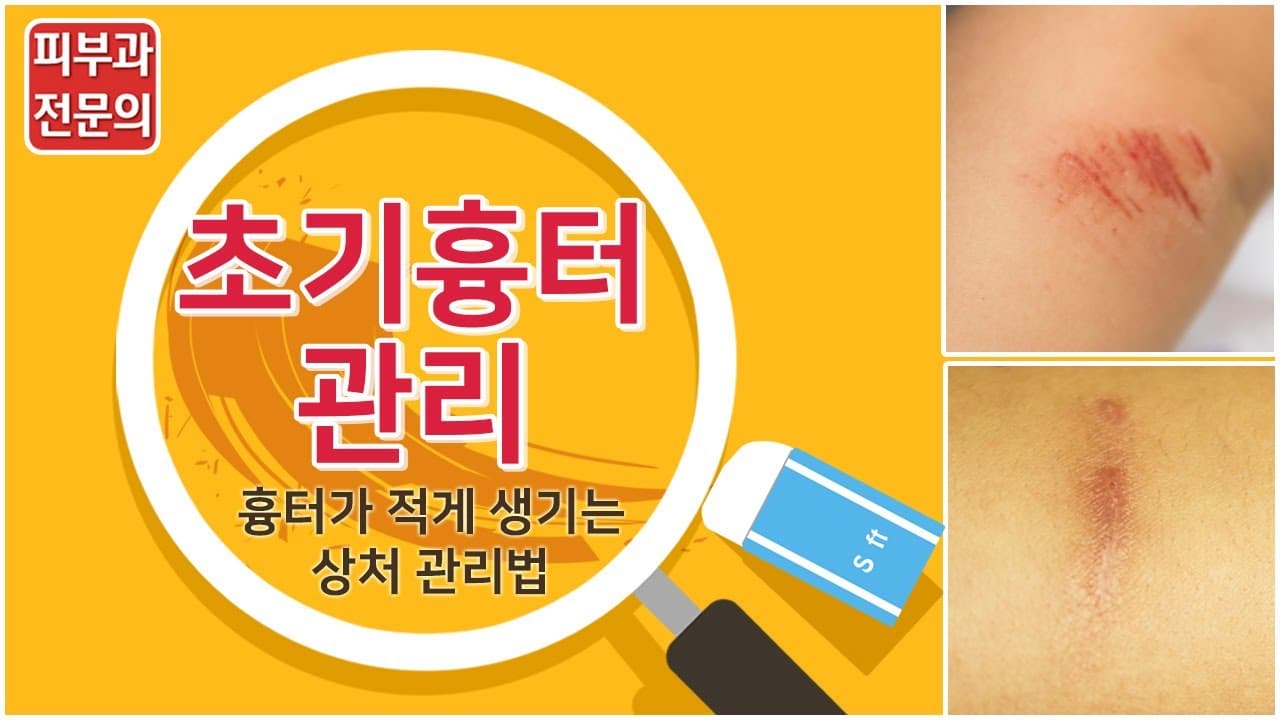
It's common to get minor or major injuries in daily life. Many people wonder how to minimize the scars that may remain after a wound heals. Today, we will delve into the process of how wounds turn into scars, initial management methods to leave fewer scars, and the golden time for managing red scars.
Why do scars form?
Scars occur when skin tissue is damaged beyond the upper layer of the dermis. If only the epidermis is damaged, almost no scar remains. The causes of scars are diverse.
- Trauma: External impacts such as falling or cutting
- Burns: Skin damage caused by heat
- Diseases: Skin damage due to viral infections, etc.
- Surgery: Cases where skin incision is unavoidable
Thus, any situation that causes damage to the skin can lead to scars.
Initial Wound Care Methods to Leave Fewer Scars
To minimize scars, proper initial wound management is very important. It can be broadly divided into two methods.
1. Protecting the skin from external damage
Appropriate initial response is needed depending on the cause of the wound.
- Burns: Since it is heat damage, it is important to cool the area under running water for about 30 minutes initially.
- Frostbite: The skin should be warmed to prevent further damage.
- Surgery: It is important to manage the sutures well to prevent the sutured area from stretching.
- Viral infection: Early drug treatment to quickly eliminate the virus can help wound healing and scar prevention.
2. Creating a good environment for wound healing
Creating an environment where the skin can heal well is also important.
- Maintaining a moist environment: Skin heals better in a slightly moist environment. Rather than letting the wound dry and form a scab, it is better to keep it moist using hydrocolloid dressings or similar products.
- Reducing tension (pulling force): For large wounds or surgical sites, tension, or pulling force, can be applied to the skin. If this tension is high, the scar is likely to be wider. Recently, methods using Botulinum Toxin injections or elastic tapes to reduce this tension are also being utilized.
- Overall health management: The body's health condition also affects wound healing. When a wound occurs, quitting smoking and drinking, and maintaining skin health through proper diet are very important for recovery.
What are the signs that a wound has healed?
The time it takes for a wound to heal varies depending on its size and depth. General wounds heal within 1-2 weeks, but deep wounds can take more than a month.
A healed wound means that the outer layer of the skin, the epidermis, has covered the damaged area. The easiest sign to recognize is that exudate no longer comes from the wound site. If the exudate stops, the wound is considered healed, and it now moves into the early scar stage.
Red Scars: Don't Neglect Them, Seize the 'Golden Time'!
In the past, it was often believed that there were no special treatments for the early scar stage (up to about 6 months) when a wound had healed and showed redness, so people would often wait. However, since the 1990s, various studies and attempts have revealed that active treatment during this period can greatly help prevent scars.
The period from when a wound heals until about 6 months can be called the golden time for scar treatment. During this period, appropriate treatment can prevent the scar from worsening and improve the final size and shape of the scar.
Red Scar Golden Time: What treatments are available?
Here are some representative treatments that can be applied during the golden time for red scars:
1. Topical treatments to keep the skin surface moist
Various products that help alleviate scars can be utilized. In particular, attaching scar-reducing tapes or sheets, such as silicone products like Scarfade or Cica-Care, to the red scar area can help reduce redness quickly and leave fewer scars.
Silicone products help prevent moisture loss from the scar area, keeping the skin moist, and contribute to regulating collagen production to prevent excessive scar elevation.
2. Laser Treatment
V-beam Laser and other vascular lasers play a role in suppressing the excessive formation of blood vessels in the scar area. This can be expected to prevent the scar from swelling and, to some extent, reduce the likelihood of the scar turning white later.
3. Injection Treatment
If the scar area begins to swell and has the potential to progress into a keloid or hypertrophic scar, injection treatment may be necessary at appropriate intervals. This helps suppress excessive scar growth and flatten it.
The red scar stage, from 1-2 weeks after a wound heals until about 6 months, is a very important period for preventing and improving scars. Actively managing and treating during this time can be the first step towards reducing scar worries and maintaining healthy skin.