
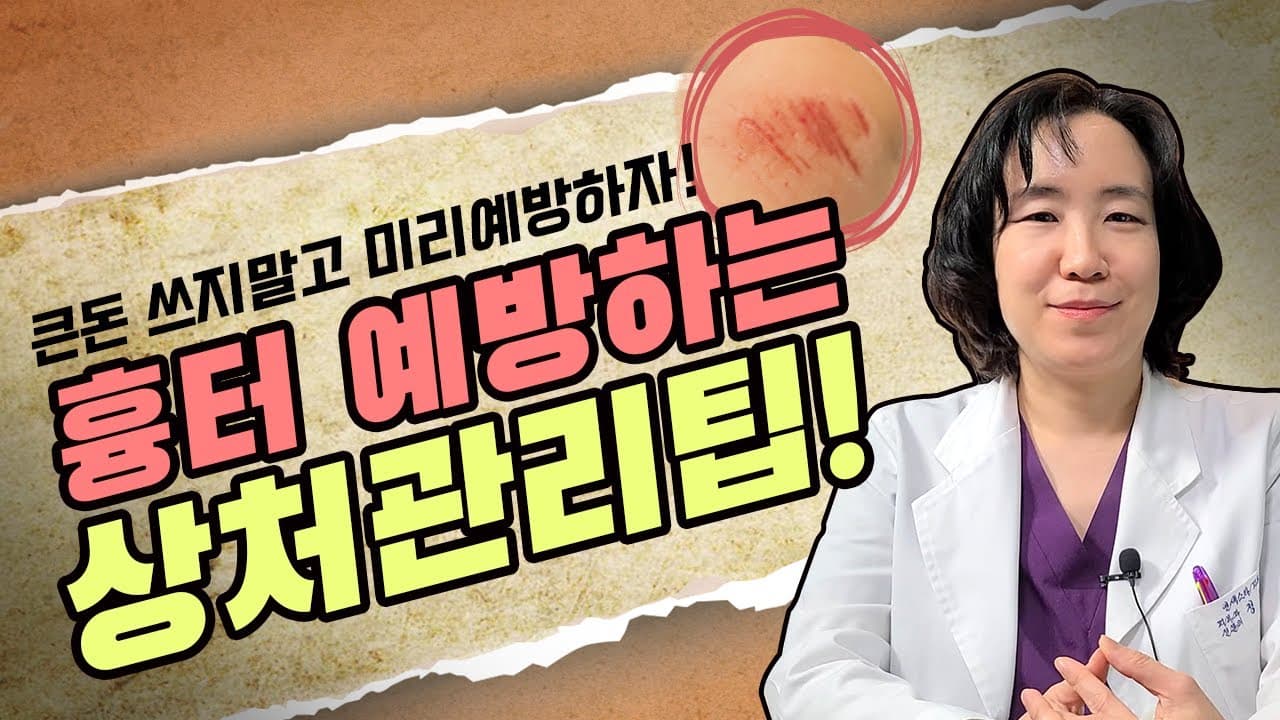
Everyone, are you worried about small scars appearing on your face or body? Most small wounds are treated at home. But did you know that incorrect wound care practices can actually worsen scars? Today, we will provide detailed information on initial wound treatment and management methods that many people are curious about.
Wound Disinfection: Less Can Be More
Using disinfectants like povidone-iodine (also known as Betadine) to prevent bacterial infection in the wound area is effective for preventing initial secondary infection and removing foreign substances.
However, repeatedly using disinfectants on clean wounds with no contamination or low risk of infection can actually slow down skin regeneration, as disinfectant components can be toxic to the skin.
For example, if a wound is caused by a clean knife or sharp plastic and no contaminants have entered, it is not advisable to repeatedly wipe it with disinfectant.
How Should Antibiotic Ointments Be Used?
Antibiotic ointments are used to prevent infection in the wound area. It is good to remember that they are not ingredients that directly speed up wound healing. They are used when the risk of infection is high, and it is not always necessary to apply the medicine before attaching a bandage.
Do Not Forcefully Burst Blisters
Many people intentionally burst blisters when a wound occurs. However, it is advisable not to burst them forcefully due due to the risk of infection. The skin on the upper part of the blister contains substances and plays a role beneficial for wound healing, so care should be taken not to forcefully open and cut off the 'lid'.
Especially for blisters caused by burns, the risk of secondary infection is high, so it is recommended not to burst them. Instead, soak a clean towel or gauze in saline solution to create a compress and then visit a hospital for examination. If necessary, the hospital may remove the clear fluid inside the blister with a needle to reduce pain or prevent the blister from spreading further.
Are Scabs Always Good?
It is easy to assume that scabs are a natural part of wound healing. A scab is a temporary crust that covers the skin as blood and exudate dry. While it plays a role in protecting the skin from within, a dried scab can hinder the proper function of the exudate that aids wound healing. It can also create an environment where regenerating cells struggle to survive, so it is not necessarily good to dry out a wound and form a scab.
Hydrocolloid Dressings: Correct Usage?
Hydrocolloid dressings protect the skin from external factors, and using them early in wound care instead of letting a scab form can yield good results. They help protect regenerating cells beneath the wound. If the dressing is not torn or contaminated, there is no need to change it too frequently.
However, when the dressing absorbs exudate and swells, it should be replaced. It is good to keep it on until new skin fills the wound, but continuous long-term use for two, three, or four weeks indefinitely should be discussed with a specialist, as prolonged use can weaken the skin.
Start Wound Care This Way
When you have a wound, it is good to manage it as follows to reduce the risk of infection:
- Remove Contaminants: Wash and remove as much contaminant as possible from the wound with clean water or saline solution. Carefully check for any foreign substances that could cause traumatic tattoos, such as thorns, wood fragments, asphalt, or metal particles.
- Tetanus Vaccination: For contaminated wounds, tetanus vaccination or tetanus immunoglobulin injection may be necessary depending on the type of wound.
- Apply Antibiotic Ointment: Afterward, apply an antibiotic ointment such as Fucidin or Madecassol to prevent secondary infection. This is recommended when the risk of infection is high.
- Use Hydrocolloid Dressing: Generally, using a hydrocolloid dressing is recommended to aid faster wound healing.
- Scar Prevention: Once the wound has healed and new skin has formed, there is no need to apply a bandage. After that, it is important to keep the wound area moist while preventing pigmentation or hypertrophic scars.
Today, we discussed appropriate initial treatment and management methods after a wound occurs. If you have any additional questions, please ask in the comments, and we will answer them. Thank you.