
The most common concern heard before laser tattoo removal is pain. When consulting about tattoo removal in the clinic, many people ask about the level of pain before the procedure itself. The degree of pain varies from person to person; some can tolerate it without anesthesia, while others say it's more painful than getting the tattoo. Therefore, we will explain why laser tattoo removal is painful and what preparations are needed to reduce the pain.
How Does Laser Tattoo Removal Work?
Laser tattoo removal works by breaking down pigment into tiny particles, which the body then naturally expels. When a laser is applied to the tattooed area, the pigment is fragmented, and macrophages, which act as the body's clean-up crew, consume these particles. During this process, the pigment particles burst, which can feel like a slight tearing sensation, and the laser's heat passing through the skin surface can also contribute to the pain.
Post-Procedure Burning Sensation is Due to Inflammation
The burning and redness in the treated area after a laser procedure are due to an inflammatory response to microscopic injuries. The laser creates very small injuries inside the skin, and this inflammatory response can cause pain or a rash. Quickly calming this inflammation is key to pain management.
Various Anesthesia Methods Can Reduce Pain
Several anesthesia methods are applied for tattoo removal, tailored to the situation. The most common method is applying topical anesthetic cream to the skin surface, but the cream only numbs the upper skin layers and may not penetrate deeply enough, so pain can still be felt.
- Topical Anesthetic Cream: The most basic method, reducing pain on the skin surface.
- Air Cooling: Cold air is applied to reduce pain and swelling simultaneously.
- Vibration Anesthesia: Vibration disperses pain signals.
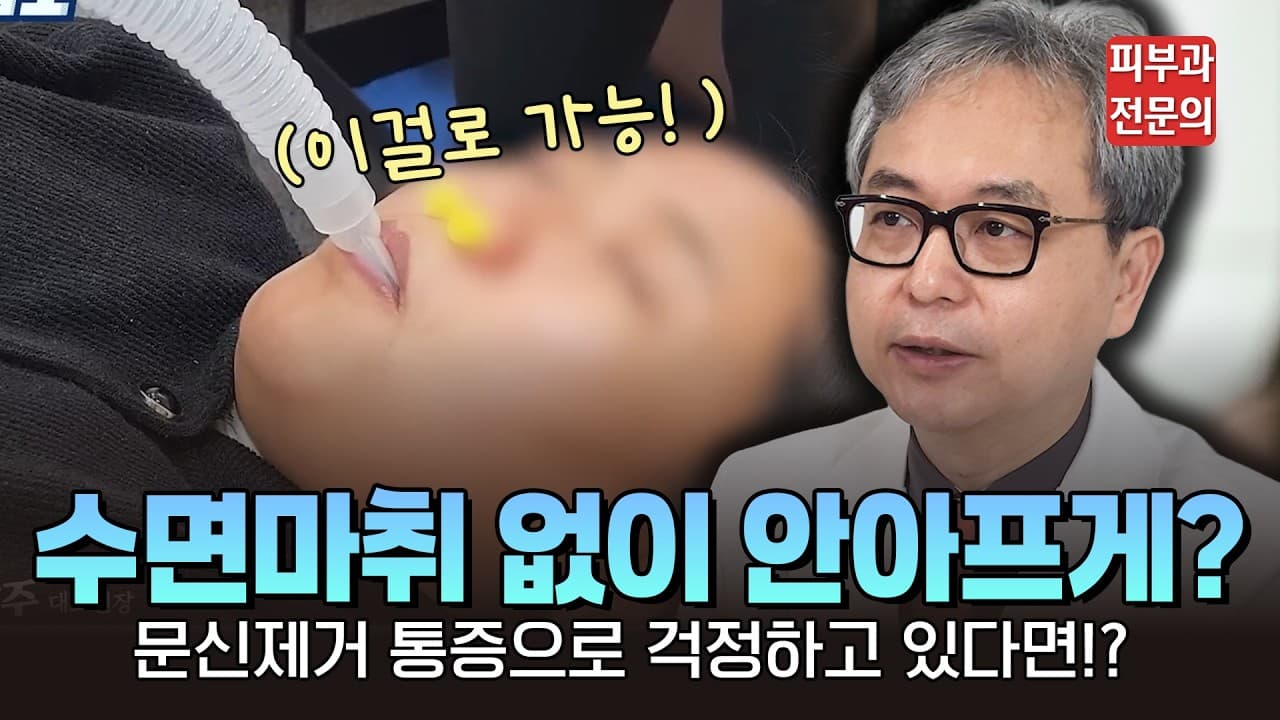
- Non-Sedative Low-Pain Nitrous Oxide Anesthesia: Oxygen and nitrous oxide are delivered via inhalation to reduce pain and anxiety while the patient remains conscious.
Non-sedative anesthesia has the advantage of allowing communication with the medical staff during the procedure. Nitrous oxide anesthesia is performed while the patient is conscious, enabling conversation with the medical staff during the procedure, which allows for more precise control of the treatment. No fasting or separate recovery time is needed before the procedure. In contrast, sedative anesthesia using propofol is necessary for major surgeries but can be burdensome for minor laser procedures due to difficulty communicating with medical staff.
Pain Varies Greatly by Body Area
Tattoo removal pain varies significantly depending on the body area. Skin thickness, nerve distribution, presence of fat and muscle, and proximity to bone all influence pain. Areas with many nerves or close to bone tend to be more painful, while areas with more fat and muscle are less painful.
- Areas with well-developed nerves, such as fingers and toes, are the most sensitive.
- The neck, ribs, and back of the hand have thin skin and many nerves, leading to strong pain.
- The wrists and ankles are close to bone, resulting in some pain.
- The shoulders and calves are tolerable due to underlying muscle.
- The forearms and thighs have thicker skin and more fat and muscle, making them relatively less painful.
Areas like the forearm, where tattoos are commonly placed, tend to have relatively less pain even if the area is large. We recommend consulting with us and planning your treatment rather than hesitating.
Factors Determining Pain and Preparation
Even for the same procedure, several factors determine pain. The patient's pain sensitivity, the amount of tattoo pigment, the color of the tattoo, the treatment speed, and the tattoo's location all play a role. Black or blue tattoos tend to cause more pain than red ones, and slower laser application can reduce pain.
Pre- and post-procedure home care is also important. Avoiding excessive alcohol the night before and ensuring adequate hydration to improve skin condition can reduce pain. After the procedure, apply cold compresses for about 24 hours to reduce inflammation, and avoid activities that raise body temperature, such as saunas or exercise, on the same day. After laser treatment, keep the skin moisturized with a regenerating ointment.
Results may vary individually, and accurate diagnosis and treatment are determined after consultation.
Written by. Dr. Sang-Joo Lee, Chief Director (Yonsei Star Dermatology) · Medical Staff Introduction · Last reviewed 2026-06-03