
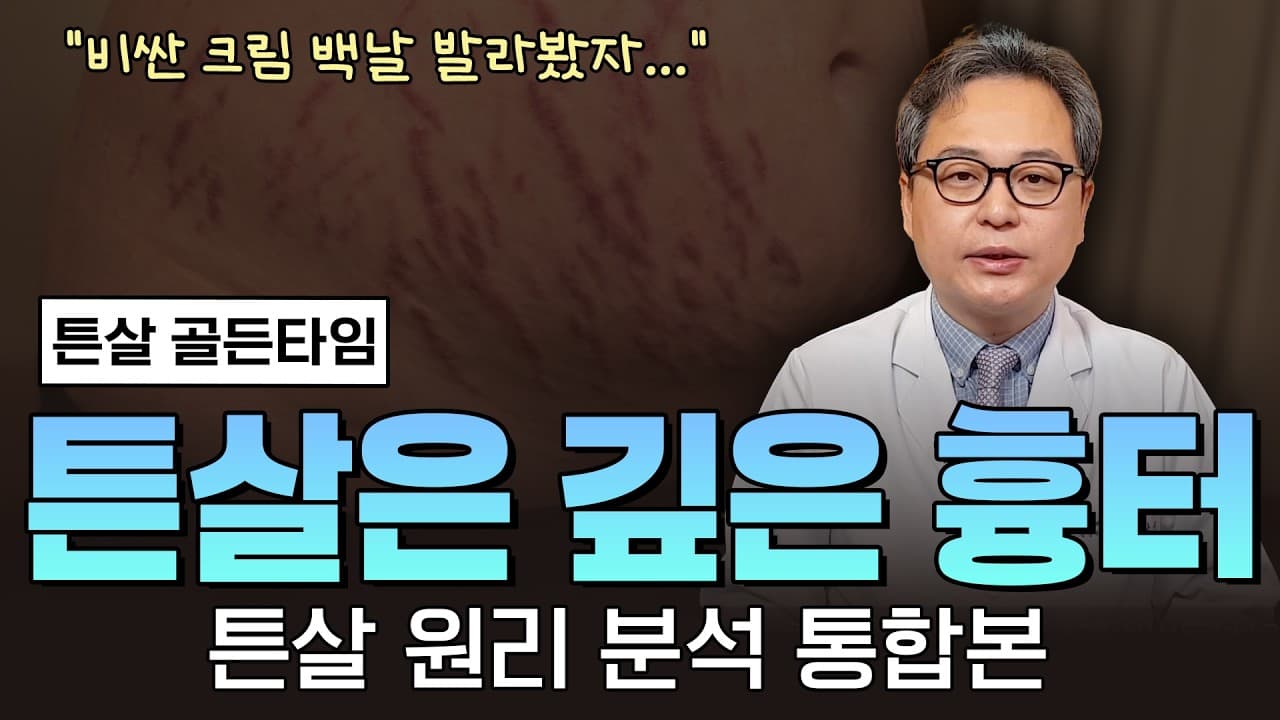
Stretch marks are not just simple skin discoloration; they are traces where the skin has torn because it couldn't keep up with growth speed. Medically, they are called striae distensae, and they commonly appear on the calves or thighs during rapid growth spurts in puberty, and on the abdomen after pregnancy and childbirth. They can also appear on the chest or back of individuals who suddenly build muscle. Many people in the consultation room ask, "I diligently applied cream, so why is it still the same?" The answer is that stretch marks are not a surface problem but a condition where the internal structure of the skin is damaged.
Why do stretch marks resemble scars?
Looking closely at stretch mark tissue, a structure similar to a scar is visible. This is because the collagen and elastin in the dermal layer rupture when the skin cannot withstand the stretching force, leaving a trace. Therefore, many people understand stretch marks as a type of scar, and that perspective is helpful when deciding on treatment.
Hormonal changes are also a major cause. Stretch marks are known to occur frequently during periods when steroid hormones in the body increase. Especially when steroid ointments are applied for a long time, or when steroids are taken for autoimmune diseases, stretch marks can appear throughout the body.
Red stretch marks and white stretch marks should be viewed differently.
Stretch marks are broadly divided into two types based on their color. This distinction is important because the treatment strategy changes.
- Red stretch marks: Primarily appear in the early stages and have a slightly pinkish hue. In the early stages, they may also appear bluish or blackish, which is because the skin is thin and underlying blood vessels are visible.
- White stretch marks: This is the state where red stretch marks have lost their color over time, usually turning white around 6 months. In some cases, they appear white immediately without a red stage.
White stretch marks are known to be more difficult to treat than red stretch marks. Therefore, early treatment, starting "when they are red," is very significant.
Why are creams and ointments alone insufficient?
Topical treatments certainly have a role, but they also have clear limitations. Ointments can be thought of in two main categories:
- Over-the-counter stretch mark creams primarily function as moisturizers. Rather than containing special ingredients, they are more about keeping the skin hydrated to prevent stretch marks to some extent.
- Medically proven is Vitamin A ointment. Applying it to stretch mark areas can prevent or improve them to some extent, but a prescription is required, and you must purchase it at a pharmacy after consultation.
We can say that ointment treatment has a limited role because its effectiveness is lower compared to lasers.
In other words, creams are in the realm of prevention and support, and their power to reverse deep stretch marks that have already formed is weak.
Laser treatment tailored to timing and color
Various methods have been attempted for stretch mark treatment, and recently, they have largely been categorized into three main approaches. Vitamin A ointment is used restrictively due to its limited effectiveness and potential for erythema or stinging. Methods that stimulate the skin with fine needles are being used less in dermatology clinics due to concerns about pain and bleeding. Therefore, the current focus is on lasers.
For red stretch marks, vascular lasers are used. Treating them in the early red stage can prevent them from hardening into white stretch marks or restore them closer to their previous state. This is based on the same principle as treating red scars.
For white stretch marks, fractional lasers are often used. Ablative fractional lasers are known to be more effective than non-ablative ones, and powerful lasers among them show good results. Many people believe that old white stretch marks cannot be treated, but this is a misconception based on past experiences where ointments, needles, or peels were ineffective. By forming new collagen to make them resemble the surrounding skin, a significant portion of white stretch marks can also be restored.
Post-pregnancy stretch marks and repeated treatments
Stretch marks that appear after childbirth are characterized by their wide and deep size. Not only the stretch mark area but also the collagen in the surrounding skin is denatured, so stretch mark treatment alone cannot fully restore them. In such cases, it can be helpful to treat the stretch marks themselves while also performing radiofrequency treatment to regenerate collagen, including the surrounding skin.
For white stretch marks, changes may be visible even after a single fractional laser treatment, but repeated treatments can accumulate regeneration, leading to better results. It is better to approach it gradually, in line with the skin's recovery process, rather than trying to finish it all at once.
Results may vary by individual, and accurate diagnosis and treatment will be determined after consultation.
Written by. Dr. Sang-Joo Lee, Medical Director (Yonsei Star Dermatology) · Medical Staff Introduction · Last reviewed 2026-06-04