
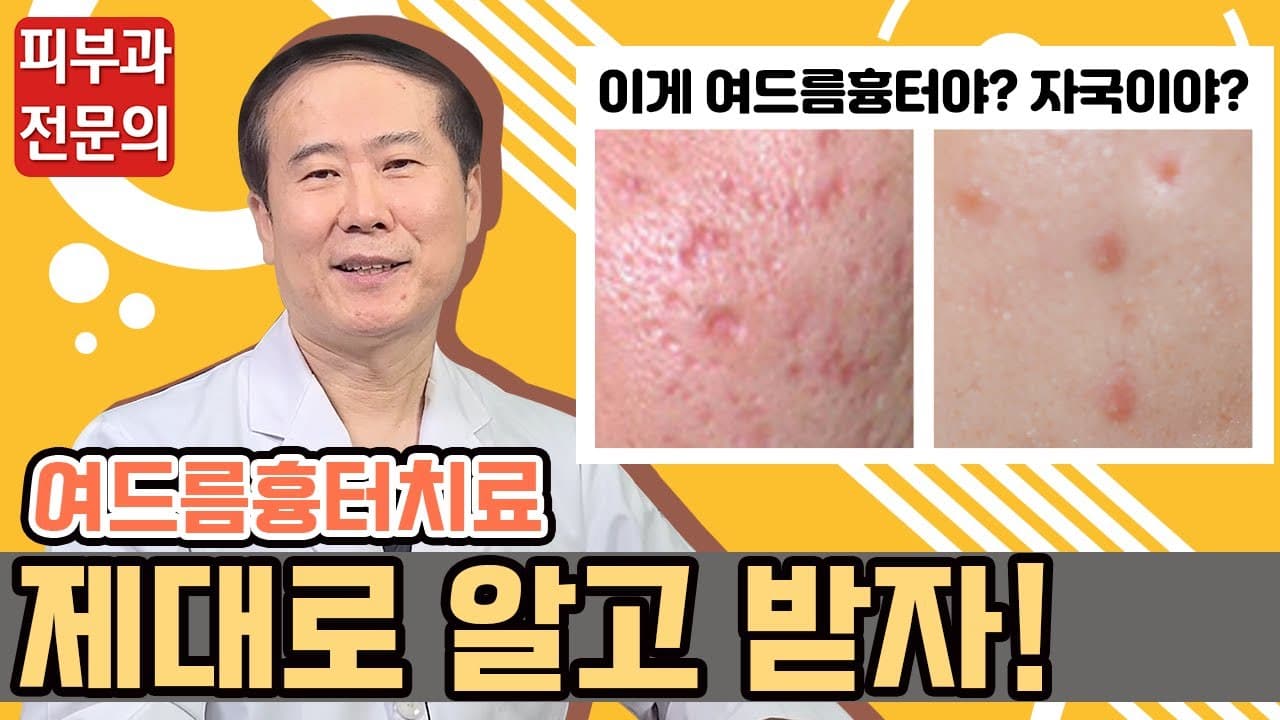
With the dry and cold weather continuing and large temperature differences between indoors and outdoors, many people are paying more attention to skin health these days. Especially in winter, when the skin tends to become sensitive, skin troubles can worsen, and scars are likely to remain. Recently, there has been an increase in acne occurring on sensitive cheeks and chin due to mask-wearing. If you have experienced skin troubles due to winter acne, early treatment before scars or acne marks appear is most effective. However, if acne scars have already formed, appropriate treatment tailored to your skin condition is necessary. Today, we will take some time to answer various questions about acne scar treatment.
Why do acne scars form?
Many people believe that acne scars are caused by picking at them with their hands. While touching or squeezing acne with your hands can worsen scars, a more important cause is severe and prolonged inflammation due to acne. As inflammation persists, fibrosis of the dermis progresses, leading to scar formation.
How do acne scars and acne marks differ?
It is important to clearly understand whether what is on your face is a scar or a mark. Both acne scars and acne marks can be considered sequelae of acne. Especially in the case of inflammatory acne, it often leaves behind acne marks and scars.
What are acne scars?
Acne scars are scars that form as inflammation due to acne persists, leading to fibrosis of the dermis. They appear as pitted or uneven skin.
What are acne marks (acne erythema)?
What you commonly know as acne marks is medically referred to as acne erythema. This refers to the symptom where the skin remains red in the area where acne has subsided. Acne erythema is a state where fibrosis has not yet fully progressed, and inflammation due to acne still remains. As a general characteristic of inflammation is vasodilation, it appears red. If inflammation persists for a long time, it can eventually lead to scars, so it can be considered an early stage of scarring.
Also, depending on one's constitution, in addition to red marks, brown secondary hyperpigmentation may occur after inflammation. Acne erythema often disappears on its own over time if the inflammation is not severe, but in cases of severe inflammation, red marks can persist for a long time and eventually progress to pitted scars.
In the early stages of acne, most are acne marks. At this time, appropriate treatment can largely prevent progression to acne scars.
When is the best time to treat acne scars?
The most important aspect of acne scar treatment is early treatment. The sooner you treat it, the more scars you can prevent. Once acne scars have formed, treatment is possible at any time, regardless of the timing.
However, if acne continues to occur, additional acne scars may form, so as mentioned earlier, concurrent acne treatment is important. If the inflammation is severe or chronic, both scars and acne marks may be present simultaneously. In such cases, it is advisable to treat the acne marks first, and then treat the pitted scars.
What are the treatment methods for acne scars?
Acne scar treatment is one of the most challenging treatments in dermatology. Fractional laser is one of the most famous lasers, but it is common for treatment to not be effective even after more than 10 sessions. Especially severe acne scars are considered very refractory. Therefore, prevention is most important for acne scars.
If acne scars inevitably remain, long-term treatment is required, and all possible methods should be utilized.
- General treatment methods: Laser treatment using Fraxel or similar fractional lasers
- Special methods: Surgical treatments such as Subcision, Dot Peeling, and laser dermabrasion
Depending on the severity of the scar, laser treatment alone may be helpful for mild cases, but for severe cases, combined treatment of laser and surgical methods is more effective than laser treatment alone. In very severe cases, laser dermabrasion may also be considered.
Treatment intervals vary depending on the intensity of the laser and procedure. Typically, Fraxel or similar fractional lasers are performed at one-month intervals, surgical treatments at two-month intervals, and laser dermabrasion at six-month intervals. After the procedure, it is important to apply sunscreen diligently and protect the skin from external stimuli.
No matter how well scar treatment is performed, it is difficult to restore the skin to 100% normal condition. It is advisable to set the treatment goal at 50-80% improvement compared to the current state.
Is scar treatment possible while taking acne medication?
Some people who are taking acne sebum control medication hesitate or worry about the impact on laser treatment or scar treatment. Taking acne medication while receiving scar treatment generally does not pose a significant problem. On the contrary, it can be an advantage by reducing the possibility of new acne outbreaks and allowing you to focus solely on scar treatment.
However, symptoms such as photosensitivity and dry skin, which are side effects of acne medication, should be considered. In particular, medications like Isotretinoin, if taken long-term, can reduce sebum secretion, leading to dry skin and mucous membranes. Therefore, for those with severe dryness and redness, we recommend Photodynamic Therapy (PDT), which can be treated without medication.
What is the core of acne scar treatment?
The core of acne scar treatment is to focus on preventing inflammatory acne, which is the root cause. If inflammatory acne is not properly treated or is neglected, various symptoms will follow. Depending on how acne is controlled when it occurs, acne scars may or may not develop. Therefore, acne scars can be said to depend entirely on acne control.
Furthermore, acne scars are mostly a mixture of different depths, so it is necessary to perform combined treatment that combines laser and procedural treatments. This can enhance the treatment effect by simultaneously treating not only deep scars but also various localized large and small scars. In other words, because it is necessary to apply the appropriate laser and treatment method considering the size and area of the scar, as well as the skin condition, it is most important to receive treatment from a skilled dermatologist.