
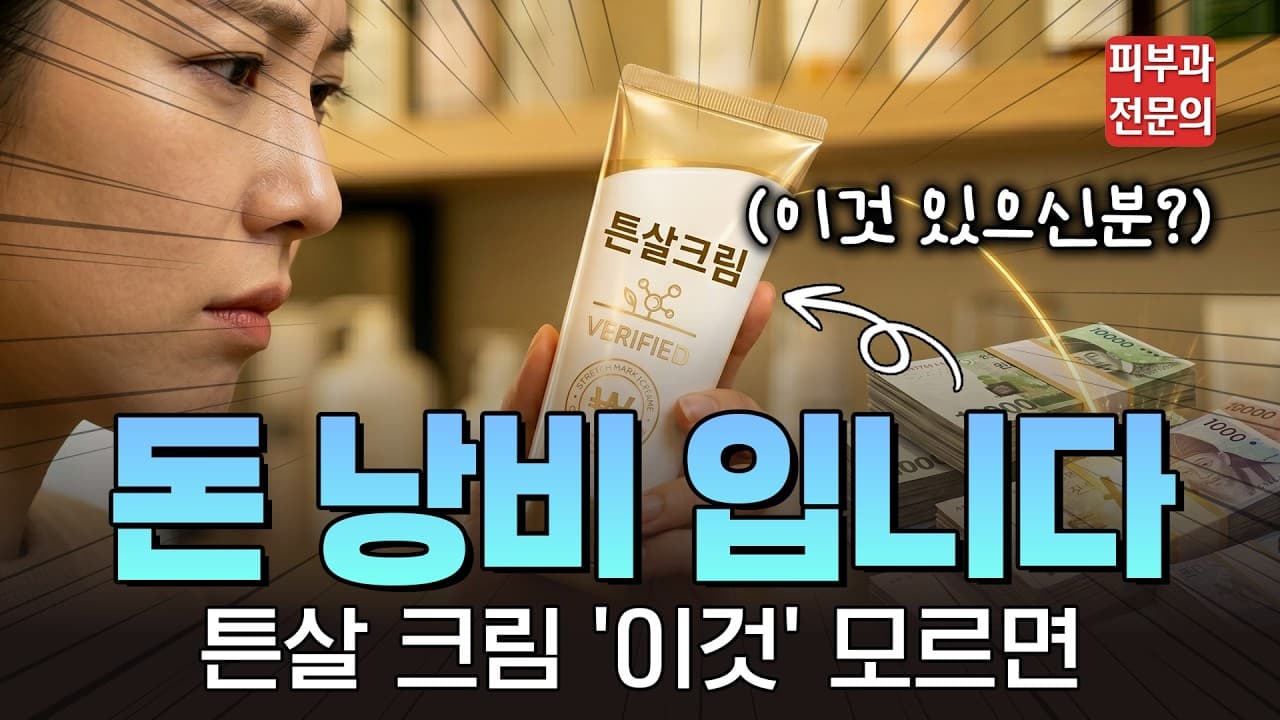
Many people expect stretch marks to disappear if they just apply stretch mark cream diligently. However, many find that when they actually use it, the effect seems ambiguous. As someone who has observed and researched stretch marks for 20 years, I will honestly explain the actual role and limitations of stretch mark creams.
Why Do Stretch Marks Occur?
Stretch marks occur when the skin cannot keep up with the rate of growth. During adolescence, as height increases and weight gains, the skin suddenly stretches, and the dermis tears, leaving stretch marks.
- Calves and thighs as height increases
- Areas where the buttocks grow larger
- Back area when male students suddenly grow taller
- Breast area for female students
The location and extent can vary from person to person depending on individual body characteristics.
Stretch Mark Creams Are Essentially Moisturizers
The effect of stretch mark creams is mostly moisturizing. Stretch marks are a type of scar formed when the dermis sinks, making improvement difficult with only topical ointments. Creams are classified as cosmetics and can hydrate the surface of the skin, but they cannot act on the deep dermal layer.
Dry skin is more prone to stretch marks, so focusing on moisturizing can help slow early progression.
However, this only helps reduce newly forming stretch marks; it does not eliminate existing ones.
Functional Claims Indicate Alleviation, Not Treatment
In 2017, as the Ministry of Food and Drug Safety expanded cosmetic categories, it became possible to label products as helping to alleviate red lines of stretch marks. If you read carefully, it is alleviation, not treatment. Functional cosmetics are a classification somewhere between cosmetics and pharmaceuticals; while they are not ineffective, they are clearly weaker than medication. If you use them, it is more realistic to expect them to slow the progression of early red stretch marks rather than white ones.
What Is Needed for Existing Stretch Marks?
Once stretch marks have formed, treatments that fundamentally improve them, such as lasers or radiofrequency, are necessary. For red stretch marks, lasers that act on blood vessels are used, and for stretch marks that have turned white over time, appropriate lasers are used. After the procedure, it takes about 2-3 weeks for dead skin cells to shed, so it may be more convenient to schedule during school breaks.
It is best to treat them early. Addressing red stretch marks early can partially prevent their progression, and there is some potential to reverse existing stretch marks to a certain extent.
Cream vs. Oil: Which Is Better?
Creams and oils are merely differences in formulation. You can choose what suits your preference in terms of spreadability or texture. I have not found evidence in the papers I've reviewed suggesting one is significantly better than the other.
There are also products available as medication. For example, retinoid-based ointments have been reported to stimulate dermal fibroblasts, aiding in collagen production. However, they can cause irritation, so the appropriate dosage must be followed, and they should not be used during pregnancy or breastfeeding.
Advertisements on social media that claim to completely eliminate existing stretch marks should be regarded as exaggerations. Dermatology specialists do not advertise specific products in this manner.
Results may vary by individual, and accurate diagnosis and treatment are determined after consultation.
Written by Dr. Lee Sang-joo, Chief Director (Yonsei Star Dermatology) · Medical Staff Introduction · Last reviewed 2026-06-03