
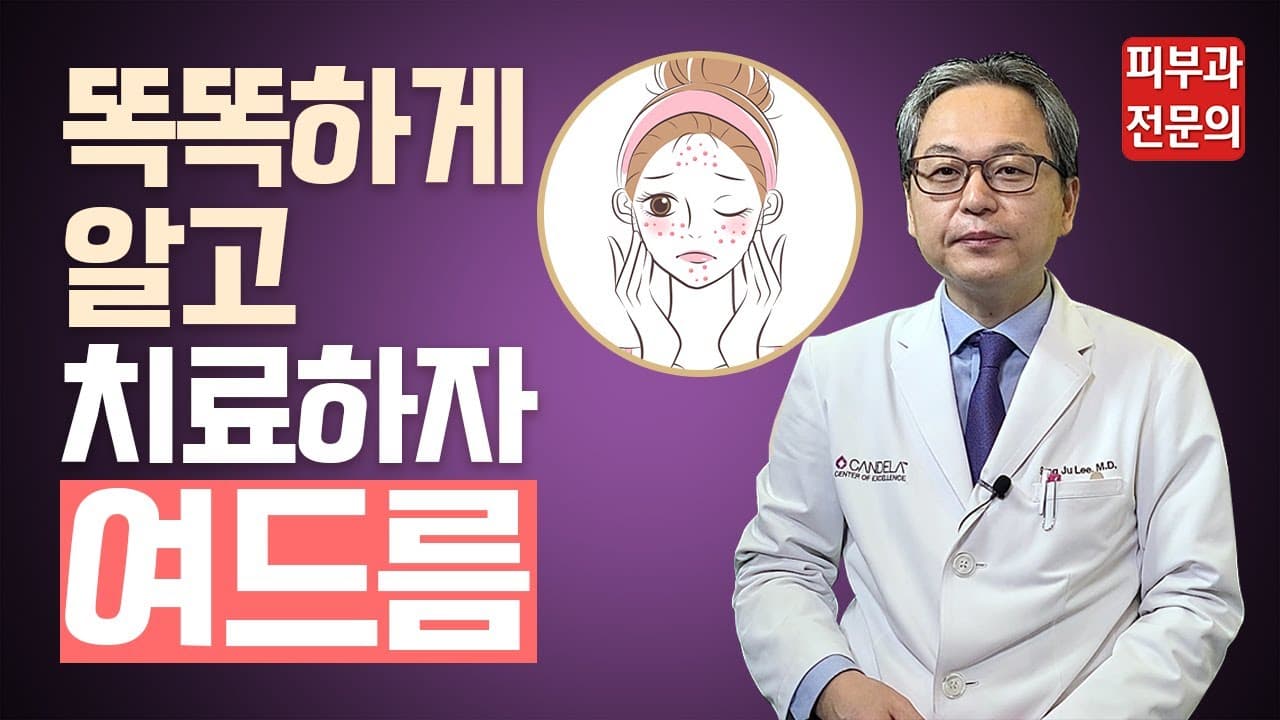
Hello, I am Lee Sang-ju, a board-certified dermatologist. Acne is a common skin condition in dermatology, but if not treated properly and in a timely manner, it can lead to permanent scars. Especially during adolescence, when interest in appearance is high, acne can lead to social phobia or depression, causing significant problems. Therefore, it is very important not to ignore acne and to receive appropriate early treatment to prevent scarring. Today, we will take the time to accurately understand why acne occurs and the characteristics of its symptoms.
Why Does Acne Occur? (4 Mechanisms of Acne Development)
The mechanisms by which acne occurs can be broadly divided into four categories.
- Hormonal Changes: Hormonal changes during specific periods, such as adolescence, lead to active sebum secretion.
- Excessive Sebum Secretion: Sebum originally forms an oily film on the hair or skin surface to keep the skin moisturized. However, on the face, it is known to only form an oily film, and excessive secretion of this sebum is the first cause of acne.
- Pore Clogging: When dead skin cells accumulate at the pore opening and block the pores, sebum cannot exit and accumulates inside, leading to the formation of comedones.
- Acne Bacteria Proliferation and Inflammation: Acne bacteria feed on the sebum trapped inside the pores, causing secondary inflammation and leading to acne.
Characteristics of Acne by Age Group
Acne tends to appear slightly differently depending on age.
Neonatal Acne
Neonatal acne appears due to the influence of maternal hormones and usually disappears naturally over time.
Adolescent Acne
Adolescent acne typically starts in the T-zone (forehead, nose), where sebum secretion is most active, and then spreads to both cheeks and the jawline. It mainly appears before the age of 20.
Adult Acne
Acne is classified as adult acne based on the age of 25. The overall mechanism of occurrence is similar to adolescent acne, but menstrual cycles, stress, lack of sleep, and improper makeup habits can also play a role. Adult acne is often more challenging to treat than adolescent acne.
It particularly occurs frequently around the mouth and jawline, where sebaceous glands are fewer. Acne in these areas is even more difficult to treat and has a higher likelihood of leading to scars, making early treatment crucial.
Difference Between Comedonal Acne and Inflammatory Acne
The most basic unit of acne is called a comedone. We can broadly categorize acne into inflammatory acne and comedonal acne.
- Inflammatory Acne (Red Acne): This form appears red due to inflammation caused by the proliferation of acne bacteria. Inflammatory acne is prone to scarring and can worsen if not treated early, so it is advisable to receive treatment as soon as possible.
- Comedonal Acne (Non-inflammatory Acne): This is an early stage of acne without inflammation, where pores are blocked and sebum accumulates, appearing as small bumps. These comedones can develop into inflammatory acne.
Conditions Easily Confused with Acne
Generally, acne is often considered a simple skin problem, but there are many conditions that can be mistaken for acne.
In particular, acne can be caused by gynecological conditions such as polycystic ovary syndrome, and conditions like demodicosis, rosacea, and seborrheic dermatitis appearing on the face also show symptoms similar to acne. These conditions are generally difficult to distinguish without an experienced dermatologist.
Importance of Accurate Diagnosis and Early Treatment
If conditions similar to acne are misdiagnosed and treated incorrectly, acne can worsen or lead to unwanted scars. Therefore, it is very important to consult a board-certified dermatologist as early as possible for an accurate diagnosis and to receive appropriate acne treatment tailored to each individual.
Today, we have looked at the mechanisms of acne, its various types, and why it is important to seek treatment from a board-certified dermatologist. Please remember that acne is not just a simple skin problem, but a condition that requires proper management.