
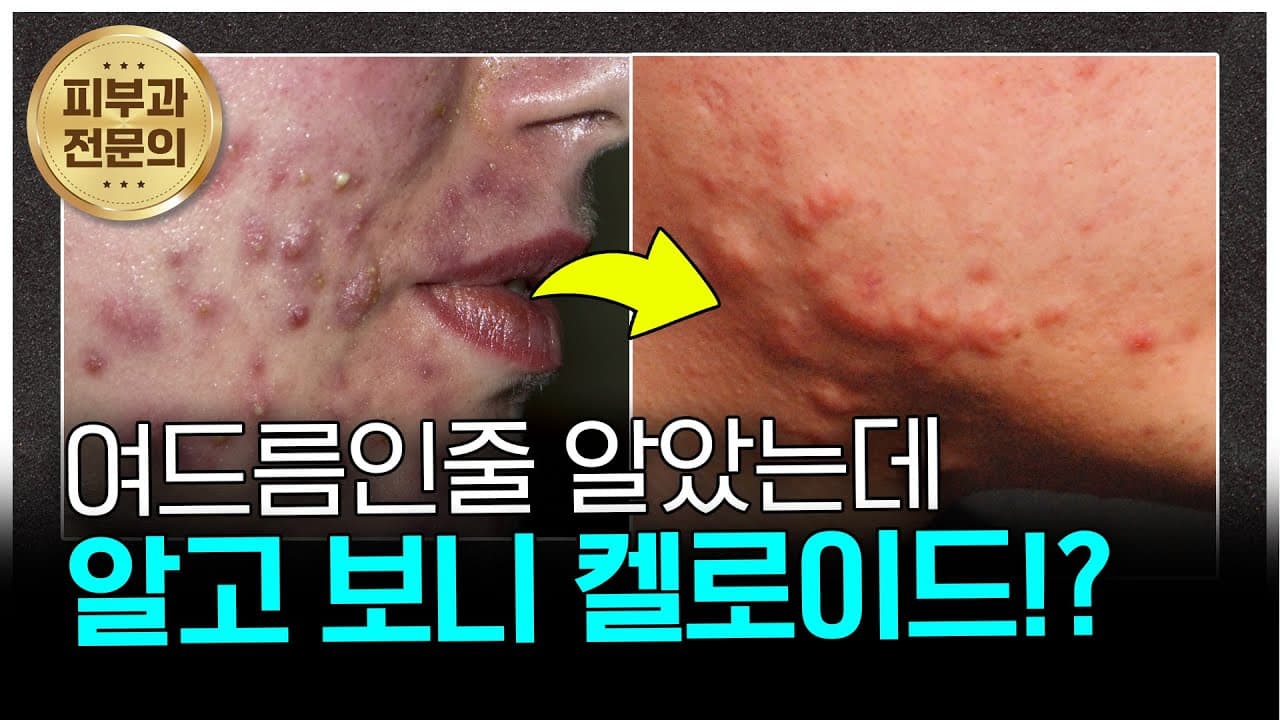
Hello. I am Dr. Sang-ju Lee, a board-certified dermatologist. Have you ever seen a lesion on your jawline or chest that doesn't disappear for a long time, hardens, and appears swollen? It's easy to mistake it for simple acne, but it could actually be a keloid scar. Especially in areas with high skin tension, such as the jawline or chest, keloids are prone to develop during the regeneration process of the dermis damaged by inflammation. Today, we will learn more about keloids, which are often mistaken for acne.
I thought it was acne, but could it be a keloid?
Keloid refers to a scar where collagen abnormally overproliferates during the wound healing process, growing beyond the original wound site into the surrounding area. If you have a keloid predisposition, even small injuries can cause your skin to swell. Acne is also a type of skin injury, so if acne occurs in a specific area and you have a keloid predisposition, it is possible for it to lead to a keloid scar.
How are acne and keloids different?
Although they may look similar on the surface, acne and keloids are fundamentally different conditions. Let's look at two major differences:
- Persistence and pattern of change:
- Acne: An inflammatory condition that initially appears red but usually subsides within 1-2 weeks, or a few months at most.
- Keloid: Once formed, it does not disappear on its own; instead, it tends to grow larger or remain the same.
- Texture:
- Acne: Not as hard as a keloid.
- Keloid: Feels very hard, like rubber or stone, when touched.
- Accompanying symptoms:
- Keloid scars often cause itching or pain when they grow in size or worsen.
Is keloid treatment really necessary?
Keloids are recommended for active treatment not only for cosmetic reasons but also medically. Many people feel uncomfortable, especially when they appear in frequently exposed areas like the chest, when wearing short clothes or in summer. More importantly, if keloids are left untreated, they can grow larger over time. Therefore, it is best to treat them early if possible.
Since keloids are scars, not simple inflammation, they require a different approach than acne treatment. While inflammatory acne is treated with antibiotics or sebum regulators, keloids require a combination of laser and medication treatments suitable for scars.
How can I tell if I have a keloid predisposition?
In most cases, it is difficult to know in advance if you have a keloid predisposition. However, if a keloid has occurred once, it suggests that you have a keloid predisposition. In such cases, there is a high possibility that keloids will recur not only with acne but also with other skin injuries, so caution is necessary.
Lifestyle habits for keloid prevention
If the skin is not injured, the likelihood of keloid formation is low. Therefore, the following preventive efforts are important:
- Avoid unnecessary skin injuries: It is best to avoid intentionally injuring the skin, such as with tattoos.
- Early acne treatment: Acne is also a type of skin injury. If inflammatory acne recurs, receiving prompt and appropriate treatment to prevent it from leading to scars is the most important way to prevent keloids.
We have discussed keloids caused by acne. If inflammatory acne recurs, it is important to receive a professional diagnosis and appropriate treatment to prevent it from leading to keloid scars. If you have any questions, please consult a board-certified dermatologist at any time.