
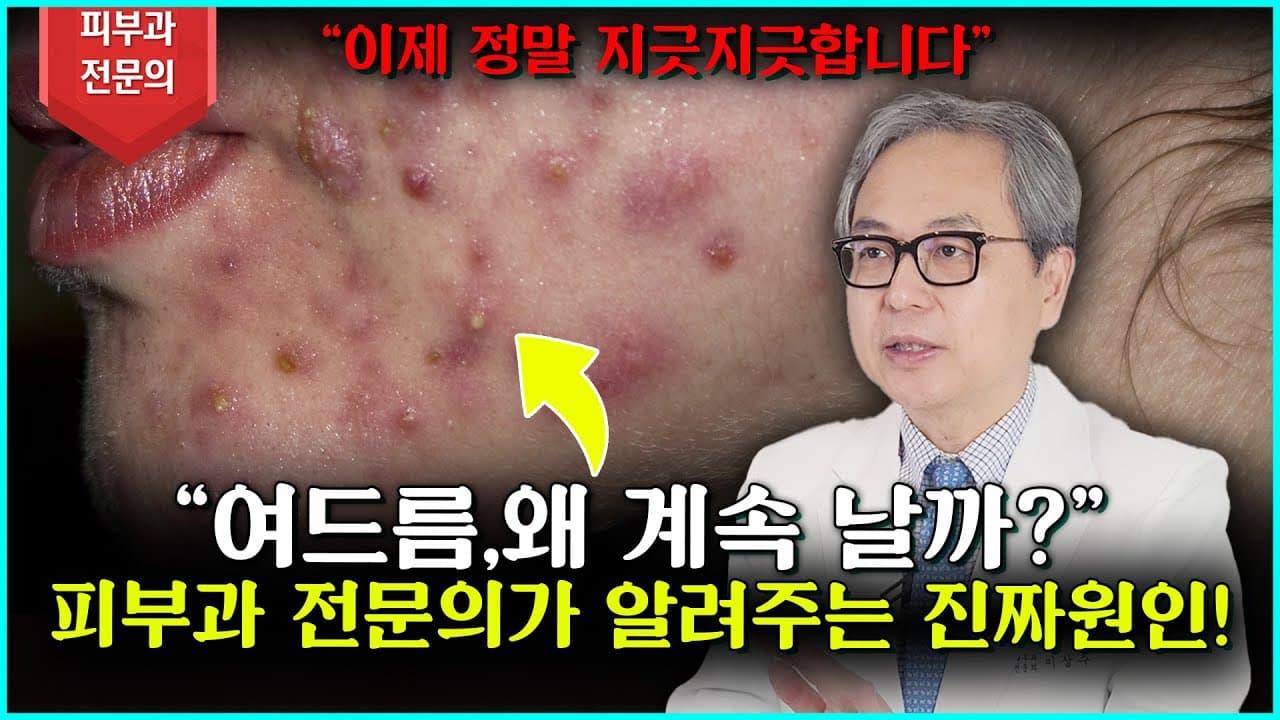
Hello, I am Dr. Lee Sang-ju, a dermatologist at the Skin Concern Counseling Center. Today, I'd like to talk about adult acne, a chronic concern for many. Acne is no longer just a problem for teenagers; it often troubles us even as adults. If you've wondered why you get acne and how to get rid of it completely, this article will be helpful.
Is acne primarily caused by hormones?
Generally, acne is deeply related to hormones. Hormones stimulate the sebaceous glands, which are the main cause of acne, increasing sebum secretion, which then leads to acne.
Differences in acne breakout areas by age group
Acne primarily appears in different areas depending on age.
- Adolescence: Acne begins to appear in the T-zone, where sebaceous glands are well-developed.
- Adults (after age 25): Acne frequently occurs in the U-zone, jawline, and around the mouth.
This phenomenon is due to differences in how sebaceous glands respond to acne-causing hormones at different ages. Occasionally, there are claims online that acne in specific areas indicates problems with certain organs, but this is not related to any particular disease; it merely indicates areas where acne commonly appears at that age.
Why is adult acne increasing?
Acne, which used to primarily occur during puberty, has recently seen a significant increase in adult-type acne after the age of 25. In particular, adult acne often appears in people in their 30s, 40s, and even after 50.
This phenomenon can occur when androgens, which cause acne, increase, or when sensitivity to androgens rises. Even older individuals can experience acne in the following cases:
- Excessive stress
- Use of pore-clogging cosmetics
- Hormonal issues
- Specific diseases
If you experience a lot of acne in your 50s compared to others, it is important to visit a dermatologist to find the exact cause.
What are the treatment methods for acne?
The purposes of treating acne are diverse, but the most important thing is to prevent acne from leading to scars, by stopping acne, which is the seed of scars, in advance.
1. Medication Treatment
- Antibiotics: Long-term use may lead to reduced effectiveness and potential resistance issues.
- Sebum regulators: With less concern about resistance, sebum regulators can be considered if acne recurrence needs to be prevented or if long-term use is necessary.
2. Recurrence Prevention Treatment
There are two main ways to prevent acne recurrence:
- Long-term use of sebum regulators: Long-term, high-dose use of sebum regulators can help reduce acne recurrence.
- Sebaceous gland destruction treatment: Using various laser devices or methods like Gold PTT to destroy sebaceous glands can help reduce the sebaceous glands, which are the cause of acne, thereby preventing recurrence to some extent.
Will adult acne eventually disappear?
If treatment is stopped, acne may not disappear quickly. However, acne tends to decrease in frequency with age compared to the past. Even if acne was severe during adolescence, the overall frequency is known to decrease in adulthood, although the areas may differ slightly. Therefore, it is possible that adult acne may naturally disappear as one gets much older.