
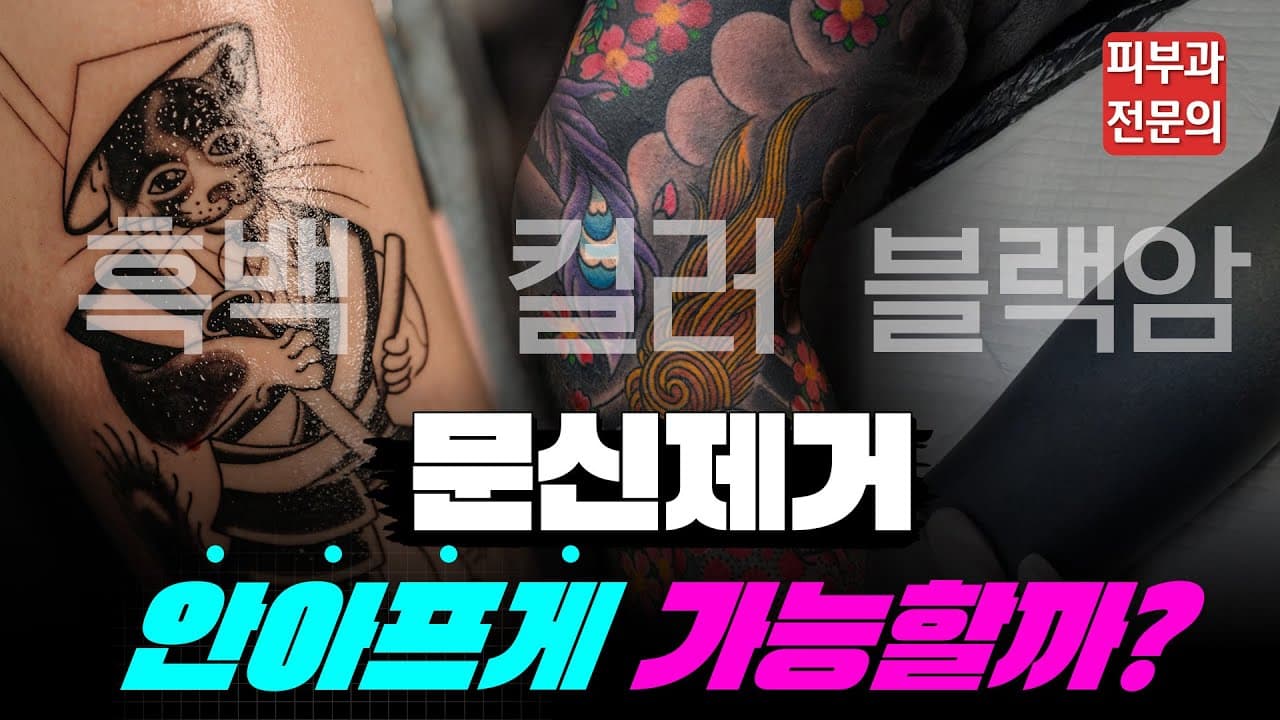
Hello, I am Dr. Sang-ju Lee, a dermatologist. When removing tattoos with a laser, many people's biggest concern is the pain during the procedure. The degree of pain varies greatly from person to person; some may feel that the procedure is possible without separate anesthesia, while others say it is much more painful than getting the tattoo. Today, we will explore why laser tattoo removal is painful and whether there are ways to remove tattoos without pain.
Why is tattoo removal painful?
Laser tattoo removal works by irradiating the tattooed area with a laser to break down the pigment into tiny particles. These fragmented pigments are then eliminated by our body's macrophages. During this process, as the laser breaks down the tattoo pigment, you may feel a slight 'stinging' sensation as the tattoo particles burst. Additionally, since lasers use heat, the laser light passing through the skin surface generates heat, which is also related to causing pain.
Pain may also occur after the procedure. Some people feel a burning and painful sensation in the treated area after laser treatment, which is due to microscopic injuries inside the skin. This inflammatory response to such injuries can cause pain, swelling, and red rashes.
How can we reduce pain during tattoo removal?
Since many people complain of pain during tattoo removal, we apply various anesthesia methods.
Topical Anesthetic Cream
The most commonly used method is applying Topical Anesthetic Cream to the skin surface. Topical Anesthetic Cream reduces pain on the upper skin, but it cannot penetrate deep into the skin, so deep pain may still be felt.
Air Cooling System
One method widely used in the West is the air cooling system, which blows cold air onto the skin to reduce pain and swelling in the area.
Is sleep anesthesia necessary for tattoo removal?
Sleep anesthesia involves administering sleep anesthetics like propofol to completely eliminate consciousness and induce sleep. While necessary for major surgeries, it can pose some risks for relatively minor procedures like laser treatments. For example, communication with medical staff during the procedure can be difficult, potentially leading to safety risks.
'Non-sleep low-pain nitrous oxide anesthesia' – awake but with reduced pain
Recently, non-sleep low-pain nitrous oxide anesthesia, a safe anesthesia method that can significantly reduce pain while the patient remains conscious without inducing sleep, has been used. This method delivers oxygen and nitrous oxide through respiration.
Non-sleep low-pain nitrous oxide anesthesia is an FDA-approved anesthesia method. In developed countries like the United States, it has long been used not only in dermatology but also in pediatrics, dentistry, and birthing centers to alleviate pain for those who cannot undergo sleep anesthesia or for children sensitive to pain. Its anesthetic effect and safety are proven, allowing for peace of mind during the procedure.
What are the advantages of non-sleep low-pain nitrous oxide anesthesia?
Non-sleep low-pain nitrous oxide anesthesia offers several advantages compared to sleep anesthesia.
- It allows for a more comfortable procedure by reducing pain, fear, and anxiety while the patient is conscious.
- Communication with medical staff is possible during the procedure, enabling more precise and safe treatment.
- There is no need to fast before the procedure, unlike with sleep anesthesia.
- No separate recovery time is needed, allowing for an immediate return to daily life, including driving, after the procedure.
We have explored various methods for removing tattoos without pain. If you are concerned about pain during tattoo removal, please consult with medical staff to choose the anesthesia method suitable for you.