
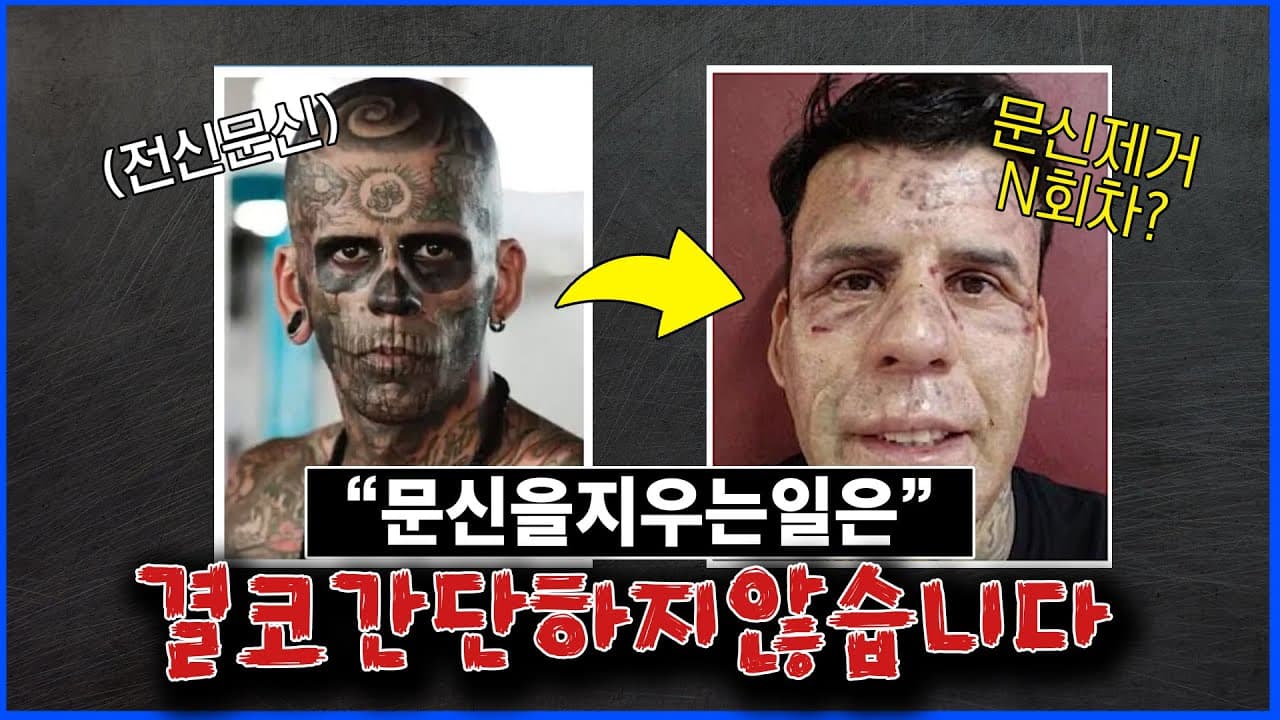
Getting a tattoo requires careful consideration, but sometimes you may want to remove it for unexpected reasons. Recently, the story of a man in Brazil removing over 170 tattoos has garnered attention, increasing interest in tattoo removal. This man himself stated that removing tattoos is far more painful than getting them.
Let's delve into the duration, pain, difficulty of old tattoos, colored tattoo removal, and the possibility of scarring, which many people are curious about during the tattoo removal process, with Dr. Sang-ju Lee, a dermatologist at Yonsei Star Dermatology Sinchon.
If you don't like your tattoo, it's best to remove it right away
"If you got a tattoo today and don't like it right away? Then coming in immediately, even on the same day, to remove the tattoo can shorten the treatment period and increase effectiveness."
Immediately after a tattoo procedure, the skin still has wounds, allowing pigment to be expelled more quickly through the wound area during laser treatment. Therefore, if you don't like your tattoo immediately after getting it, consulting a dermatologist right away to begin removal can be advantageous for enhancing treatment effectiveness and shortening the duration.
How long does tattoo removal take?
Generally, it is known that completely removing a tattoo takes about one and a half to two years. However, this can vary greatly from person to person. Various factors influence the tattoo removal period, such as:
- Tattoo size and color
- Depth of pigment injection
- Individual skin type
- Skin recovery speed
Why does tattoo removal pain differ?
When getting a tattoo, you experience a stinging pain, but the nature of the pain during tattoo removal is different. When the laser breaks down pigment in the skin with strong energy, the shattered pigment particles scatter, stimulating nearby nerves. This can cause the skin to feel stinging or a hot, burning pain.
New tattoos vs. old tattoos, which is harder to remove?
Tattoo removal tends to be easier either immediately after the procedure or, conversely, for older tattoos.
- Tattoos immediately after the procedure: As mentioned earlier, the skin still has wounds, making pigment expulsion easier.
- Old tattoos: Over time, the color of the tattoo ink fades, reducing the amount of pigment. This can mean fewer treatment sessions.
On the other hand, for tattoos that have settled in for some time, the usual number of treatment sessions may be required.
Why colored tattoo removal is more challenging
Laser treatment for tattoo pigment is effective only when the tattoo color and the laser wavelength react well.
- Black tattoos: They react well to most laser wavelengths, making removal relatively easy.
- Colored tattoos (red, blue, yellow, etc.): They react only to specific wavelengths. Therefore, multiple types of lasers must be used in combination, and the number of treatment sessions may also increase.
How to prevent scars after tattoo removal?
There is a possibility of scarring during the tattoo removal process. The main causes of scarring are as follows:
- Excessive laser energy: While the laser should only destroy pigment, if the energy is too strong, it can severely damage surrounding skin tissue, leading to scars.
- Individual constitution: Some individuals are constitutionally prone to scarring. In such cases, scars can form even with appropriate energy levels.
- Body area: The risk of scarring may be higher in certain body areas where the skin is delicate or prone to hypertrophic reactions, pigmentation, or keloids.
Tattoo removal is not a short-term procedure; it is a process that requires time, pain, and multiple repeated treatments. Even colored tattoos or some challenging old tattoos can yield good results with consistent treatment. To prevent scars and achieve safe and good results during the treatment process, it is crucial to consult and plan treatment with a dermatologist experienced in tattoo removal.