
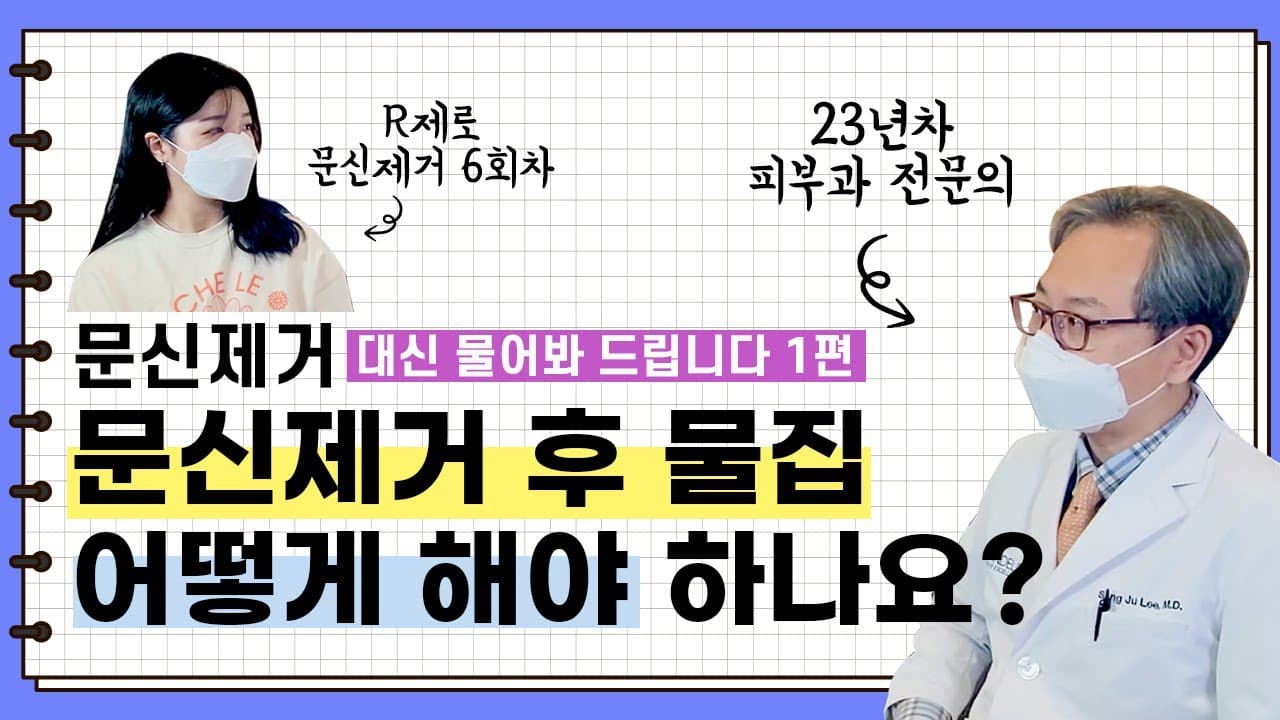
Tattoo removal is one of the procedures many people are curious about. There are many questions, such as whether the tattoo will be effectively removed, which laser is effective, how much pain to expect during the procedure, and how to manage side effects like blisters after the procedure. Let's explore common questions about tattoo removal, answered directly by the medical staff at Yonsei Star Dermatology Sinchon.
Why multiple sessions are needed: Minimizing skin damage and maximizing effectiveness
If a laser is applied with too strong energy in a single tattoo removal session, it can lead to blisters, bleeding, and even scars. Therefore, performing the procedure in multiple sessions with appropriate intensity is an effective way to remove tattoos without causing significant damage to the skin.
Laser energy is adjusted according to the patient's skin condition and tattoo response. The procedure is performed by finding the appropriate intensity for each individual, between the lowest energy that produces an effect and the highest energy that does not cause skin damage. If the response is weak or too strong, the laser intensity can be adjusted accordingly to ensure a safe and effective procedure.
Effective laser types for tattoo removal
No single laser can solve all tattoo removal needs. Different tattoo pigments react to different laser wavelengths. The most commonly used wavelengths to date are 1064nm and 532nm.
-
Pico Laser:
"Pico Laser has various wavelengths, including 1064nm, 532nm, 737nm, and 785nm, and is currently known to be the best for tattoo removal." Pico Laser breaks down pigment much more finely, which may result in a relatively higher chance of blisters after the procedure.
-
Ruby Laser: Ruby Laser uses a 690nm wavelength and is known to be effective primarily for blue-toned tattoos.
How to manage pain during tattoo removal
Pain during tattoo removal varies greatly from person to person. Some people may feel almost no pain, while others may feel significant pain.
Strongly cooling the tattooed area during the procedure can help reduce pain. While the pain may not disappear completely, it can be alleviated to a tolerable level.
Initially, pain may be felt, but as the number of sessions increases and laser energy is adjusted, it often feels less painful over time.
Managing blisters and scabs after the procedure
Blisters can form more easily than expected after laser tattoo removal. This is because the laser instantly shatters the pigment, stimulating surrounding tissues.
-
Blister Management:
- It is best to leave small blisters untouched. They often absorb naturally and subside over time.
- However, if blisters are large, causing discomfort in daily life, or severely painful, it is important to visit the clinic for appropriate treatment.
- If you are unsure how to manage them, it is safest to contact or visit the clinic first.
-
Scab Management:
- When scabs form, it is important to keep the area moist.
- Apply plenty of regenerative cream to prevent the scab from drying out.
- If using gauze, it may stick to the scab and be uncomfortable to remove, so it is best to apply plenty of regenerative cream before covering with gauze.
- If you are concerned about inflammation or infection, applying an antibiotic ointment like Fucidin to the area may be helpful.
Differences in tattoo removal effectiveness based on skin tone
Tattoo removal is more effective for people with lighter skin. Lighter skin allows laser energy to reach the tattoo pigment more effectively, enhancing treatment results. Additionally, the risk of side effects such as pigmentation or scarring is relatively lower.
Conversely, in East Asians, the presence of a melanin cell layer around the tattoo can hinder laser energy from reaching the tattoo pigment. Therefore, among Koreans, individuals with lighter skin that does not tan easily may have a greater advantage in tattoo removal.
What is the interval for tattoo removal procedures?
Initially, procedures are typically performed once a month. As the tattoo gradually fades, the interval is usually extended to once every two months or longer. This adjustment considers the rate at which tattoo pigment fades and the skin's recovery status.