
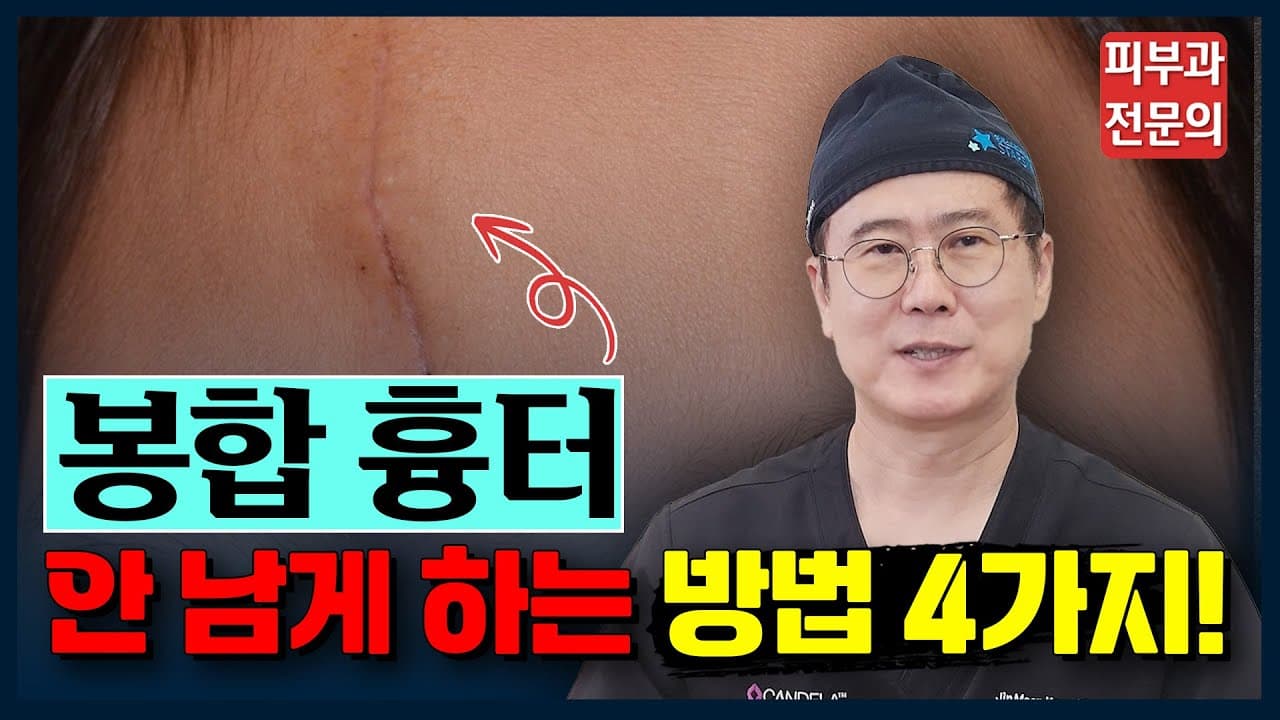
After skin suturing due to trauma or surgery, many people are concerned about the scars left at the suture site. Even if the suturing is done well, large scars such as hypertrophic scars or keloids can remain during the skin regeneration process. Today, we will provide detailed information on early treatment methods to minimize suture scars and effective ways to improve existing scars.
Suture Scars: Why Do They Form? Why Early Treatment is Important
After wound suturing, it's easy to think that skin regeneration is complete once the stitches are removed. However, skin cells continue to regenerate for several months, or even up to a year. During this process, if excessive regeneration occurs, scars can remain. Therefore, preventing excessive skin regeneration is the core principle of early scar treatment.
Suture Scar Prevention: Don't Miss the 'Golden Time'
By constricting or removing unnecessary blood vessels that cause excessive regeneration with a vascular laser such as Vbeam Prima, the formation of large scars can be largely prevented. It is recommended to start this suture scar prevention treatment immediately after stitch removal. While a slight delay in treatment is not a major problem, earlier treatment can lead to more effective results.
Do You Know the Main Cause of Suture Scars: 'Skin Tension'?
One of the most important reasons for large scars is skin tension. Areas with strong skin tension tend to regenerate excessively, making scars prone to widening and becoming prominent. For example, areas like the arms, legs, and torso have strong tension, making large scars more likely, while areas with thin skin like the face have weaker tension, resulting in relatively fewer scars. In particular, the eyelids, which have the thinnest skin, are considered the area with the least scarring due to weak tension. Therefore, if you have undergone suture surgery in an area with strong skin tension, more proactive early treatment may be necessary.
Scar Revision: Careful Selection is Needed
Significant skin tension can also occur in suture scars from procedures like surgical scar revision or tissue expansion, which involve removing existing scars and re-suturing.
Surgical removal and suturing of scars should be chosen carefully, as it can potentially create larger scars.
For Existing Suture Scars, Remember These 4 Treatments
Even for existing suture scars, it is advisable to remember the following four points to achieve satisfactory treatment results:
- Vascular Laser Treatment: It is important to eliminate red marks at the suture site as quickly as possible. Treatment using a vascular laser is effective.
- Avoid Vigorous Movements: It is advisable to avoid vigorous exercise or movements that can put tension on the skin.
- Utilize Scar Ointments and Silicone Sheets: Scar ointments and silicone sheets can help with scar management, so their combined use is recommended.
- Two-Stage Skin Regeneration Laser Treatment: If you are still concerned about noticeable scars after the redness has subsided, you may consider a two-stage treatment using skin regeneration lasers such as Ultrapulse Encore or StarLux.
Scar Treatment: Setting Realistic Goals is Important
It is virtually impossible to perfectly restore a scar to be 100% identical to normal skin. However, by setting a goal to improve it to be as similar as possible to normal skin and consistently receiving treatment, it is possible to achieve sufficient improvement to live without stress in daily life.