
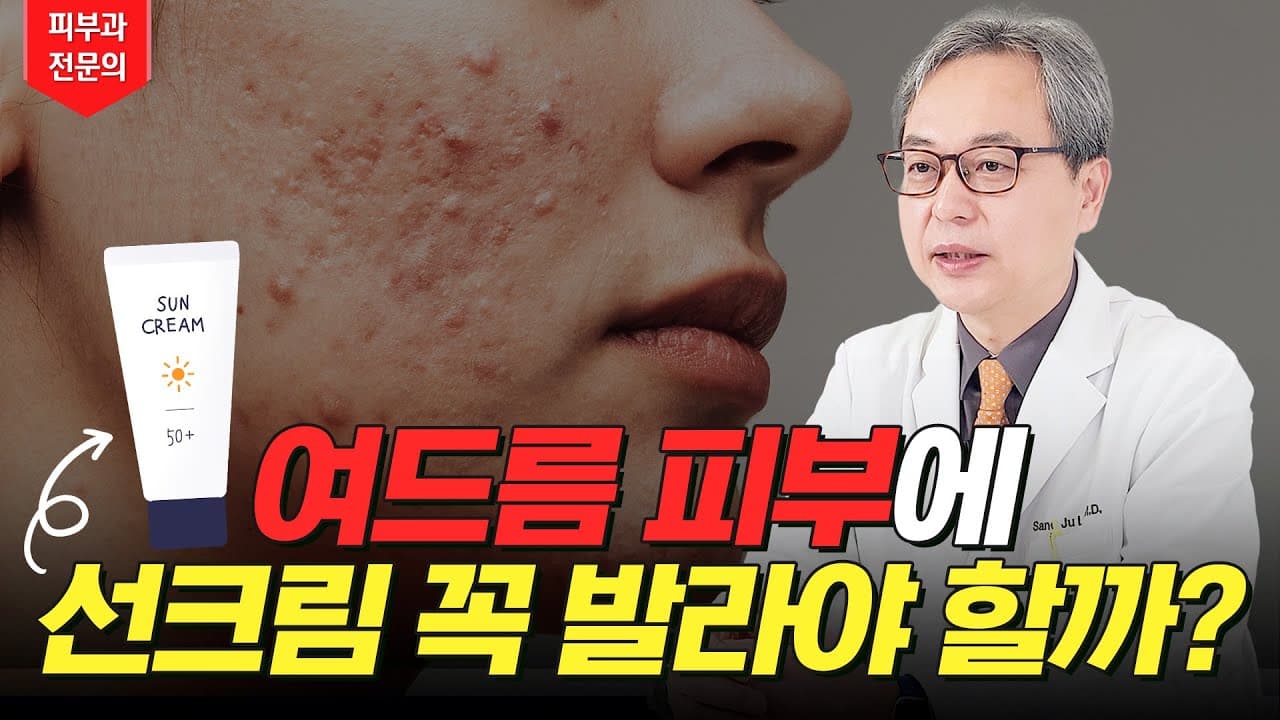
Hello, I am Dr. Sang-ju Lee, a dermatologist. UV radiation is one of the unwelcome guests that negatively affect skin health, so it is very important to apply sunscreen diligently. However, if sunscreen is applied incorrectly, it can actually cause or worsen acne, so it is necessary to know how to apply it properly. Today, I will tell you about the correct way to use sunscreen to reduce acne concerns.
Why can sunscreen cause acne?
Sunscreen generally contains a wider variety of chemical compounds than other cosmetics. It can be broadly divided into organic and inorganic sunscreens, and it is important to understand the characteristics of each.
- Organic Sunscreen (Chemical Sunscreen): Contains various organic compounds to chemically block UV rays. The principle is that when UV rays enter, the compounds change shape, absorb the UV rays, and release them as heat. However, some compounds, such as oxybenzone and avobenzone, have been reported in studies to be associated with not only skin irritation but also acne. Since they primarily use oily ingredients, they often clog pores, causing or worsening acne.
- Inorganic Sunscreen (Physical Sunscreen): Uses inorganic compounds to block UV rays. It utilizes the principle that light cannot pass through finely crushed metal components, physically reflecting UV rays. Inorganic sunscreens have simpler compound ingredients and use less oil, so the likelihood of causing acne is relatively lower, but inorganic sunscreens are not entirely free from the possibility of causing acne.
The Key to Choosing Sunscreen for Acne-Prone Skin: 'Non-comedogenic'
Summer UV radiation can be a factor that worsens acne, so sunscreen use is essential for those with or concerned about acne. The most important tip here is to check the terms printed on the sunscreen packaging.
Recently, sunscreen packaging often includes the terms 'Non-comedogenic' or 'Non-acnegenic'. These products are relatively less likely to cause acne. The most basic cause of acne is the formation of comedones, and non-comedogenic products are sunscreens that do not cause comedones, so they are much less likely to worsen or cause acne compared to other products, making them safer to use.
Appropriate SPF and PA Index for Each Situation
The UV protection index should also be chosen according to the situation.
- Daily life: Sunscreen with SPF 30 or higher is recommended.
- On sunny days or during outdoor activities: It is advisable to use sunscreen with SPF 50 or higher.
- Swimming or sweating heavily: To prevent sunscreen from washing off due to sweat or water, it is good to use waterproof sunscreen. However, waterproof sunscreens or products with high SPF are not necessarily acne-causing. If you use a product that is 'non-comedogenic' and also waterproof with SPF 50 or higher, the likelihood of acne occurrence is relatively low.
Organic vs. Inorganic Sunscreen, Which Should You Choose?
It is important to choose a sunscreen that suits you. As mentioned earlier, the key is to use sunscreens labeled 'Non-comedogenic' or 'Non-acnegenic'. If you have to choose between inorganic and organic sunscreens, inorganic sunscreens are generally known to be less likely to cause acne because they are less likely to clog pores.
Cleansing is as Important as Sunscreen Use
Just as important as applying sunscreen is thoroughly cleansing your face in the evening. The habit of cleansing thoroughly to prevent clogged pores is most important for acne prevention.