
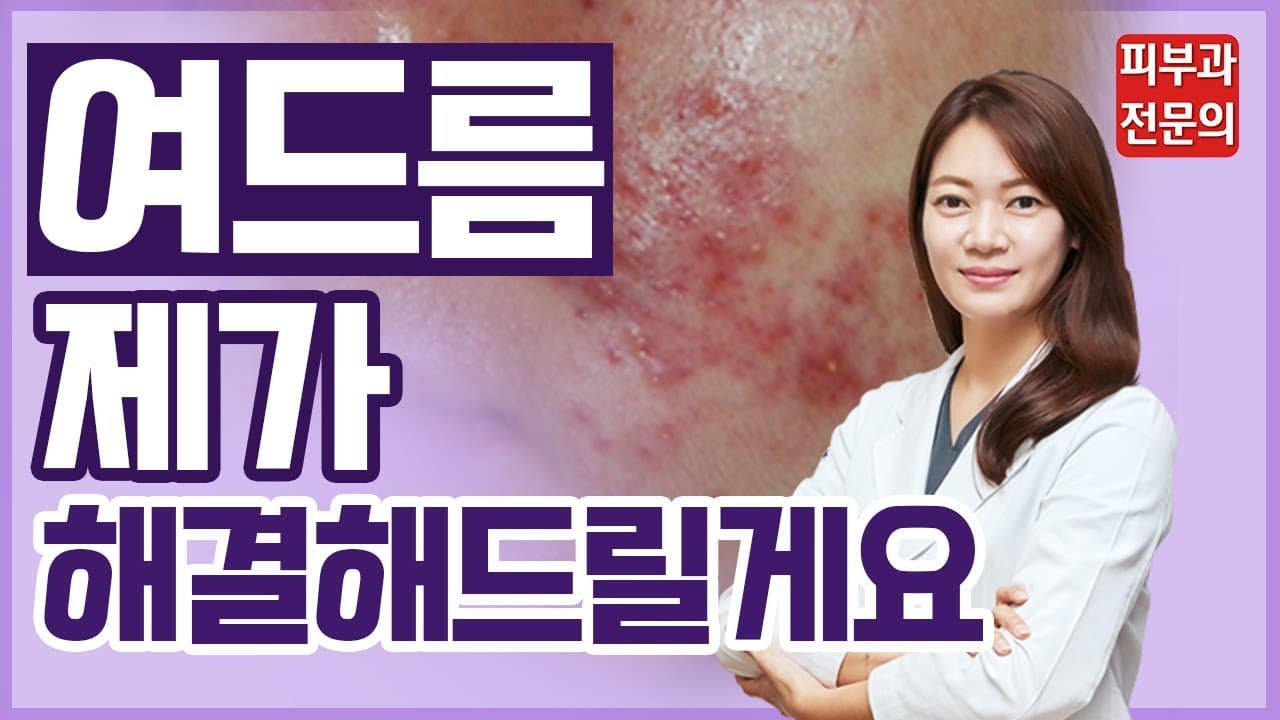
Hello. I'm Lee Hyung, a dermatologist who will be your skin doctor, solving your skin concerns starting today. I will explain various skin concerns in an easy-to-understand and interesting way.
The first skin concern we'll discuss is acne. Many people complain that they spent millions or tens of millions of won on acne treatment but saw no results, or that their acne worsened again after stopping long-term medication. When examining the causes of such failed acne treatment cases, it is highly probable that a lack of understanding about acne led to choosing an unsuitable method. So today, we will find solutions for acne treatment by understanding the causes and processes of acne.
Why does acne occur?
To find effective acne treatments, it is important to carefully examine the process of acne formation. The solution is hidden within that process.
If you look closely at the pores on our skin, there are sebaceous glands inside the pores that secrete sebum. If an appropriate amount of sebum is secreted and properly discharged from these sebaceous glands, it can prevent moisture evaporation, keeping the skin from drying out and maintaining its health. However, if sebum is excessively secreted beyond what is needed, or if the opening of the pore becomes blocked by keratin or waste products, the sebum cannot escape from inside the pore and accumulates, eventually leading to acne.
Therefore, methods that destroy the sebaceous glands that excessively secrete sebum, or effectively remove keratin and waste products, can help improve acne.
Types of Acne and Customized Treatments
Acne can be broadly divided into comedonal acne and inflammatory acne, and the causes and processes differ slightly depending on the type.
Characteristics and Treatment of Comedonal Acne (Comedones)
When our skin has adequate moisture, it naturally undergoes a keratin shedding process. However, if the skin is dry, keratin may not shed properly and continues to block the pores, preventing sebum from escaping and causing it to accumulate inside the pores. This results in small, white, bumpy acne, which is called comedones or comedonal acne. It can also occur due to improper cleansing or excessive sebum secretion influenced by hormones, such as during puberty.
For comedonal acne, many people are prescribed sebum suppressants like isotretinoin to reduce excessive sebum secretion. While the medication is effective, it can be a burden on the body as an oral medication, and long-term use carries potential risks such as liver issues or hyperlipidemia. In particular, women of childbearing age require contraception when taking this medication. Furthermore, it unnecessarily suppresses sebum in other areas, leading to discomforts such as dry lips.
For these reasons, we recommend a systematic acne treatment program based on photothermal therapy like Gold PTT, which selectively destroys sebaceous glands, combined with scaling to dissolve old keratin and treatments that aid skin regeneration.
Characteristics and Treatment of Inflammatory Acne
Inflammatory acne occurs when comedonal acne persists, preventing oxygen from entering the pores, leading to a significant proliferation of anaerobic acne bacteria, which then causes inflammatory acne. In some cases, inflammation is accompanied by ingredients in cosmetics or masks that irritate the pores, or it can result from attempts to squeeze comedonal acne directly, which irritates the pores or ruptures the pore wall.
Unlike comedonal acne, inflammatory acne is characterized by pain, redness, and pus due to inflammation. Most importantly, the process of acne inflammation can destroy skin cells, leaving large scars, so prompt and appropriate treatment is necessary. In such cases, treatment that destroys the acne bacteria causing the inflammation can be effective.
Gold PTT, the photothermal therapy introduced earlier, is effective in destroying acne bacteria, yielding good results for inflammatory acne treatment. Additionally, vascular lasers like V-Beam Perfecta, which improve inflammatory acne and red marks and prevent depressed scars caused by acne, are very helpful. Furthermore, prescribing tetracycline-based antibiotics together can enhance the antibacterial and anti-inflammatory effects against acne bacteria, leading to more satisfactory results.
How can acne recurrence be prevented?
It is true that acne is a skin condition prone to recurrence. However, the recurrence rate can be minimized. To minimize recurrence, it is necessary to examine the causes of acne.
-
First, you need to check if the fundamental cause of acne has been treated. Skin that has had acne often has an environment where sebaceous glands secrete excessive sebum or acne bacteria can thrive. Therefore, if the root cause is not definitively treated, there is a high probability that acne will recur.
-
Second, please check if you arbitrarily stopped treatment without consulting a specialist, believing that your acne was completely cured. Acne cannot be considered completely cured just because it appears improved on the surface. As explained earlier, if the fundamental causes such as sebum secretion within the pores are not resolved, acne will inevitably recur. Therefore, you should continue treatment until a dermatologist determines that it is safe to stop, to eradicate acne at its root.
-
Third, you should examine whether you are engaging in lifestyle habits that trigger acne. Please make sure you are not excessively consuming high-sugar foods, greasy fried foods, or instant foods that stimulate the sebaceous glands, and that you are not using irritating cleansers or oily cosmetics that can irritate the skin.
So far, we have explored the fundamental causes and treatments of acne through understanding its formation process. We plan to provide more detailed information later on what specific treatments and effects the methods explained today offer, so please leave any related questions in the comments. If today's video was helpful, please like and subscribe, and for any further questions about acne, please contact us via the comments below or the Yonsei Star Dermatology KakaoTalk channel. This has been dermatologist Lee Hyung. Thank you.