
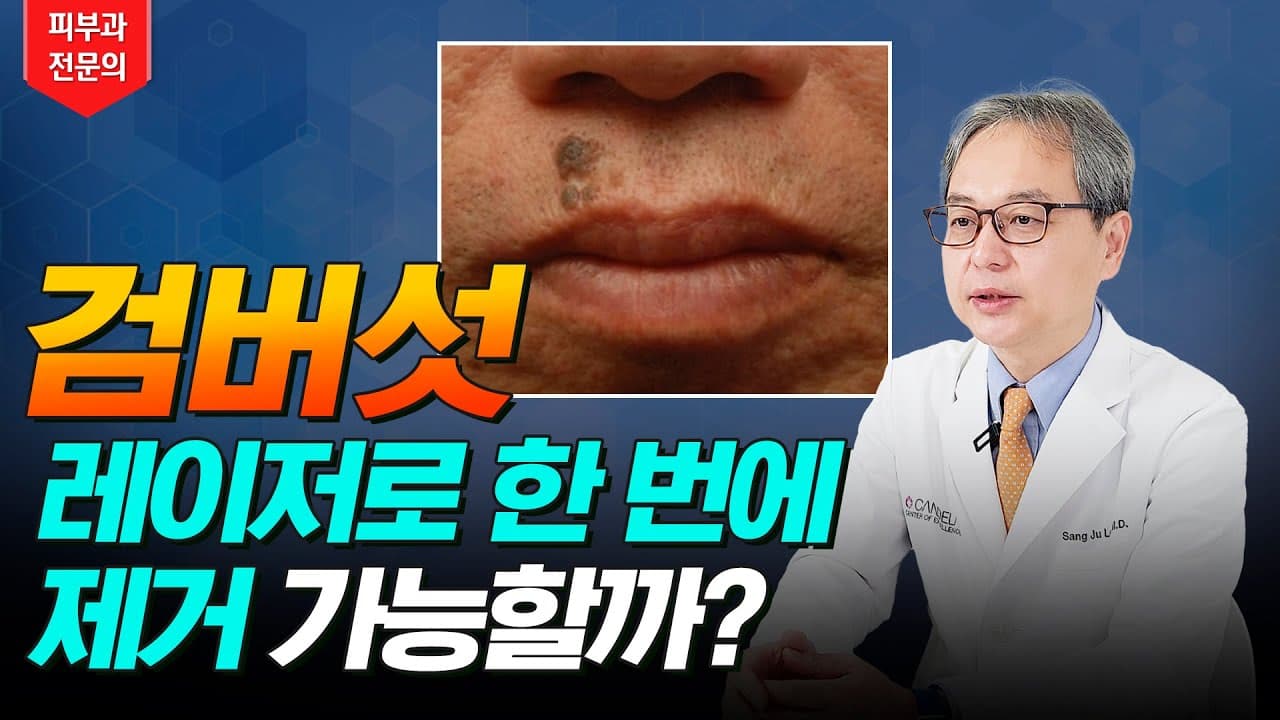
Hello. I am Dr. Sang-ju Lee, a dermatologist. Seborrheic keratosis, also known as 'death's flower,' commonly appears in people aged 60 and older. It often forms on visible areas like the face, back of the hands, and limbs, easily giving an older impression. Many people are interested in seborrheic keratosis removal. Today, I will thoroughly address everything from how to distinguish seborrheic keratosis to its treatment and related questions.
What does seborrheic keratosis look like?
Seborrheic keratosis is a benign skin tumor caused by the thickening of the stratum corneum and epidermis. It mainly occurs in people aged 60 and older, appearing on exposed areas such as the face, back of the hands, and limbs, which can give an older impression. The most significant characteristic of seborrheic keratosis is that it protrudes from the skin surface.
How can seborrheic keratosis and lentigo be distinguished?
Seborrheic keratosis and lentigo are often confused due to their similar shape and color. However, there are clear differences between the two.
- Seborrheic keratosis: Characterized by protruding from the skin surface due to the thickening of the stratum corneum.
- Lentigo: Caused by an increase in melanin cells on the skin surface, it does not protrude, is level with the skin surface, and often appears brown or black.
In other words, seborrheic keratosis and lentigo can be distinguished by whether they are level with the skin surface or protrude.
Can seborrheic keratosis be removed in one laser session?
The goal of treatment for seborrheic keratosis is complete removal. In the past, surgical methods were sometimes used, but recently, treatment primarily involves ablating the affected area using a laser.
- Thick seborrheic keratosis: Treatment is performed by ablating with a CO2 laser. After the procedure, a regenerative tape such as Duoderm must be applied.
- Thin, black seborrheic keratosis (closer to lentigo): Treatment is possible using a pigment laser. In this case, the wound usually heals well without separate dressing after the procedure, and scars are less likely to remain.
Generally, seborrheic keratosis can often be removed in a single session by laser ablation. However, if the root is too deep or the size is very large, one or two more sessions may be necessary. Since seborrheic keratosis is a condition that develops with age, there is a possibility that it may reappear in other areas as one gets older.
Is post-laser hyperpigmentation a recurrence of seborrheic keratosis?
After laser removal of seborrheic keratosis, sometimes brown or black pigmentation remains at the treated site. This is not a recurrence of seborrheic keratosis but a phenomenon called post-inflammatory hyperpigmentation.
The difference is that seborrheic keratosis protrudes, while post-inflammatory hyperpigmentation does not protrude from the skin surface; only the color changes. Generally, such pigmentation improves naturally over time. If you wish to shorten the improvement period, you can consider using a whitening ointment or methods such as laser toning.
Can seborrheic keratosis be removed with home remedies?
In the past, home remedies using vinegar, flour, baking soda, etc., were attempted to remove seborrheic keratosis. However, these methods are very dangerous.
Especially strong acidic substances like glacial acetic acid can dissolve the skin, making it difficult to remove seborrheic keratosis to an accurate depth. Instead, they often cause secondary burns or scars, leading people to seek hospital treatment.
Therefore, we recommend not attempting to remove seborrheic keratosis with home remedies, but rather having it removed simply and safely at a dermatology clinic. It is important to consult with a dermatologist to choose the appropriate treatment method.