
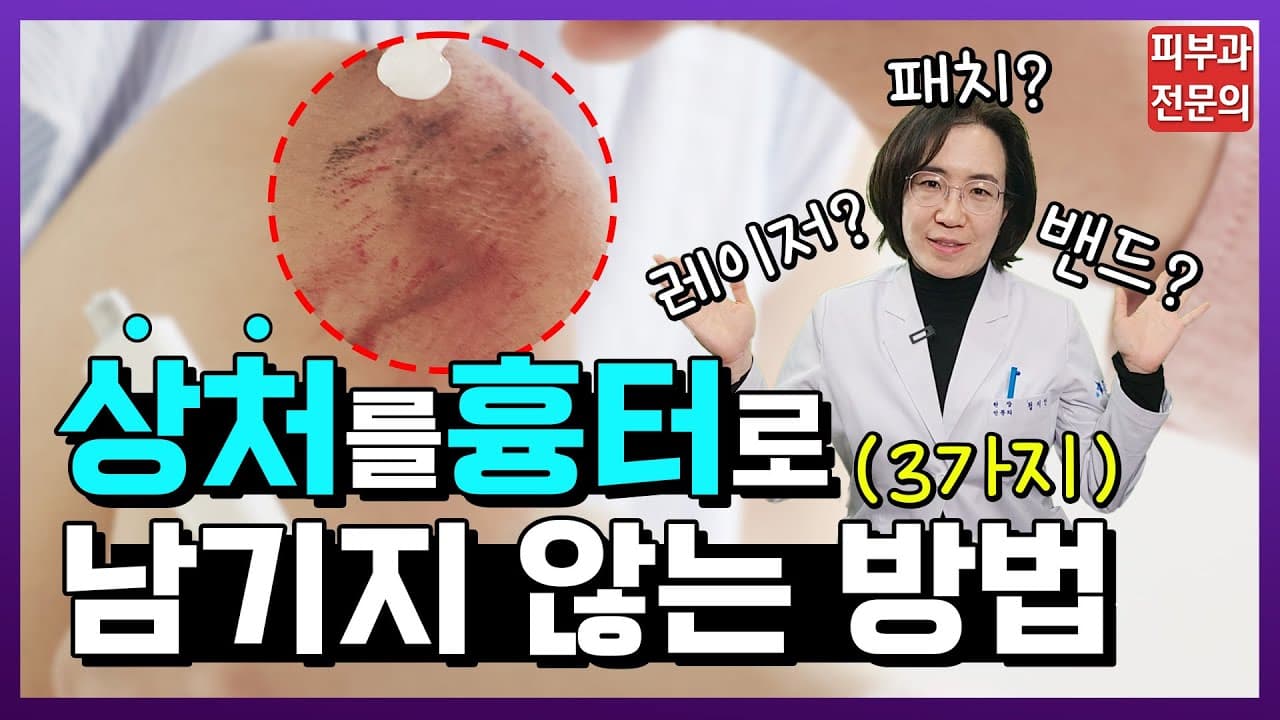
Many people worry about scars remaining after a skin injury. The trend in scar treatment over the past 10 years emphasizes the early stage, from 2 weeks after the wound has healed until about 2 months when scar formation begins. This is because effective scar prevention is possible depending on how it is managed during this period. Today, we will explore key methods for scar prevention that can be practiced in daily life.
Prevent excessive vascular proliferation, the main culprit of scar formation
Blood vessels play an important role in the formation of hypertrophic scars or keloid scars that protrude above the skin. During the wound healing process, blood flow increases to supply nutrients, and the total surface area of blood vessels naturally expands. However, if these increased blood vessels do not disappear at the appropriate time and proliferate excessively, it can promote scar formation.
- Lifestyle habits to reduce vascular proliferation:
- If you have a wound, it is advisable to avoid activities that can cause blood vessels to dilate, such as saunas or consuming spicy foods. There are also reports that foods that excessively increase blood flow are not good.
- Effective vascular suppression treatment:
- You may consider Vbeam Prima laser treatment, which selectively destroys only excessively proliferated blood vessels and shows good effects in scar prevention.
- As auxiliary methods, compression therapy to suppress vascular proliferation or cryotherapy to reduce blood vessels may also be used as needed.
Minimize inflammatory reactions to suppress scar formation
All wounds go through inflammatory, proliferative, and maturation phases. Minimizing the inflammatory response of the wound during this process helps suppress scar formation. This is because excessive inflammation can induce excessive fibrosis or destruction of skin tissue, increasing the likelihood of scarring.
- Methods for inflammation management:
- Vitamin C intake: Personally, I recommend taking Vitamin C, which has strong anti-inflammatory effects and helps collagen production, to reduce unnecessary inflammatory reactions. It can also be expected to have a positive effect on preventing pigmentation by suppressing melanin production.
"Research results indicate that injecting Vitamin C directly into the lesion can actually create excessively protruding scars." Therefore, high-dose Vitamin C megadose therapy or intravenous injections are recommended.
- Dexpanthenol ointment and patches: After the wound has healed, applying an ointment containing dexpanthenol or attaching a patch is one of the ways to minimize scars. Dexpanthenol derivative, coenzyme A, has anti-inflammatory and restorative effects in the early stages of epidermal wound healing. Products such as Bepanthen and Cicaflex are available on the market.
- Adrenocortical steroids: Adrenocortical steroid hormones, one of the most potent drugs for reducing inflammation, can be helpful when injected or patched onto early scars that have the potential to grow excessively. However, they can delay wound healing and cause side effects such as skin atrophy, so it is advisable to proceed after sufficient consultation with a dermatologist and according to their prescription.
- Vitamin C intake: Personally, I recommend taking Vitamin C, which has strong anti-inflammatory effects and helps collagen production, to reduce unnecessary inflammatory reactions. It can also be expected to have a positive effect on preventing pigmentation by suppressing melanin production.
Reduce skin tension to prevent keloid scars
Keloids commonly occur in areas where skin tension is high, such as joint extension areas, shoulders, chest, and abdomen. This is because the stronger the pulling force on the skin in the injured area, the higher the probability of keloid formation.
- Management for tension relief:
- To prevent keloid progression, it is helpful to fix the injured area with a gel sheet or paper tape in the early stages. One study reported a significant reduction in keloid scar incidence when the surgical site was fixed with paper tape after a C-section.
- If a wound occurs, it is best to avoid excessive stretching or strenuous exercise that pulls the skin too much, especially in the early stages.
Consistent care for clear, scar-free skin
We have discussed the three most important methods for scar prevention: vascular management, inflammation minimization, and skin tension relief. When an injury occurs, proper understanding and appropriate early care significantly impact achieving clear, scar-free skin. If you have any questions, it is important to consult with a dermatologist to create a personalized treatment plan.