
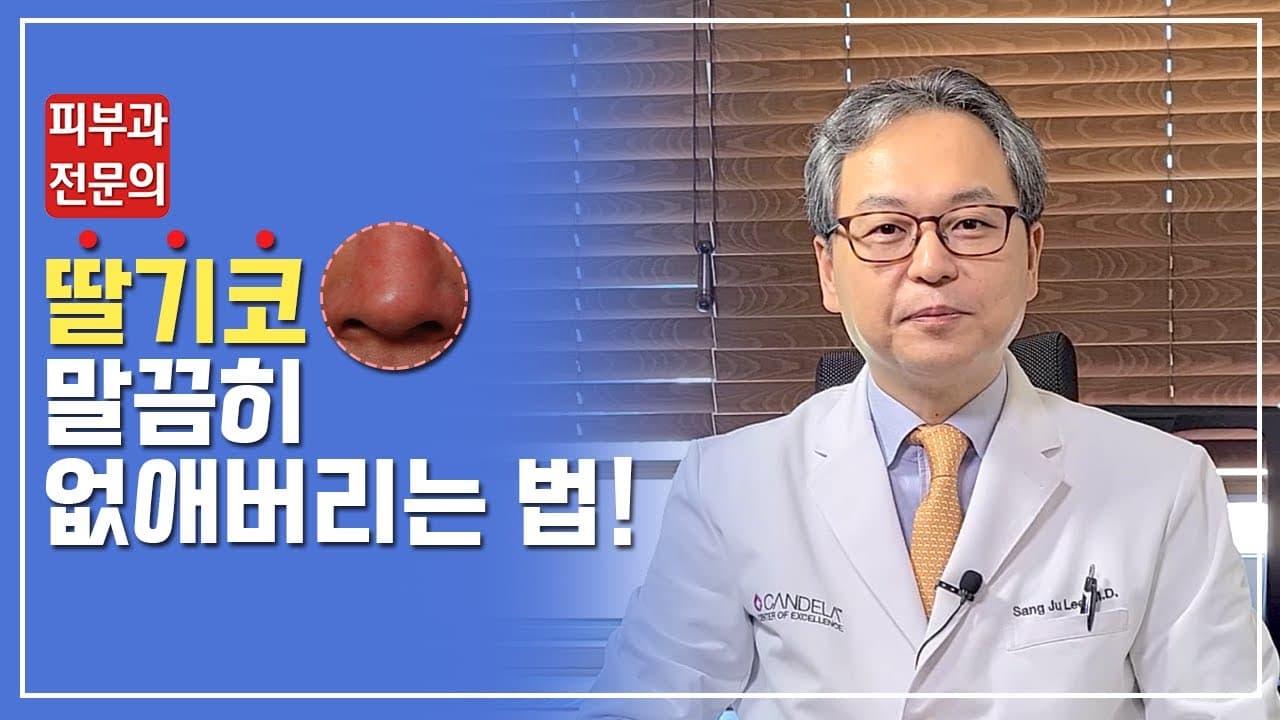
Many people are concerned about symptoms such as a red nose or visible capillaries in cold weather. These symptoms, commonly known as strawberry nose, are medically referred to as rosacea. Today, we will learn in detail about what rosacea is, how it progresses, and what effective management and treatment methods are available, through the explanation of a dermatologist.
What exactly is rosacea?
Rosacea is, as the name suggests, a condition where 'rosacea' symptoms appear on the nose. It typically begins with the nose easily turning redder than others. Over time, blood vessels around the nose dilate, and capillaries become visible to the naked eye. Beyond this stage, if it progresses further, not only capillaries but also the surrounding nasal tissue thickens and proliferates, causing the nose to become bumpy. At this stage, it can be said to resemble the commonly known strawberry nose.
What are the causes of rosacea?
The clear cause of rosacea has not yet been identified. However, several factors are known to influence the occurrence and worsening of rosacea.
- Constitutional factors: An individual's constitution may influence the development of rosacea.
- Alcohol consumption: Excessive alcohol consumption can dilate blood vessels and worsen rosacea.
- Temperature changes: Hot environments such as saunas or jjimjilbangs with large temperature differences can stimulate blood vessels and exacerbate symptoms.
- UV exposure: If UV protection is not properly applied, rosacea may develop more easily or worsen.
- Stress: Stress is also known as a factor that worsens rosacea.
How can rosacea be managed and prevented?
If rosacea is well-managed in its early stages, further progression of symptoms can be prevented. It is especially important to avoid conditions that easily dilate blood vessels.
Key conditions to avoid
- Sunlight: UV rays stimulate blood vessels, so consistently applying sunscreen can be helpful.
- Alcohol consumption: Just as drinking alcohol causes the face to redden, blood vessels easily dilate, so it is advisable to refrain from alcohol if possible.
- High-temperature environments: High-temperature environments such as saunas and jjimjilbangs can cause blood vessel dilation, so it is best to avoid them.
- Stress: Maintaining healthy lifestyle habits through stress management can help prevent rosacea from worsening.
While excessive sebum on the nose does not inherently worsen rosacea, improper squeezing of sebum or damage to the skin can exacerbate rosacea symptoms due to scarring or inflammation in that area. Therefore, rather than self-management, it is important to seek accurate diagnosis and treatment from a dermatologist in the early stages.
Can advanced rosacea be improved with laser treatment?
If capillaries have appeared or the nasal area has become bumpy, laser treatment can be considered. Vascular lasers are effective for treating dilated capillaries. Removing capillaries with a vascular laser can help prevent rosacea from progressing further.
In cases where the nose has already become bumpy, significant improvement can be expected by precisely refining the protruding areas using a carbon dioxide laser or other lasers. Since the appropriate laser type and treatment plan may vary depending on the individual's symptoms and skin condition, it is crucial to consult with a dermatologist to find the treatment method that is right for you.
Today, we have learned about the causes, progression, and management and treatment methods for rosacea, also known as strawberry nose. Early diagnosis and appropriate management are very important for rosacea, and it is a condition that can be sufficiently improved with professional treatment if necessary. If you have any further questions about rosacea, please do not hesitate to consult with a dermatologist.