
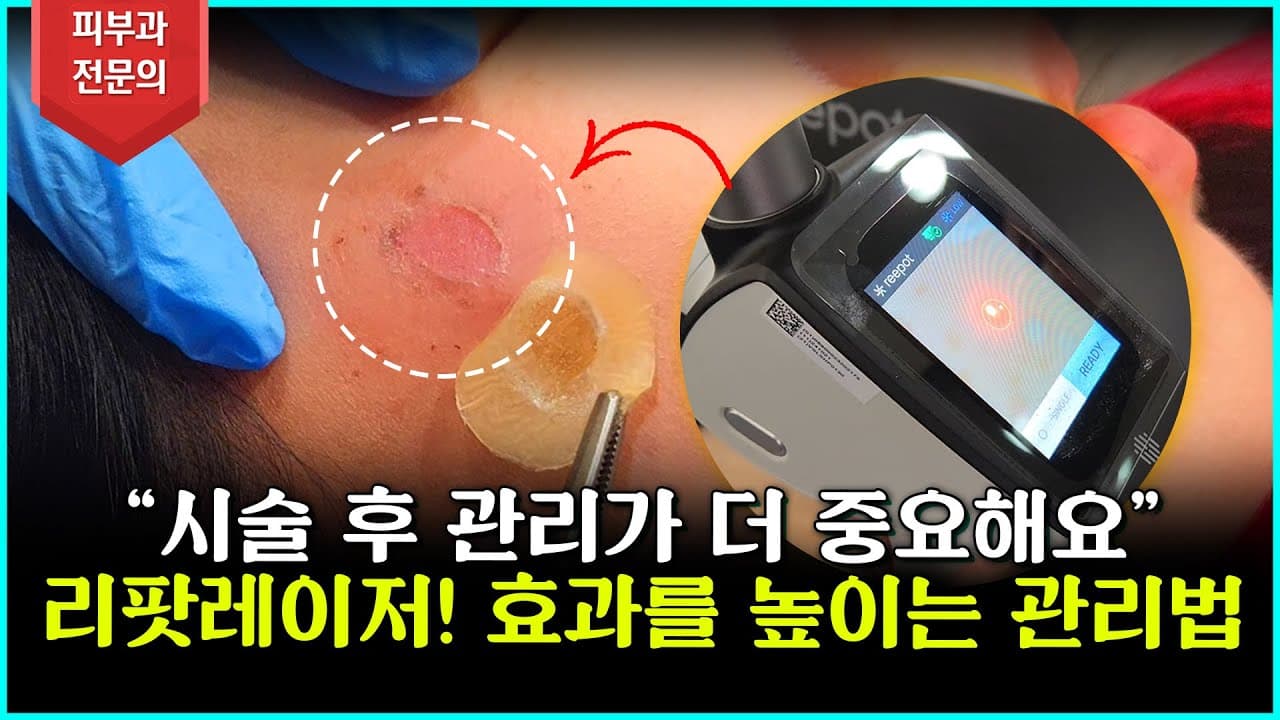
RePott Laser Treatment: The Real Effectiveness Depends on ‘This’!
Hello. I am Lee Sang-joo, a dermatologist specializing in skin concerns. As we age or are continuously exposed to UV rays, various pigmentary disorders can occur on the skin. Recently, many people have been seeking RePott Laser to remove lentigo or seborrheic keratosis in just one or two sessions. As with all laser treatments, how you manage your skin after the procedure greatly influences the treatment outcome. Since RePott Laser delivers strong energy, thorough care is essential during the skin regeneration process. Today, I will explain how to care for your skin to enhance the effectiveness of RePott Laser treatment.
What is RePott Laser Treatment?
RePott Laser treatment is relatively simple and quick. It targets seborrheic keratosis or lentigo in the epidermal layer with strong 532nm wavelength energy. During this process, continuous cooling protects the skin, which is advantageous in preventing side effects such as pain or blood vessel damage. A major feature is the ability to return to daily life immediately after the procedure.
Why is it essential to apply a hydrocolloid bandage?
Hydrocolloid bandages are applied for quick recovery and skin protection, and many people wonder if they are truly necessary. Hydrocolloid bandages help the scab remain naturally until new skin grows. Especially since RePott Laser uses high energy, it is crucial to protect the skin well. If the scab falls off too early, the less-recovered skin may be exposed to the external environment, increasing the risk of pigmentation and potentially negatively affecting the treatment results. Therefore, hydrocolloid bandages must be applied.
How to care for your hydrocolloid bandage
- If the hydrocolloid bandage becomes loose or starts to peel off, do not panic or remove it. Simply apply a new, larger hydrocolloid bandage over it.
- Washing your face, applying makeup, and showering are all possible on the day of the procedure. However, excessive irritation should be avoided.
- It is best to avoid rubbing your face vigorously or using scrubs when washing.
- It is advisable to avoid prolonged immersion in water, such as in saunas, jjimjilbangs (Korean bathhouses), full baths, or swimming.
- Excessive alcohol consumption or strenuous exercise should be avoided for about 2 weeks.
- Generally, hydrocolloid bandages are maintained for about 2-3 weeks. For thick skin or good regenerative capacity, about 2 weeks is sufficient, but for very thin skin, it may be advisable to maintain it for 3 weeks or more.
Do not remove the hydrocolloid bandage by yourself!
Generally, it is safer for medical staff to remove the hydrocolloid bandage at the clinic rather than at home. If the area where the hydrocolloid bandage is attached becomes red or itchy in the interim, do not remove it yourself; it is best to visit the clinic where you received the treatment to check your progress. Occasionally, some people may have an allergy to hydrocolloid bandages, which can cause significant itching. While some itching may occur as the skin regenerates, it can be difficult to distinguish between the two, so if anything feels unusual, it is recommended to visit the clinic where you had the procedure for a consultation.
After removing the hydrocolloid bandage, the real care begins!
After removing the hydrocolloid bandage, the real care begins. The area where the hydrocolloid bandage was removed has new skin, but it is not yet fully recovered. Therefore, it often appears reddish initially, and this is a period when pigmentation can occur, so thorough care is necessary. Since the stratum corneum is thin, it is important to minimize skin irritation.
- When washing your face, it is advisable to use a mildly acidic cleanser for about a month, avoiding anything too irritating.
- Apply regenerative ointment frequently to help the skin recover and promote regeneration.
- Above all, sunscreen is essential for UV protection.
The area where the hydrocolloid bandage was removed has new skin, making it particularly vulnerable to UV rays and prone to pigmentation. Therefore, sunscreen is an essential step in post-treatment care.
Are additional treatments sometimes necessary?
Most blemishes and shallow seborrheic keratosis can be removed in one session with RePott Laser treatment. However, depending on the pigment condition, additional removal may be necessary, and if there are pigmented lesions located in the dermal layer, additional pigment laser treatment may be required. In such cases, treating them together can further enhance the treatment effect.
Today, we learned about post-treatment care for RePott Laser. We hope you maintain clean and healthy skin through aftercare, which is as important as the procedure itself.