
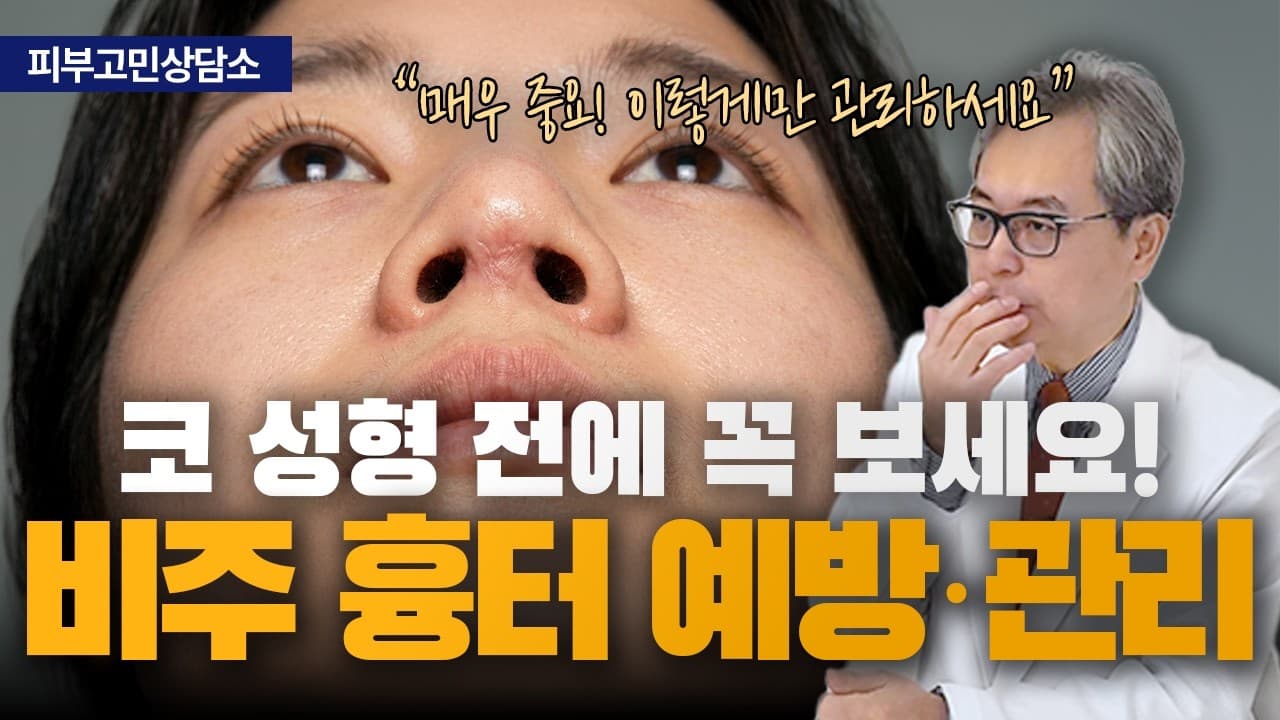
The red incision scar left under the nose after rhinoplasty can be sufficiently improved with lasers. Many people worry in front of the mirror that their surgery will be revealed. To put it simply, if the right method is applied in time for the shape and color of the scar, it can be restored to a natural appearance. However, if the timing is missed, treatment becomes much more difficult, so early management is important.
Reasons Why Incision Scars Differ from Person to Person
There are several reasons why sub-nasal incision scars look different from person to person. First, skin thickness varies individually. Also, depending on how much the nose was opened during surgery and how much the bridge was raised, skin tension changes, and the greater the tension, the deeper the scar.
The shape of the scar is also not uniform:
- Depressed scars that are lower than the skin surface along the incision line
- Cases remaining as red scars or white lines
- Cases where it swells up due to keloid constitution
Reasons Not to Leave It Untreated and the Golden Time
If early red scars from surgery are left alone, they can progress to become more prominent, or in severe cases, even lead to deformation. The period before the scar completely hardens, while it is still red, is called an early scar, and this is the golden time.
If treated during the golden time, it is generally believed in academia that less than half of the scar remains, and if the timing is missed and the scar descends and hardens, treatment becomes very difficult.
Especially if you are constitutionally prone to scarring or have had deep and extensive nose surgery, establishing a preventive treatment plan while the scar is still red is the way to reduce future scars.
Home Care You Can Do
Hospital treatment is best, but if circumstances don't allow, there are helpful methods you can do at home. If there is no discharge and the area is red, it is good to use tape, or if the wound heals after about two weeks, apply silicone gel-type ointment daily.
- Scars are prone to pigmentation, so cover them from light with sunscreen or a mask.
- Do not touch the area repeatedly with your hands.
- Do not blow your nose hard or irritate it.
- Smoking impairs blood flow, so quit, and reduce the amount and frequency of alcohol consumption.
Signs to Go to the Hospital Immediately
If you notice the following changes, it is advisable to seek medical attention without delay:
- If the redness deepens over time or persists after 3 months
- If, when looking in the mirror, the contracture pulling downwards gradually worsens
- If the area around the scar hardens or becomes convex
- If pain or itching is severe
How Non-Surgical Lasers Improve Scars
In individuals prone to scarring, re-incising and suturing the scar often results in deeper and larger scars. Therefore, except for cases requiring correction of the nose shape itself, re-incising merely because it is unsightly is not recommended.
The alternative is non-surgical methods. Laser irradiation helps to leave fewer scars and promotes the filling of already existing scars, raising the surface. In cases of severe downward pulling, combining this with a procedure to sever the scar tissue with a needle can yield better results.
Results may vary individually, and accurate diagnosis and treatment are determined after consultation.
Only when the last trace is cleared can the mind truly be at ease. Rhinoplasty scars can be sufficiently improved if the golden time is well-managed, so do not worry alone and consult with a specialist.
Written by Lee Sang-joo (Yonsei Star Dermatology) · Last reviewed 2026-06-04