
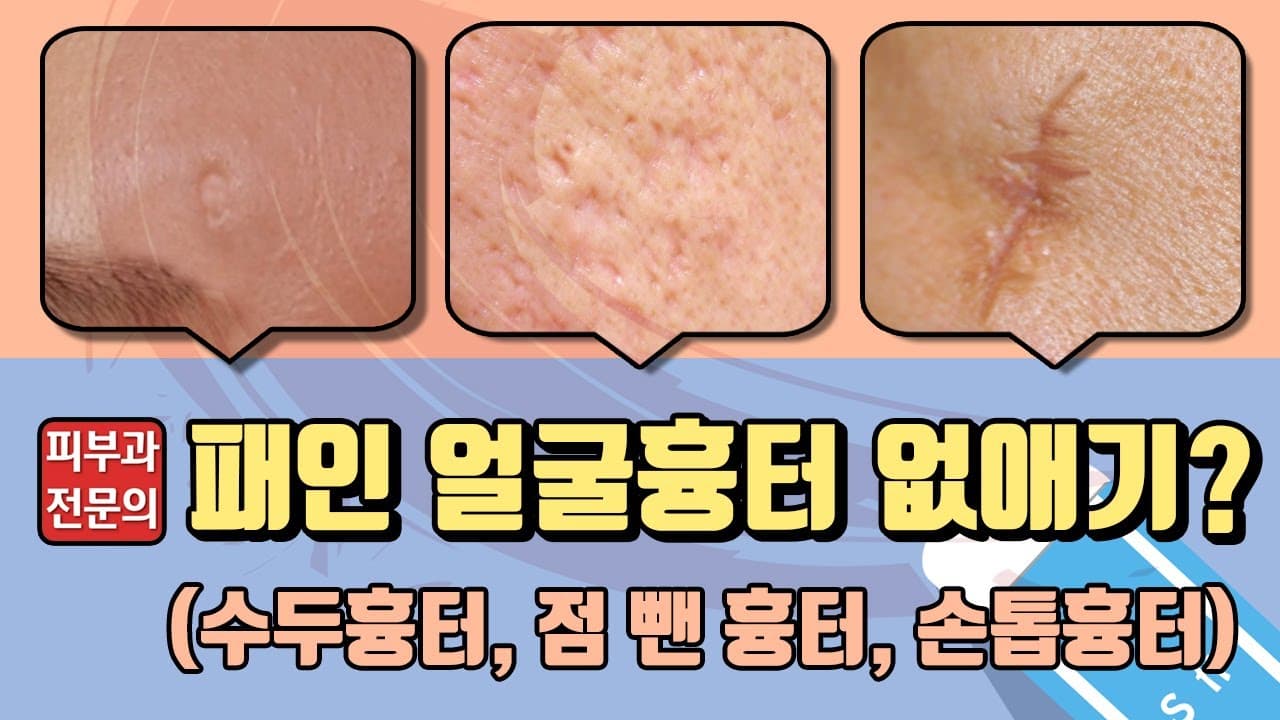
Many people are concerned about deeply indented facial scars. In particular, scars that are deeply formed below the dermal layer, such as chickenpox scars from childhood, deep acne scars, and fingernail scars, can lead to not only aesthetic concerns but also psychological burden. Today, we will explore effective ways to treat these deep scars.
Deeply Indented Scars: Why Are They Difficult to Treat?
Deeply indented scars are difficult to view as merely a surface skin problem. This is because scars are often deeply formed down to the dermal layer and are adhered to the underlying skin tissue. Therefore, treating only the skin surface may not yield sufficient results.
Limitations of Laser Treatment
Laser treatment is commonly used for indented scar treatment, but for deep scars, laser treatment alone has limitations. Lasers promote the growth of a certain amount of new skin with each treatment, but the deeper the scar, the more numerous treatment sessions may be required. Furthermore, if there is adhesion underneath, it can be difficult to treat deeply, so laser monotherapy may have limited effectiveness.
'Subcision' is Effective for Deep Scars such as Chickenpox Scars
Deeply indented scars, such as chickenpox scars, are considerably deep. Generally, the depth of scars that can be improved with lasers is known to be within 1-2mm, and for deeper scars, lasers alone may not be effective. In such cases, Subcision, a procedure that helps raise deep scars, can be considered. This treatment method involves severing the fibrotic scar tissue beneath the skin, and the blood clot pocket formed in that area pushes the scar upwards, thereby improving the scar overall. It is known to be particularly effective for deep scars like chickenpox scars.
Deep Acne Scars: Potential for Improvement with 'Punch Excision'
Acne scars can be categorized into icepick scars, boxcar scars, and rolling scars depending on their shape. Among these, deeply indented scars such as boxcar scars or icepick scars have significant depth, limiting the effectiveness of laser treatment alone. For deeply indented, circular boxcar scars, procedures like Punch Excision may be helpful. This procedure uses a punch tool to lift the underlying scar to match the height of the skin surface. It is known to have advantages in effectively improving scars with fast recovery and minimal disruption to daily life, as no sutures are required after the procedure. For deep acne scars, considering procedural methods like Punch Excision is recommended.
Types of Scar Treatment Methods and Advantages of Procedural Treatment
Scar treatment can be broadly divided into the following methods:
- Laser Treatment: Effective for shallow scars, it induces skin regeneration.
- Procedural Treatment: A method of lifting deep scars using needles or instruments, simpler than surgery.
- Surgical Treatment: A method of cutting and suturing the skin, with the disadvantage of potentially leaving scars.
Among these, procedural treatment offers the following advantages:
- Since treatment is performed locally on the scar area, there is less disruption to daily life after the procedure.
- It can be particularly effective for deeply indented scars.
- It can be combined with other laser treatments for even greater effects.
Important Considerations for Successful Scar Treatment
Since scars vary in shape, size, and depth, choosing the most appropriate treatment method for each is crucial.
Since scars vary greatly in shape, size, and depth, selecting the most appropriate treatment method for each scar is paramount. Procedural treatment is classified as a simple surgical method, so the experience and know-how of the practitioner can significantly influence the results. Therefore, it is advisable to consult sufficiently with medical professionals who have extensive experience in various scar treatments to establish the most suitable treatment plan for you.