
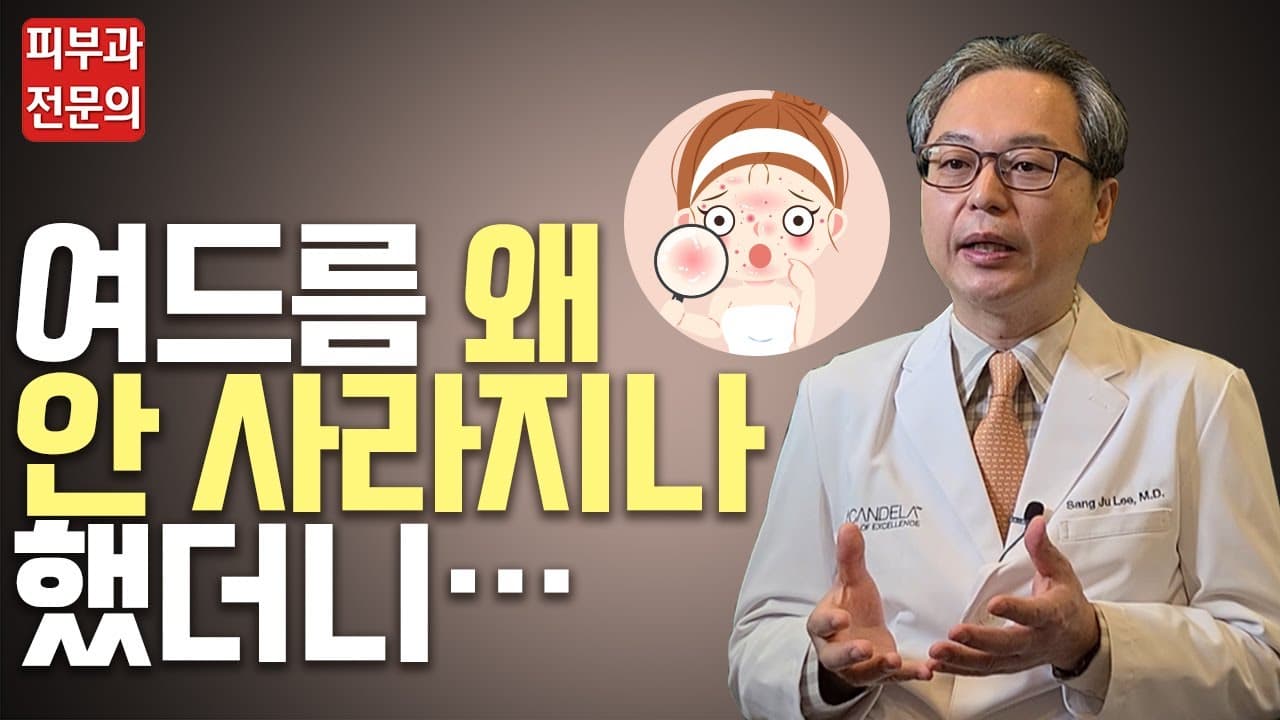
Hello, I am Dr. Lee Sang-tae, a dermatologist. As the weather gets warmer, sebum secretion and sweat increase, leading to more people worrying about acne. Many people are curious about the causes of acne, so today, let's explore the various causes of acne that can occur to anyone, regardless of skin type—dry, oily, or combination—and answer some common questions.
Skin Type and Acne: Is There Really No Connection?
Acne does not only appear on specific skin types. It's easy to think that acne occurs more frequently in oily skin with high sebum secretion, but in reality, acne develops when sebum is not properly discharged to the outside and accumulates inside the pores. Therefore, the smooth discharge of sebum has a greater impact on acne development than the amount of sebum secreted. Acne can occur in all skin types—dry, oily, or combination—if pores become blocked.
Hormones and the Secret of Acne Occurrence Areas
Sebaceous glands are distributed throughout our face, and these glands are highly influenced by hormones. Interestingly, sebaceous glands in different facial areas react differently to hormone concentrations.
- Younger age: Acne primarily occurs in the T-zone (forehead, nose), which reacts to lower hormone concentrations.
- As one ages: Acne tends to occur more in the U-zone (around the mouth, chin), which reacts to higher hormone concentrations. So, remember that the primary areas where acne occurs can change with age.
Why Acne Keeps Appearing in the Same Spot
Many people are concerned about acne repeatedly appearing in the same spot. This is because that area has an environment conducive to acne growth.
- Excessive sebum secretion: Sebum is secreted in large amounts, easily blocking pores.
- Keratin accumulation: Dead skin cells (keratin) block pores, hindering sebum discharge.
- Acne bacteria proliferation: Acne bacteria easily multiply in an environment rich in sebum and keratin. Due to these complex factors, certain areas can experience a vicious cycle of recurring acne.
Acne: Should You Pop It?
It's often a dilemma whether to pop acne or leave it alone. Acne can be broadly divided into two types:
- Acne with open pores: If sebum discharge is smooth, there is less chance of scarring after extraction.
- Acne with blocked pores: Forcibly popping it can worsen inflammation and lead to scars. It is difficult for an ordinary person to accurately distinguish between these two types with the naked eye. Especially for acne with blocked pores, improper self-extraction can leave permanent scars, so it is advisable to visit a clinic for professional treatment.
Are Stress and Lack of Sleep the Main Culprits of Acne?
Occasionally, some people believe that constipation or poor gut health causes acne. However, stress and lack of sleep are actually known to have the greatest impact on acne development. When we experience a lot of stress, stress hormones are secreted, and these hormones can reduce bowel movements, leading to constipation. At the same time, these hormones act on the sebaceous glands, causing acne.
For example, when studying late into the night before an exam, acne often appears the next day. This is because stress and lack of sleep cause fatigue in the body, leading to acne, and that stress causes constipation, rather than constipation itself being a direct cause of acne.
The Relationship Between Food and Acne: How Should We View It?
There are various opinions regarding the connection between food and acne. Recently, reports have emerged suggesting that certain foods can worsen acne. Dairy products and foods that rapidly raise blood sugar are known to cause or exacerbate acne. If acne repeatedly appears after consuming specific foods, avoiding those foods may be helpful. However, if not, it is generally considered more beneficial for skin health and overall well-being to consume a variety of healthy foods rather than unconditionally restricting specific ones.