
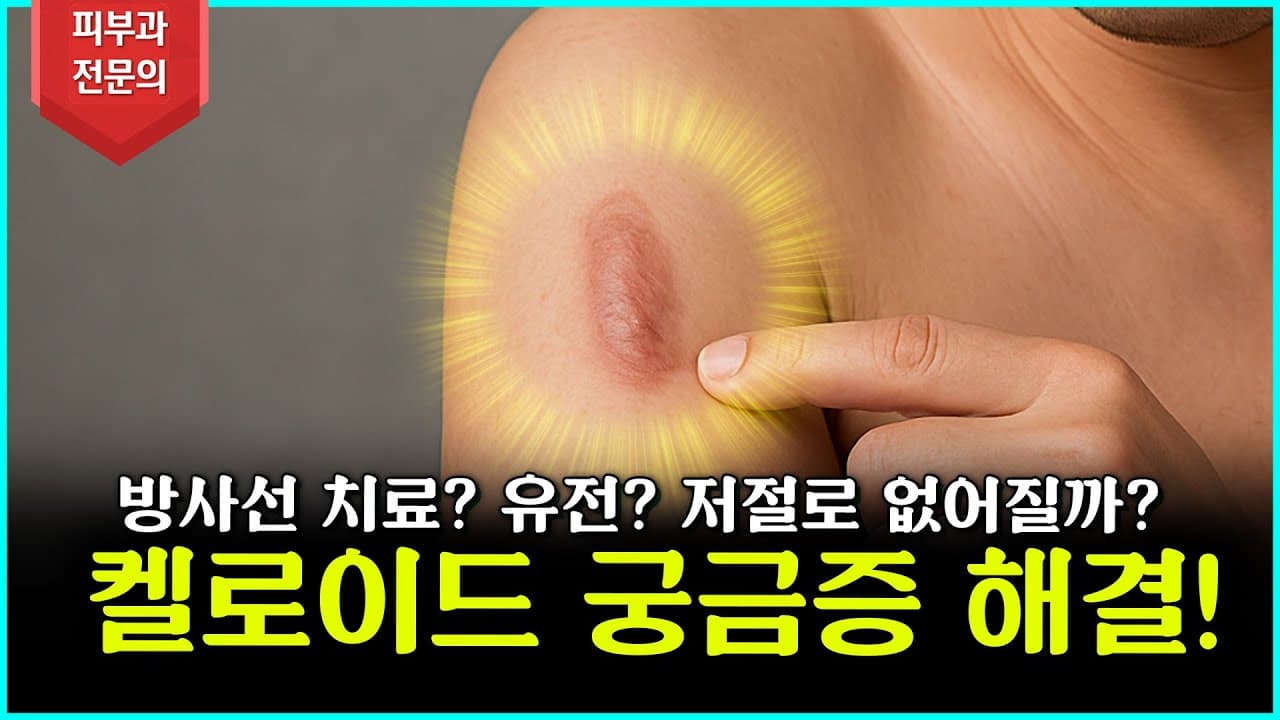
When the skin is injured, scars are usually left behind. However, in certain constitutions, the scar tissue can proliferate excessively, growing larger and wider than the original wound area. This phenomenon is called keloid. To address common questions about keloid scars, we provide accurate information based on frequently asked questions.
Is keloid largely influenced by genetics?
Keloids can show a genetic predisposition. It is known that if one parent has keloids, the child is more likely to develop them. However, there are many cases where keloids appear in individuals even if their parents do not have them, and conversely, children may not develop keloids even if their parents do. In other words, genetic factors play a role, but they are not absolute.
Does the treatment effect for keloid scars vary with size and location?
If the keloid is small and thin, the treatment period may be relatively short. However, the effectiveness of keloid treatment is influenced by several factors in addition to size and thickness, such as:
- Individual constitution: Differences may appear depending on each patient's skin characteristics and response.
- Location of occurrence:
- Center of the chest: Treatment effects tend to appear more slowly compared to other areas.
- Areas subjected to much pressure: Treatment effectiveness may be reduced in areas where continuous pressure is applied to the skin.
- Chin: The treatment progression may be slower than in other areas.
Is radiation therapy necessary for keloid treatment?
Radiation therapy is sometimes mentioned as one of the keloid treatment methods. Indeed, there are reports that radiation therapy can help improve keloids. However, most dermatologists in Korea do not actively use radiation therapy for keloid treatment. The reason is the potential risks associated with radiation exposure. Continuous radiation therapy can lead to necrosis in the affected area, making the skin difficult to heal, or, rarely, the possibility of secondary cancer. For these reasons, radiation therapy for keloids is approached cautiously in Korea.
Can keloid scars disappear naturally?
Occasionally, some people report that their keloids disappeared naturally. While it is not entirely impossible for keloids to disappear on their own, it is generally a very rare occurrence compared to the possibility of keloids gradually growing larger.
It is not advisable to think that keloids will disappear naturally if left alone. While there are cases where they disappear, it is best to consider these extremely rare.
Therefore, if a keloid develops, it is recommended to receive early and active treatment before it grows larger.
Does the season affect keloid symptoms?
Medical literature does not contain clear reports that keloid symptoms worsen or improve in specific seasons. However, when examining many patients, some report feeling that their keloids grow slightly larger during seasonal changes. This appears to be an area where individual differences may exist.
Today, we took the time to answer your questions about keloid scars. If you have further questions about keloids, it is important to consult with a medical professional to establish an accurate diagnosis and appropriate treatment plan.