
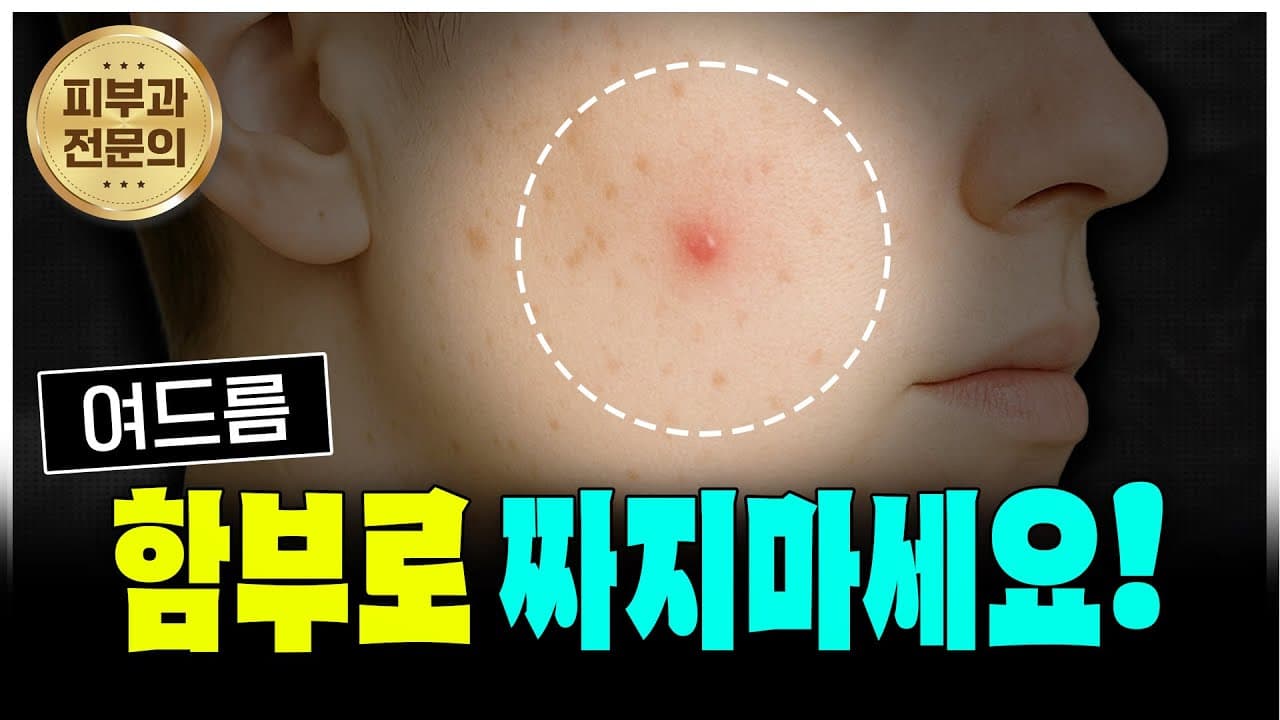
When acne appears, the dilemma of 'should I squeeze it or not?' is a question almost everyone has pondered at some point. However, the answer to this question is not as simple as it might seem. Some acne can be squeezed, while other types should never be touched. Today, we will learn about the precise criteria for acne extraction as advised by a dermatologist.
Why shouldn't you squeeze acne carelessly?
Acne can be broadly categorized into red acne and non-red acne. Non-red acne is non-inflammatory acne without inflammation, while red acne is inflammatory acne where inflammation is progressing. Especially with red acne, because there is internal inflammation, carelessly touching it can spread the inflammation to surrounding areas, worsening the condition.
Characteristics of inflammatory acne that should never be squeezed
Acne that is red or painful beneath the skin, and throbs even with a light touch, is a typical symptom of inflammatory acne. Such acne is likely to have pus spread deeper than what is visible. Squeezing it yourself or improper extraction can destroy surrounding tissue and leave inflammation, ultimately leading to scars, so it is best to avoid touching it altogether.
Acne that can be carefully considered for extraction
On the other hand, acne where sebum has slightly risen in the form of small white bumps is called comedonal acne. These non-inflammatory types of acne, when properly extracted, can accelerate the overall recovery of the acne.
However, it is important to avoid forcefully pressing or applying excessive pressure with your hands at home. The reasons are as follows:
- Bacteria from your hands can enter and cause secondary inflammation.
- Excessive irritation to the skin can lead to pigmentation.
- Attempting to extract forcefully can damage skin tissue.
Even among non-red acne, extraction should only be carefully attempted if the comedo comes out easily with light pressure, and forcing out stubborn acne should be avoided.
Scars last a lifetime, why professional management is important
Acne usually disappears within 1-2 weeks, but scars, once formed, often last for years or even a lifetime. Especially, the habit of repeatedly squeezing acne can cause damage much deeper, reaching the dermal layer of the skin, leading to depressed scars.
Why dermatologists recommend acne extraction
Dermatologists can safely extract acne for the following reasons:
- Use of sterilized tools: Minimizes the risk of secondary infection.
- Skilled technique: Only selects acne suitable for extraction and precisely removes only the comedo to prevent inflammation from spreading.
- Post-treatment care: Provides calming care and anti-inflammatory treatment after extraction to aid recovery and minimize skin damage.
Through such professional care, acne can improve faster, and the risk of skin damage and scar formation can be reduced.
If it's difficult to judge acne extraction on your own
Whether or not acne should be squeezed completely depends on its condition. If you find it difficult to judge on your own or are concerned about side effects from improper extraction, consulting with a dermatologist to determine the correct treatment timing is the safest and most effective method. Please feel free to discuss any questions with a specialist.