
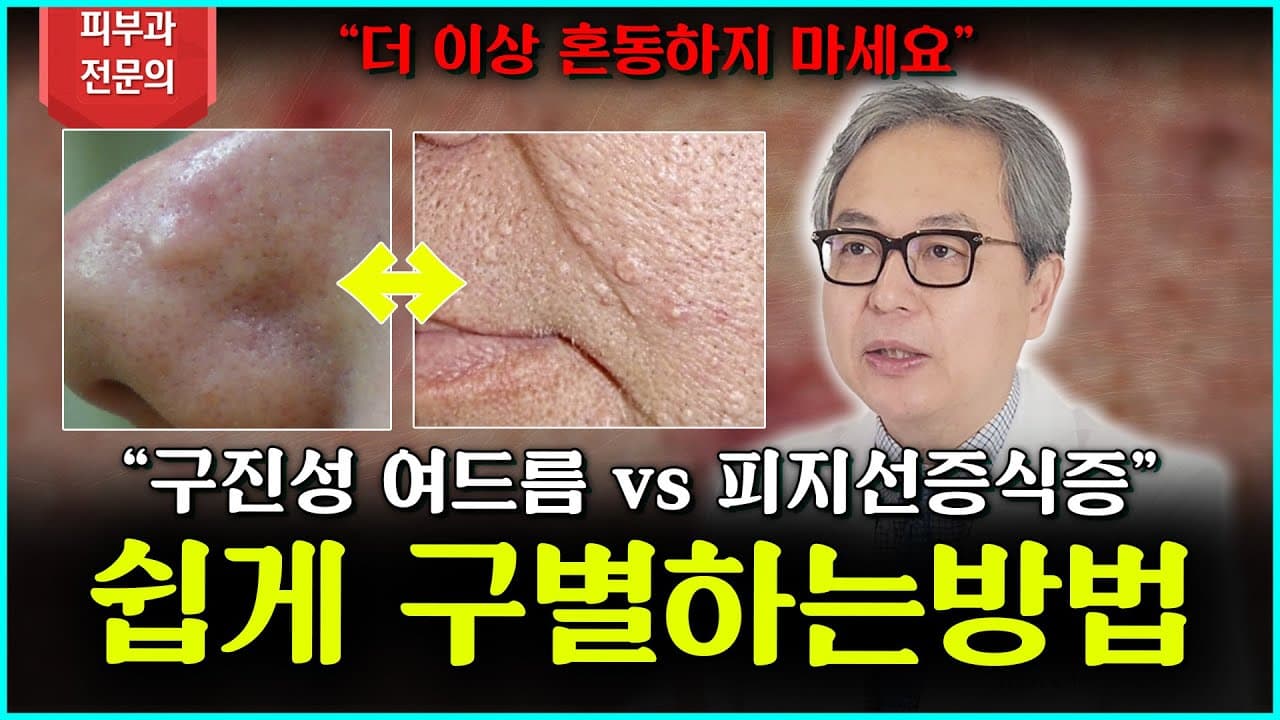
In the skin concern counseling center, we would like to discuss papular acne scars and sebaceous hyperplasia, which many people confuse. While both affect the appearance of the skin, there are clear differences in their causes and treatment methods. Today, we will accurately identify these differences and explore the correct treatment direction.
What types of raised acne scars are there?
Generally, acne scars often appear as depressions in the skin. However, some scars may appear raised above the skin surface. There are typically two types:
- Keloid acne scars: Characterized by appearing as a long, raised line on the injured area.
- Papular acne scars: Refers to acne scars that appear as small white bumps on the nose, chin, and chest.
Let's learn more about papular acne scars.
Papular acne scars often appear as bumpy lesions on the nose and can also occur on the chin. They are typically the size of a millet seed and appear slightly whiter than the surrounding skin. They often occur after inflammatory acne or sometimes appear without the person being aware.
What is sebaceous hyperplasia?
Sebaceous hyperplasia, as the name suggests, refers to a condition where sebaceous glands abnormally proliferate. The sebaceous glands in the skin grow excessively, leading to increased sebum secretion, which results in raised lesions compared to the surrounding skin.
This condition can occur with acne, but it is generally known as a symptom of skin aging that appears with age. It may be observed more frequently in individuals with oily skin and well-developed sebaceous glands on the face.
Sebaceous hyperplasia primarily occurs as a skin aging phenomenon in individuals aged 40 to 50 and older, and it is characterized by appearing as white, volcano-shaped bumps that are raised above the surrounding skin.
Papular acne scars vs. sebaceous hyperplasia: What are the key differences?
Both conditions can be easily confused as they both appear as white, raised lesions on the skin. However, they differ in their causes and manifestations.
- Causes:
- Papular acne scars: Can occur after inflammatory acne or appear due to unknown causes.
- Sebaceous hyperplasia: Primarily a phenomenon of skin aging that appears with age.
- Key Characteristics:
- Papular acne scars: Bumpy on the nose, millet seed size, slightly whiter than the surrounding skin.
- Sebaceous hyperplasia: Primarily occurs in individuals aged 40-50 and older, appearing as white, volcano-shaped bumps raised above the surrounding skin.
How are these two conditions treated?
Papular acne scars are treated according to the specific characteristics of the scar. On the other hand, sebaceous hyperplasia can be treated by destroying the sebaceous glands that are causing the proliferation.
Even if both conditions appear together, a treatment plan can be established for each based on its respective cause.
If you are confused, consult a dermatologist.
As mentioned earlier, papular acne scars and sebaceous hyperplasia are often difficult to distinguish because they both appear as white, raised lesions on the skin. Especially in the early stages, it can be challenging to differentiate between the two.
In such cases, consultation with a dermatologist is essential for an accurate diagnosis and appropriate treatment.
A dermatologist will not only perform a visual examination but also, if necessary, conduct additional diagnostics to suggest the most suitable treatment method for the patient.
Today, we have explored the differences between papular acne scars and sebaceous hyperplasia. We hope this information has been helpful in resolving your skin concerns. If you have any further questions, we recommend consulting a dermatologist at any time.