
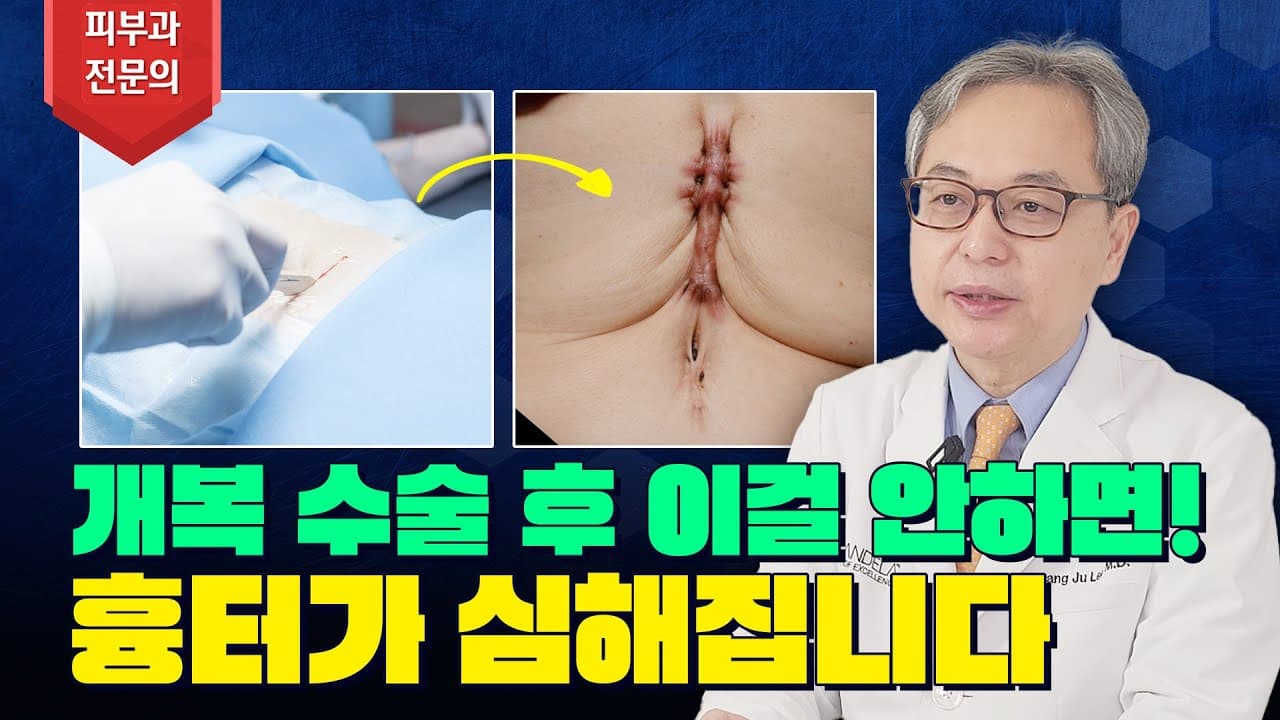
Open Surgery Scars: Don't Worry Anymore
Many people undergo open surgery to treat abdominal conditions such as C-sections, gastric cancer, colorectal cancer, and uterine fibroids. Inevitably, scars remain at the incision site on the abdomen. The abdomen, in particular, is highly affected by skin tension and frequent movement, increasing the likelihood of long, large scars. Since the scalpel penetrates deep into the skin during incision, scars are often larger and more raised than in other areas.
However, these abdominal surgical scars can be significantly improved with professional treatment at the appropriate time. It is important to remember that satisfactory results can be achieved through proactive management, rather than leaving them as a lifelong concern.
Why are open surgery scars more likely to form?
Open surgery involves significant skin tension during the process of incising the abdomen with a scalpel, which increases the likelihood of scar formation. The abdomen, in particular, is one of the areas of the body with a lot of movement and is greatly affected by skin tension. Furthermore, because the scalpel penetrates deep into the skin during incision, scars are often larger and more raised.
Scar prevention should begin immediately after surgery
To minimize scarring, it is best to start preventive treatment as soon as possible after surgery. In the early stages, the following methods can help suppress scar formation and aid in improvement:
- Ointments and Tapes: Use ointments or tapes applied to the scar area to reduce skin tension and help minimize scar formation.
- Laser Treatment: Specific laser treatments, such as Vbeam Laser, can help manage red or early scars.
How can already formed long scars be improved?
Even long scars that have already formed in the shape of sutures can be improved. The size or shape of the scar can be alleviated through surgery or laser treatment. Especially if the surgical site is red or raised, it may indicate a predisposition to scarring, so we recommend considering laser treatment. Various laser treatments can be helpful in improving long linear scars.
Keloid Scars Accompanied by Itching and Pain
Some patients, depending on their constitution, may develop keloid scars where the skin protrudes at the incision site. Keloid scars are not just a cosmetic issue; they can cause itching or pain, leading to discomfort in daily life. In such cases, repeated Triamcinolone Scar Injection can help alleviate pain and itching.
Real Treatment Case: Abdominal Keloid Scar Causing Even Back Pain
Here is a treatment case from a dermatologist:
There was a patient who, due to a keloid scar after open surgery, experienced such severe skin pulling that they couldn't straighten their back properly. This led to poor posture, causing not only back pain but also pain in various joints.
This patient had the scar removed with a single laser treatment and prevented scar recurrence with injection treatment. Now, they can straighten their back properly, and the scar has almost disappeared, resulting in a very satisfactory cosmetic outcome.
As seen, abdominal surgical scars, if left untreated, can remain a lifelong complex, but they can be sufficiently resolved through appropriate diagnosis and treatment by a dermatologist.