
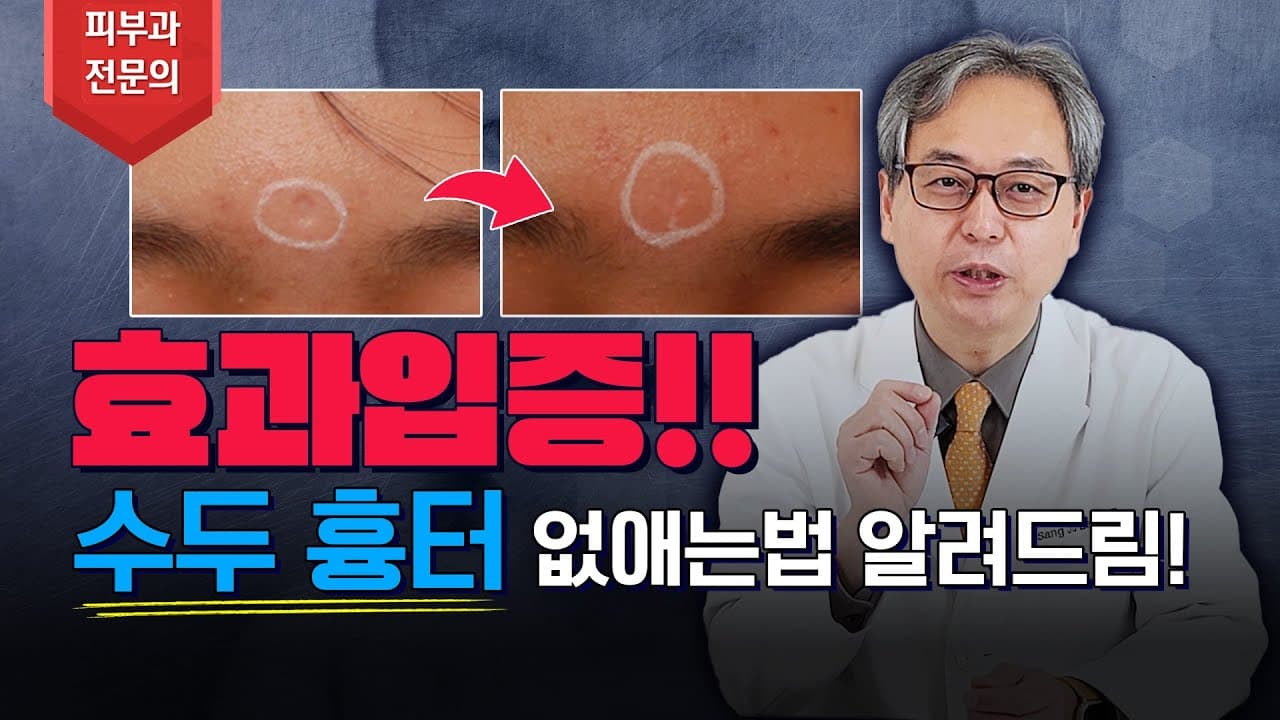
Hello. Chickenpox is one of the common infectious diseases contracted during school years due to its high contagiousness. In particular, after a severe bout of chickenpox, depressed scars can remain on the cheeks, between the eyebrows, and other central areas of the face, causing significant stress. Today, based on a paper published by Yonsei Star Dermatology regarding chickenpox scar treatment, we will inform you about effective removal treatment methods.
When can chickenpox scars be treated?
Chickenpox scars can be treated from the point when scabs have disappeared and there is no more oozing. As with other scars, the earlier the treatment, the better the results. If scar prevention treatment with lasers or injections is performed during the early scar stage after the wound has healed, the formation of chickenpox scars can be minimized.
Can old chickenpox scars also be treated?
Many people who developed chickenpox scars in childhood still have them as adults. These individuals often ask if old scars are untreatable. While old chickenpox scars are more challenging and take longer to treat compared to early chickenpox scars, they are not impossible to treat. By undergoing repeated treatments, significant improvement can be achieved compared to the current state.
Limitations of existing chickenpox scar treatments
Chickenpox scars primarily form when skin damage occurs after a chickenpox virus infection. Previously, laser dermabrasion was a commonly used procedure to remove chickenpox scars. Laser dermabrasion helps effectively fill severely depressed scars, but it had the disadvantage of severe redness after the procedure and a slight widening of the scar area.
Yonsei Star Dermatology's new chickenpox scar treatment: Combined Intra-incision and Erbium YAG Laser
Our Yonsei Star Dermatology research team introduced a method in a 2014 SCI-indexed international journal that can quickly and effectively improve chickenpox scars. This method involves combining intra-incision, which complements the shortcomings of existing treatments, with an Erbium YAG Laser.
What is Intra-incision?
First, intra-incision is used to sever the fibrous scar tissue that pulls the skin down, allowing the depressed area to fill with new tissue. After about a month, you can observe the depressed area filling in to some extent.
Role of the Erbium YAG Laser
After the skin has filled in, a 2940nm Erbium YAG Laser is used to meticulously ablate the edges of the scar. Through this process, the skin depressed by chickenpox becomes similar in height to normal skin, offering a new treatment method that can provide a certain level of satisfaction.
Treatment process and precautions
The method introduced this time may cause bruising or slight erythema immediately after the procedure. If you have a very important schedule or meeting within a week, it is advisable to avoid the procedure.
- Treatment frequency: Treatment should be performed at least 5 times, with one-month intervals.
- Improvement effect: Generally, an improvement effect of 70% or more is reported after the procedure.
- Duration of effect: The combined treatment effect of intra-incision and Erbium YAG Laser can be expected to be semi-permanent, as long as chickenpox scars do not reappear in the same spot.