
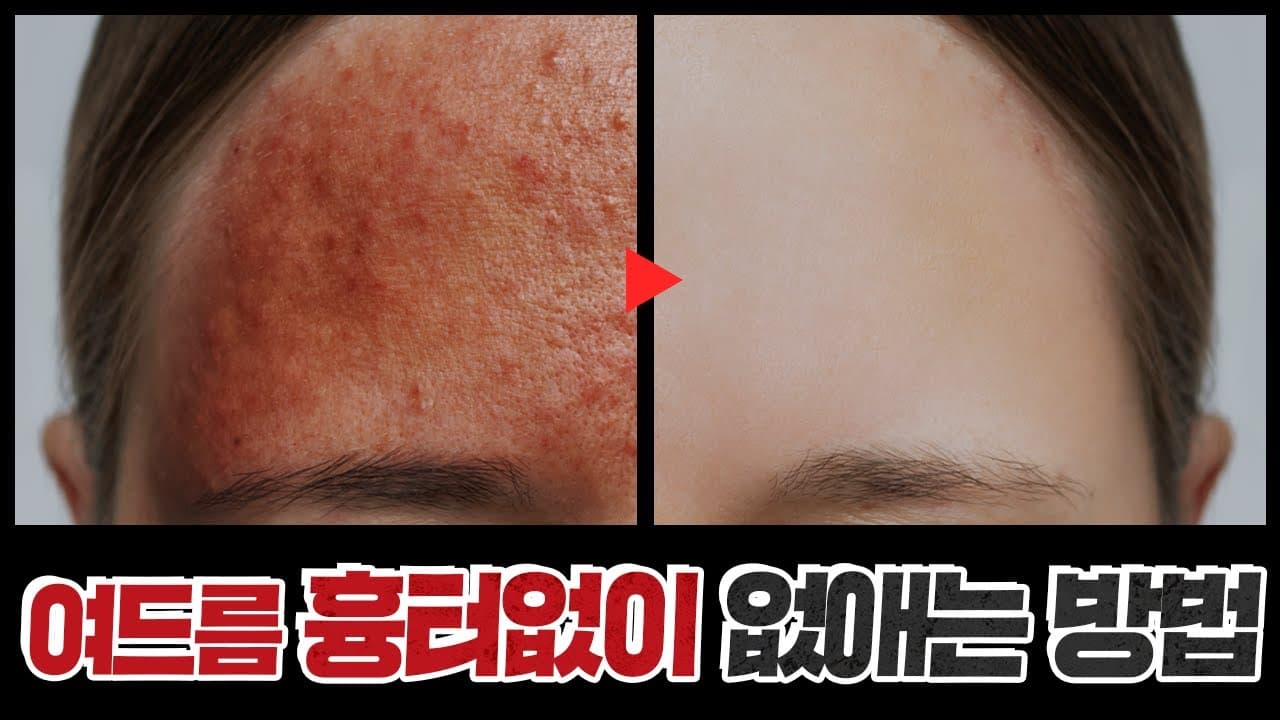
Many people manage their acne by squeezing it themselves. However, they often don't know that some acne can be squeezed while other types absolutely should not, leading to incorrect handling and scarring. Today, we will learn about properly managing acne with Director Lee Sang-ju of Yonsei Star Dermatology Sinchon.
Why shouldn't you squeeze acne improperly?
Acne has different stages of progression, and the management method varies depending on the stage. Squeezing acne with the wrong method can worsen inflammation and ultimately lead to deep scars, so caution is needed.
Stages and Types of Acne
White Acne (Comedones)
When acne first appears, it looks white. This is a comedone, a lump of sebum accumulated inside the pore. Comedones provide a favorable environment for bacteria.
Red Acne (Inflammatory)
If inflammation occurs in a comedone, the acne turns red. Over time, it may become a deeper red or turn brown. If the inflammation worsens and a pustule ruptures nearby, the inflammation can become severe, leaving marks or scars.
Blue Acne (Severe Inflammation)
When inflammation is severe, the skin surface may thin and appear bluish. This is a very sensitive state, like an angry balloon, prone to rupturing if mishandled, which can cause severe inflammation and secondary scars in the surrounding area.
Acne that can be squeezed vs. Acne that should never be squeezed
Depending on the type of acne, squeezing it can either be helpful or harmful.
- Acne that can be squeezed
- White comedones are sebum lumps, so they can be squeezed.
- Small white comedones are best squeezed.
- Comedones in wider skin areas tend to extract relatively well.
- Acne that should never be squeezed
- Red acne already has inflammation, so mishandling it can cause it to rupture and lead to scars.
- Forcing acne in narrow skin areas can rupture the comedone or cause damage to the surrounding area, making it worse than not squeezing it at all.
- Bluish acne has thinned skin, so mishandling it can cause it to rupture, leaving severe inflammation and scars. It is important to calm it. You can receive topical or oral medication from a dermatologist to calm it.
- For sudden breakouts, receiving an acne injection at a clinic can be effective.
Scars left by improperly squeezed acne
Forcing acne that should not be squeezed can worsen inflammation, causing pain and various types of scars. Many people are concerned about deep, depressed scars such as boxcar, rolling, and icepick scars.
Severely inflamed acne inevitably leaves depressed scars. This is because sebum or pus cannot exit properly and ruptures sideways, creating inflammation in the surrounding tissue, and this inflammation dissolves the dermal tissue of the skin, causing the skin to become sunken.
How do we treat acne scars?
Acne scars can appear in various forms on a single person's face, so it is important to choose the appropriate treatment method based on the type and depth of the scar.
Shallow Acne Scars
Laser treatment that induces natural regeneration can be effectively used for shallow acne scars.
Deeply Depressed Acne Scars
For deeply depressed acne scars, using a mild laser multiple times or laser treatment that uses strong energy on the skin can be considered. However, better results can be expected when combined with other treatments.
- Rolling Scars: Subcision can be considered, which involves using a small needle to cut the fibrous bands that pull the skin down.
- Boxcar Scars: There is also a method using a device called Punch excision/elevation to lift normal skin and reduce the height of the scar.
Combining these various treatment methods can help effectively improve acne scars in a relatively short period.
How to minimize acne scars
To prevent acne from causing scars, managing acne to prevent it from appearing in the first place is most important. Stress management, sufficient sleep, and healthy eating habits are paramount.
If acne has already appeared, it is best to treat acne scars appropriately in the early stages. The method that leaves the fewest acne scars is to treat red marks or early scars as quickly as possible before the acne worsens, so please remember to visit a nearby dermatology clinic for a consultation.