
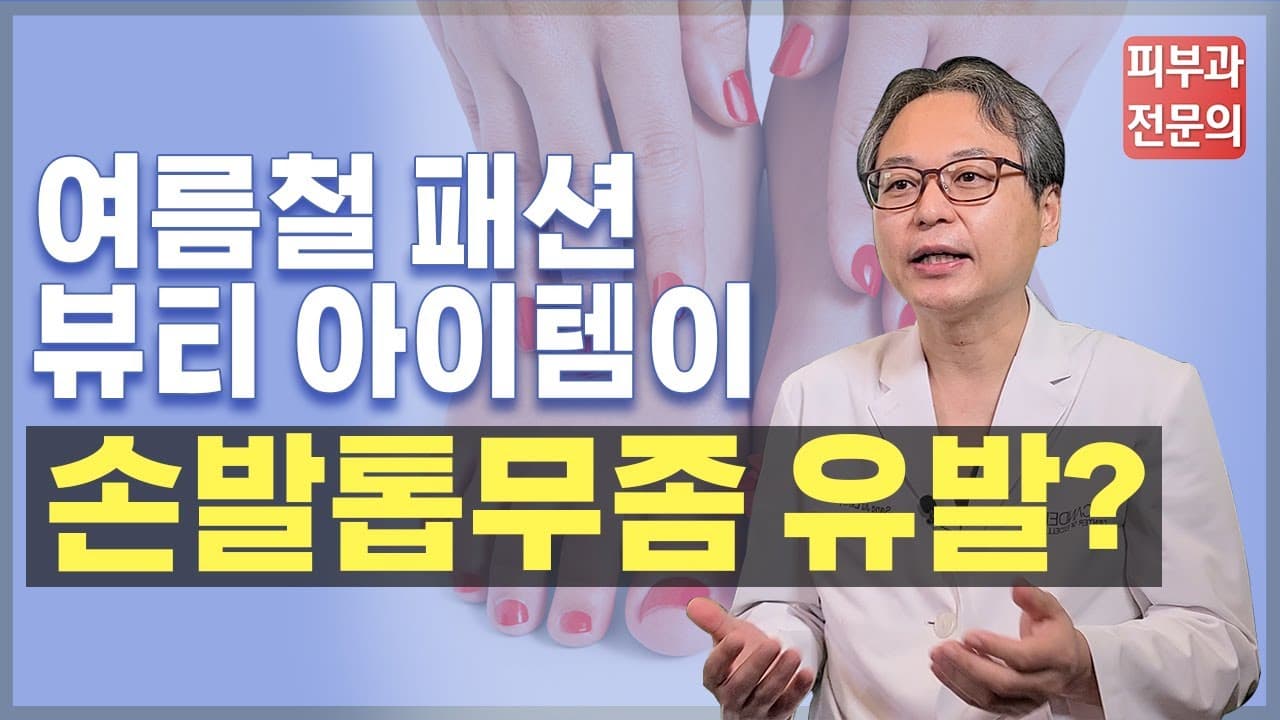
Hot and humid summers lead to lighter clothing, but did you know that popular fashion and beauty items can cause athlete's foot and nail fungus? Today, we will look at common items that tend to cause athlete's foot in the summer and discuss proper management and treatment methods.
Stylish Pedicures Can Lead to Nail Fungus
Pedicures, which involve applying nail polish to toenails for stylish wear with summer sandals, are popular. Recently, various types of gel pedicures, including convenient tips and stickers, have emerged, making it easy for anyone to try. However, these pedicures can cause or worsen nail fungus, so caution is needed.
The surface of pedicured toenails blocks light, and moisture often remains between the nail and polish after showering or bathing, creating an ideal environment for fungi to multiply. Gel pedicures, in particular, usually last for more than 3 to 4 weeks, so it is not uncommon for people to discover a fungal infection late, missing the early treatment window.
If you already have nail fungus and try to cover it with a pedicure, this will only worsen the symptoms. It is advisable to treat the fungus completely before attempting a pedicure. While not saying to avoid pedicures entirely, maintaining them for about a week and then removing them to check for fungal infection is a relatively safe method.
Rain Boots, a Must-Have for the Rainy Season, Can Be a Breeding Ground for Athlete's Foot Fungus?
One of the most beloved fashion items during the rainy season is rain boots. While rain boots are excellent at blocking water, they are not well-ventilated, making the feet inside the boots hot and humid. A hot and humid environment is very conducive for athlete's foot fungi to thrive.
If the skin on your soles is wrinkled or your toenails have turned yellowish after wearing rain boots, you might suspect nail fungus. If you can't give up rain boots, you should pay attention to managing various bacteria and fungi, such as athlete's foot fungi.
After wearing rain boots, it is good to turn them upside down or use deodorizers and desiccants to dry the inside thoroughly. When wearing rain boots, it is important to wear cotton socks with good sweat absorption to ensure sweat is well absorbed and to create a dry environment.
Athlete's Foot and Nail Fungus: What Are Effective Treatments?
Since athlete's foot is highly contagious, prompt treatment is crucial.
- Athlete's Foot: Treatment with antifungal ointments or oral medications prescribed by a dermatologist can achieve results in a relatively short period.
- Nail Fungus: The treatment period is generally longer. In the past, oral and topical medications were primarily used, but recently, laser treatment has been reported to show excellent effects.
- Early Nail Fungus: There are lasers that use low-output energy to induce reactive oxygen species within the fungal cells, thereby killing the fungi. OnychoLaser is a prime example.
- Advantages: Treatment is possible without heat or pain.
- Disadvantages: It is more suitable for early and mild cases, and consistent treatment 8 to 10 times at weekly intervals is needed to expect therapeutic effects, which might be a burden due to weekly clinic visits.
- Advanced Nail Fungus: Other laser treatments are frequently used. In severe cases, Nd:YAG Laser, which raises the temperature of the toenail to 60-70 degrees Celsius with a fine beam of light to kill the fungal cells, is primarily used, with PinPointe being a representative device.
- Advantages: The laser is applied only to the affected area, selectively killing the fungal cells without affecting the toenail, ensuring safety and promising satisfactory treatment results.
- Advantages: It is highly effective, and the treatment cycle is longer, about once a month, making it a preferred method for busy professionals or those who find it difficult to visit the hospital regularly.
- Early Nail Fungus: There are lasers that use low-output energy to induce reactive oxygen species within the fungal cells, thereby killing the fungi. OnychoLaser is a prime example.
Why Must Athlete's Foot Treatment Be Consistent?
Many people stop treatment once their athlete's foot symptoms begin to improve. However, even if the symptoms have improved, the fungi are not completely eradicated and can recur at any time. Therefore, rather than arbitrarily stopping treatment, it is advisable to complete the treatment after being fully cured, as diagnosed by a dermatologist.
Lifestyle Habits to Prevent Recurrence of Athlete's Foot
Athlete's foot is a condition with a high recurrence rate, and family transmission is also common. Even after treatment, to prevent recurrence, it is important to always keep your feet and toenails dry and clean. You should maintain lifestyle habits that create an environment free of sweat and moisture.