
Hello. I am Dr. Lee Hye-young, a dermatologist. In summer, many people wear sandals or slippers barefoot, and many enjoy nail art or pedicures for a change of pace during vacation. Did you know that while they may look beautiful on the outside, the nails underneath can suffer unexpected pain? Today, we will learn more about major nail diseases that can occur due to nail art or pedicures.
Why do nail fungus occur after nail art or pedicures?
Many women who visit our clinic for nail fungus complain that they developed new fungus or their existing fungus worsened after removing nail art or pedicures. In such cases, the cause of the disease can often be found in nail art or pedicures.
The main causes are as follows:
- Sunlight blockage and humid environment: When you have nail art, your nails are not exposed to sunlight. After showering or swimming, moisture between the nail polish and the nail may not dry completely, creating an environment where dermatophytes, which cause nail fungus, can easily multiply.
- Hygiene issues with tools: If the tools used for nail art are not properly sterilized, nail fungus from other people can be transferred.
Early detection and treatment of nail fungus are important
It is very important to detect and treat nail fungus early. If nail art covers the nails, it is often discovered late, making treatment more difficult. Therefore, if nail fungus is found, you should not do nail art or pedicures to cover it. Early stages can be treated with topical medication, so we recommend visiting a dermatologist and getting treatment as soon as possible.
When is laser treatment effective?
If medication is a burden or not effective, laser treatment can be considered.
- Lunula Laser: This is a non-thermal laser treatment recommended for mild cases or when nail fungus occurs on multiple nails simultaneously.
- PinPointe Laser: This is an effective treatment for severe nail fungus that has been present for a long time or is not numerous, selectively killing only fungal cells with strong thermal energy.
Can gel nail UV lamps cause skin cancer?
Many people prefer gel nails over regular nail polish because they last longer, for more than 3 to 4 weeks. The reason gel nails boast such a long-lasting period is that they are hardened and solidified with a UV lamp.
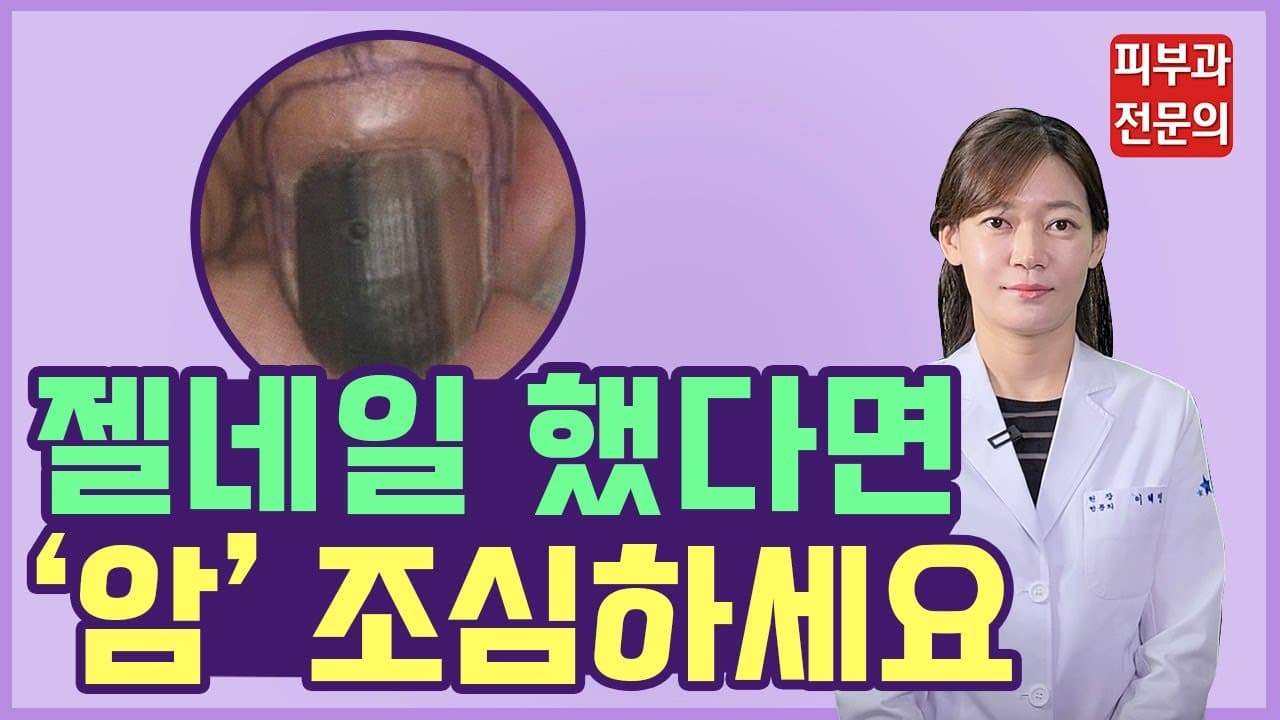
However, the American Medical Association reported a case where melanoma, a type of skin cancer, was found in a woman who had gel nails about 6 times a year for 15 years and was exposed to a UV lamp, even without a family history. Subungual melanoma, melanoma that occurs under the nail, usually appears as a black line on the thumb or big toe. It is a skin cancer originating from melanin-producing cells that is highly related to UV radiation. As reported in the case, if nail art is done too frequently, the cumulative exposure to UV light, which can cause skin cancer during the UV lamp curing process, could lead to melanoma.
Of course, only a few cases have been reported, and subungual melanoma is not a common skin cancer, so you don't need to worry too much. However, if you have the following symptoms, you should definitely get a biopsy:
If the width of the black line on the nail is 3mm or more, and it has various shades, asymmetry, and indistinct borders, there is a possibility of melanoma, so be sure to consult a dermatologist and get a biopsy.
To prevent subungual melanoma, please refrain from doing gel nails too frequently or for too long. We recommend applying sunscreen to the skin around the nails or using an LED lamp rather than a UV lamp for gel nails.
Self-nail art, what if your nails lift or crack? (Onycholysis)
Nowadays, many people do self-nail art or pedicures at home using stickers or tip-shaped artificial nails without going to a nail salon. However, frequent attachment and detachment of nail stickers or artificial nails can damage the nails, causing not only fungus but also onychomycosis, a nail disease where nails crack or lift, so be careful.
Onycholysis is when the adhesive of artificial nails and nail stickers irritates the nails, causing them to lift and separate from the skin or crack. In particular, bacteria can penetrate between the separated nails, causing secondary infections. Therefore, if symptoms of onycholysis are found, immediately remove nail art and pedicures, and applying nail strengtheners can be helpful.
Also, be careful of contact dermatitis caused by adhesive ingredients.
Please note that substances such as toluene, chloroform, and formaldehyde used in nail stickers or artificial nail adhesives can cause contact dermatitis if they come into contact with the skin.
Nail Art Guidelines for Healthy Nails
Honestly, not doing it at all is best for nail health. But if you must, you can protect your nail health by following a few guidelines.
- Use regular nail polish: We recommend applying regular nail polish rather than gel nails, which irritate the nails when removed, as they last longer.
- Thorough personal hygiene: It is best to use personal or disposable tools for nail art if possible.
- Appropriate duration and rest: It is good to keep nail art for about a week, then remove it to check for any abnormalities in nail health, and then take a rest period of 1 to 2 weeks.
- Sufficient rest: When onychomalacia, where nails become thin or break due to frequent nail art, occurs, it is important to give them at least two months of sufficient rest.
So far, we have learned about nail diseases that can occur due to nail art or pedicures. Please pay attention to proper care and precautions for nail health.