
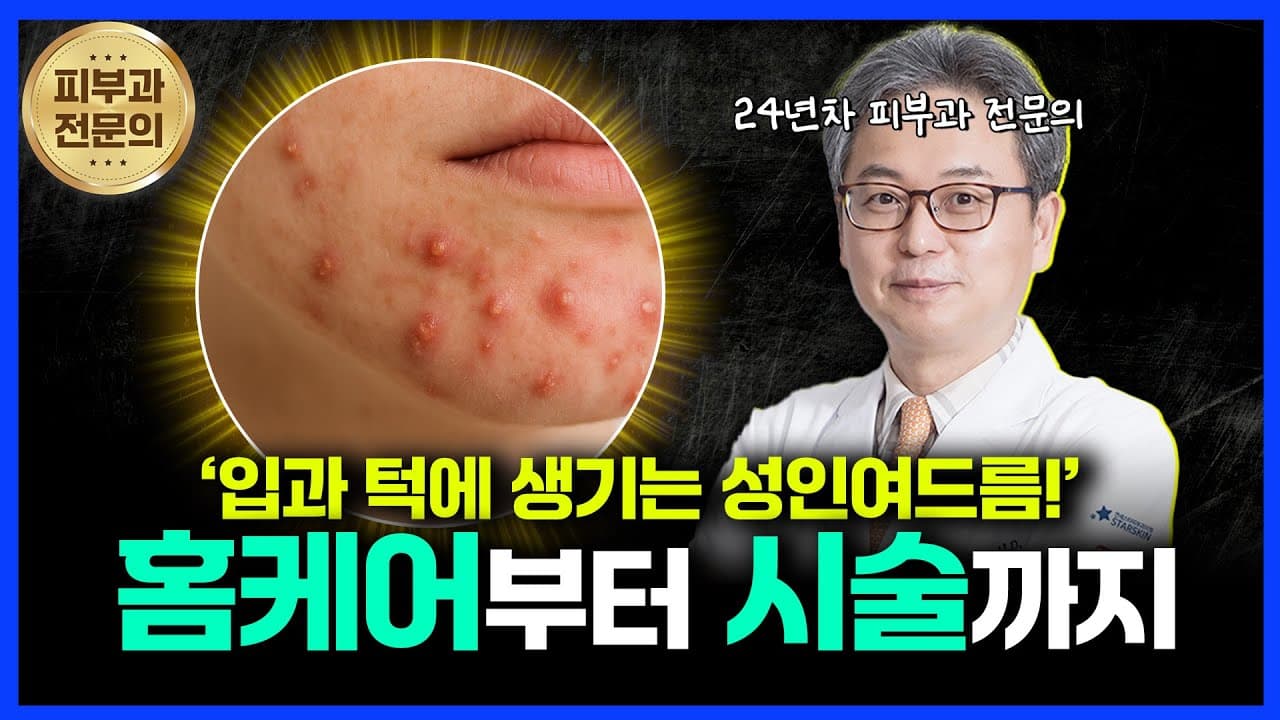
Hello, I'm Lee Sang-ju, a dermatologist at the Skin Concern Counseling Center.
Do you think acne is only a concern for teenagers? Recent research suggests that adults with acne are 2.4 times more likely to have an eating disorder than those without. This indicates that adult acne can affect not just appearance but also quality of life. Today, we will delve into why adult acne occurs and how to manage it.
Adult Acne: More Than Just a Skin Problem
Adult acne can impact not only appearance but also mental health. Reports linking it to psychological issues like eating disorders emphasize the importance of proactive management and treatment.
Why Does Adult Acne Occur?
The causes of adult acne are diverse, but they can be broadly categorized into three main areas.
Hormonal Imbalance
Acne often worsens during menstrual cycles or pregnancy. Additionally, severe acne and increased facial hair can be the first symptoms of hormonal disorders like Polycystic Ovary Syndrome. This shows that hormones significantly influence the development of adult acne.
Skin Barrier Issues
Using various cosmetics or harsh cleansers for excessive sebum removal can damage the skin barrier. When the skin becomes dry and pores are irritated, dead skin cells can accumulate, making sebum excretion difficult and potentially worsening acne.
Lifestyle Habits
- Lack of Sleep: During periods of stress and insufficient sleep, such as exam periods, hormonal changes often lead to acne breakouts.
- Stress: When stressed, various hormones like cortisol are secreted, which can trigger acne. Stress can also cause constipation, and adult acne often appears alongside constipation.
- Diet: While there are discussions about dairy products, sugary foods that cause blood sugar spikes, and fast food potentially affecting acne, nothing has been clearly established to date. However, it is advisable to avoid foods that do not suit you.
Why Acne Tends to Occur Around the Mouth and Chin
Many people notice that acne frequently appears specifically around the mouth or chin. There are several reasons for this:
- Hormone Receptor Response: The sebaceous glands in these areas may have a different degree of hormone receptor response compared to other areas.
- Sebaceous Gland Characteristics: Sebaceous glands around the mouth and chin tend to be thinner and deeper than those in other skin areas, making comedones (whiteheads/blackheads) more likely to form, which can easily lead to inflammation.
- For Men: Various bacteria reside around men's beards. When tired or sleep-deprived, these bacteria can proliferate and manifest as folliculitis, which can resemble acne.
Adult Acne Management at Home
Effective acne management involves adhering to three basic principles: cleansing, moisturizing, and sun protection.
1. Proper Cleansing
The purpose of cleansing is to remove external impurities and excessive sebum from the skin.
- Step 1: Use a slightly stronger cleanser that effectively breaks down oil for thorough cleansing.
- Step 2: Finish gently with a mild acidic or neutral cleanser. If you wear makeup, double cleansing may be necessary.
- Water Temperature: Water that is too hot or too cold can irritate the skin, so lukewarm water is recommended.
2. Adequate Moisturizing
Choose moisturizers that are low in oil and labeled Non-comedogenic or Non-acnegenic. These indications mean they are less likely to cause acne.
3. Sun Protection
UV rays can worsen acne, so it's important to protect your skin from the sun.
- Physical Sunscreen: For acne patients, physical sunscreens are often recommended as they tend to clog pores less.
- Product Selection: Since there are various ingredients, it is best to find a product that suits your skin.
Professional Adult Acne Treatment at a Dermatology Clinic
If acne does not improve with home care or worsens, professional treatment should be considered. Dermatology clinics apply various treatments depending on the type and severity of acne.
1. Medication
- Exfoliation: Medications that remove dead skin cells accumulated in pores.
- Sebaceous Gland Reduction: Medications that reduce sebum secretion.
- Acne Bacteria Elimination: Medications that kill acne bacteria.
Topical medications are often used for localized areas, while oral medications are frequently combined for widespread acne.
2. Acne Care (Medical Skincare)
Scaling and similar procedures are used to remove dead skin cells accumulated in pores without side effects. Acne around the mouth or chin is difficult to extract at home and can leave scars, so it is advisable to have comedones properly extracted at the clinic.
3. Laser Treatment and Gold PTT
Recently, treatments that destroy sebaceous glands within pores to address the root cause of acne are widely used.
- Comedonal Acne: Primarily treated with comedone extraction or exfoliating medications.
- Inflammatory Acne: Antibiotics for acne bacteria or laser treatment for inflammation are common.
- Pustular Acne: If inflammation is severe and pus forms, anti-inflammatory injections are used to calm the inflammation.
- Nodular Acne: In severe cases with bumpy nodules, medication and laser treatment should be actively combined.
- Gold PTT (Photothermal Therapy): This method involves penetrating gold particles into the pores and then irradiating them with a laser to destroy sebaceous glands and kill acne bacteria. This can be effective in preventing recurrence.
Advice for Preventing Acne Scars
Many people often dismiss adult acne as a simple pimple and neglect it. However, excessive inflammation can lead to scarring. To prevent scars, it is crucial to treat acne as soon as it appears. If acne persists despite diligent home skincare, it is advisable to combine it with professional procedures for active treatment.