
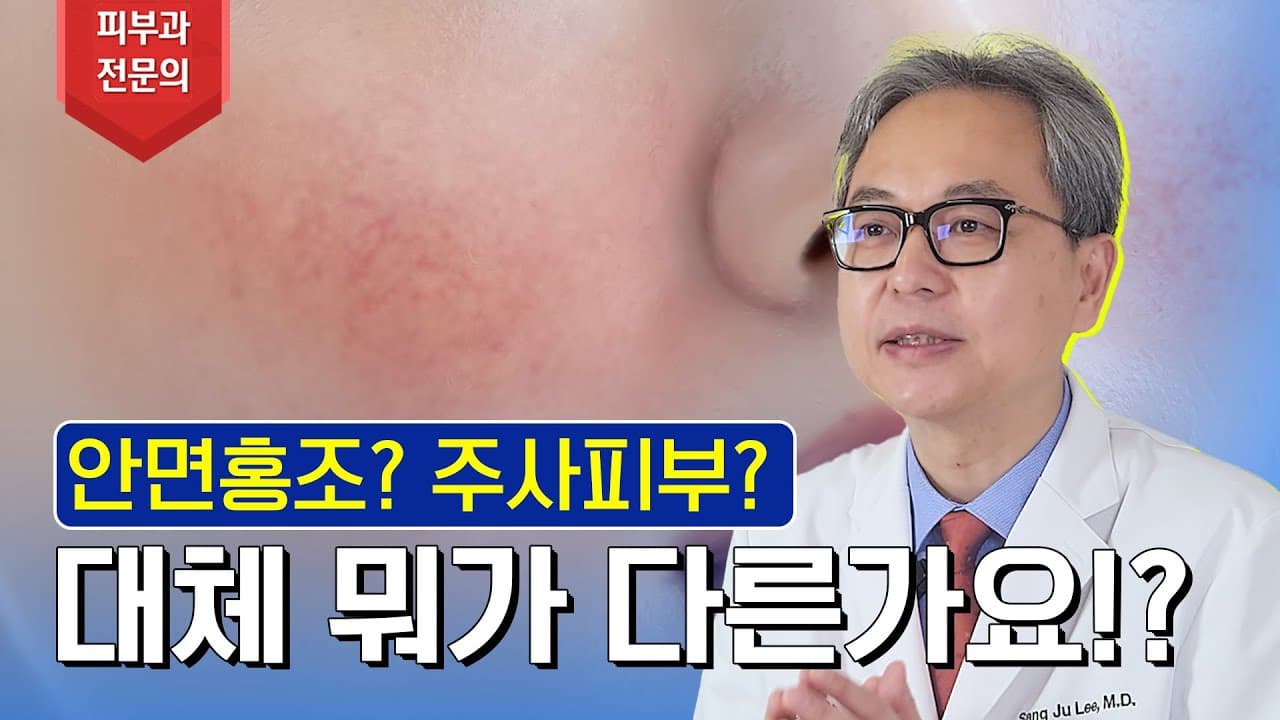
Hello, I am Dr. Sang-ju Lee, a dermatologist. Many people experience their face turning red involuntarily and tend to dismiss it lightly. However, if the redness on your face is not temporary and does not return to its original state over time, it might be more than just simple facial redness, it could be a skin condition called Rosacea. Today, we will delve into rosacea, which is often confused with facial redness.
Facial Redness, Is It Simply a Red Face?
Facial redness, as the name suggests, is a symptom where the face turns red. It is characterized by the skin appearing persistently red due to increased blood flow from dilated blood vessels. The cheeks, in particular, often show persistent redness.
Facial redness can worsen or be exacerbated by the following situations:
- Emotional changes (stress, tension, etc.)
- Sudden temperature changes (moving from a cold to a warm place)
- Consuming hot or spicy foods
- Alcohol consumption
- UV exposure
Facial redness is often difficult to treat naturally, and if left untreated, it can become chronic or lead to rosacea due to inflammation.
What is the Difference Between Facial Redness and Rosacea?
Facial redness and rosacea are often used interchangeably, but there are clear differences between the two conditions. The early symptoms of rosacea often overlap with facial redness, making them easy to confuse.
Facial redness primarily involves the symptom of a red face, with increased blood flow due to dilated blood vessels being the main cause.
In contrast, rosacea is characterized by inflammation accompanying the facial redness. Repeated pressure on the skin's blood vessels and subsequent inflammation in that area are known to be the main causes of rosacea.
Furthermore, while the term 'rosacea dermatitis' is commonly used, it is not, strictly speaking, a medical term. Rosacea is an independent condition, Rosacea, and dermatitis is Dermatitis, which should be understood as entirely different diseases.
Various Symptom Types of Rosacea
Rosacea can manifest in various forms beyond just a red face. Rosacea symptoms typically appear on the central part of the face, specifically on prominent areas such as the cheeks, nose, forehead, and chin.
-
Erythematotelangiectatic Rosacea: This type involves not only facial redness but also dilated blood vessels in the affected area. It often overlaps with initial facial redness symptoms, and laser treatment for the reddened area can show good results.
-
Papulopustular Rosacea: This is an inflammatory type of rosacea, similar to acne, where small bumps (papules) and pus-filled lesions (pustules) appear. It is characterized by severe accompanying inflammation.
-
Phymatous Rosacea (Rhinophyma): As rosacea progresses, the nose area becomes enlarged and bumpy. It can also appear only on the nose.
-
Ocular Rosacea: This type of rosacea affects the eyes. While it can occur alone, it is rare and usually appears with skin rosacea symptoms. Conjunctivitis, redness, dryness, and eyelid inflammation may be present.
Factors that Worsen Rosacea
The exact cause of rosacea is not yet fully understood, but repeated increases in skin blood vessel pressure and inflammation are considered major contributing factors. Additionally, the following factors can exacerbate rosacea symptoms:
- Alcohol consumption
- Emotional stress
- Excessive use of steroid ointments
- Spicy and hot foods (causing skin temperature changes)
- Sudden temperature changes (saunas, air conditioning, etc.)
- UV exposure
Effective Management and Treatment Methods for Rosacea
Rosacea is a chronic condition, so consistent management is crucial. It can be managed through three main approaches: medication, laser treatment, and lifestyle modifications.
-
Medication: If rosacea is accompanied by inflammation, oral antibiotics or sebum suppressants used for acne may be effective. Additionally, some inflammatory rosacea is closely linked to Demodex mites, so applying specialized medications like Rozex Gel that kill these mites can be helpful.
-
Laser Treatment: For erythematous rosacea (erythematotelangiectatic rosacea) where the face is red and blood vessels are dilated, medication may be less effective. In such cases, laser treatment is known to show good results.
-
Lifestyle Modifications: Since rosacea is a chronic condition, it is important to identify factors that worsen it and manage them consistently, similar to managing diabetes or high blood pressure.
- Manage emotional stress
- Avoid sudden temperature changes (saunas, hot water facial cleansing, etc.)
- Refrain from consuming spicy and hot foods
- Consistently use sunscreen (UV light can worsen rosacea)