
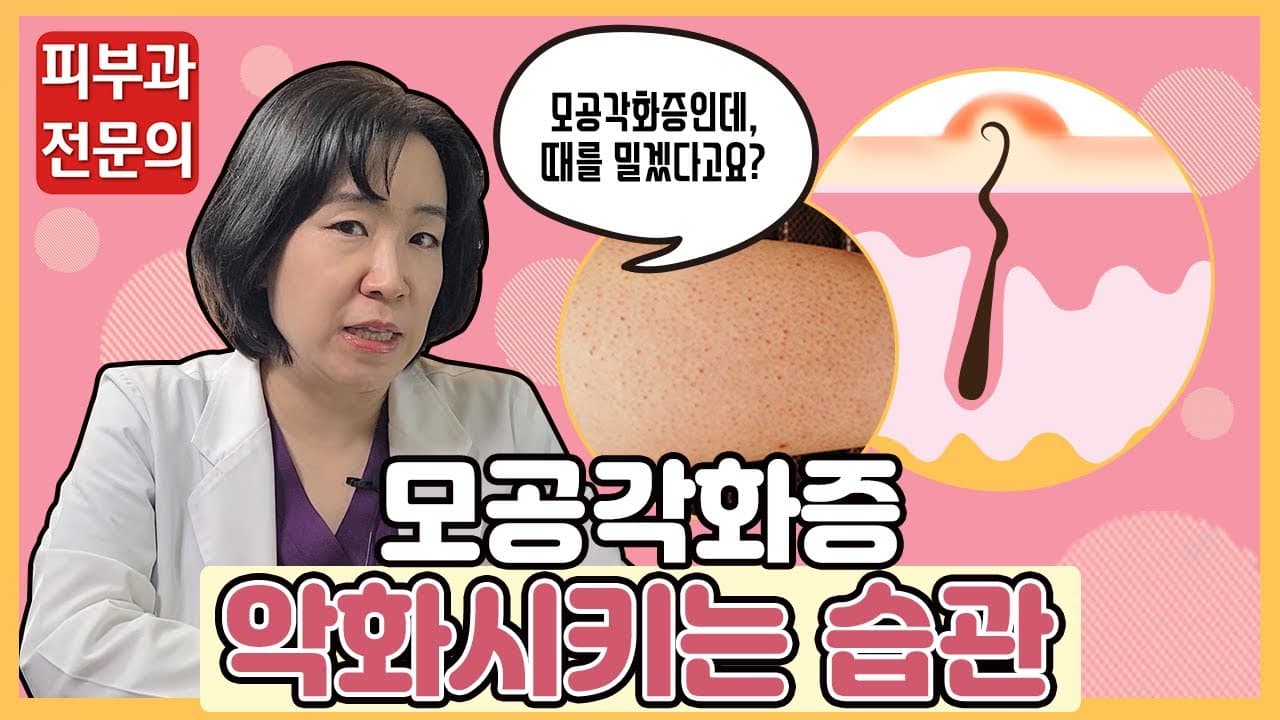
What is Keratosis Pilaris?
Keratosis Pilaris, commonly known as 'chicken skin,' is a skin condition where keratin abnormally builds up around hair follicles, encasing the hair and creating a bumpy, chicken skin-like appearance. It is an autosomal dominant genetic trait, often improving or disappearing around age 30, but can persist into the 50s or older in individuals with dry skin.
Strictly speaking, it differs from temporary 'chicken skin' caused by cold. Keratosis Pilaris primarily appears persistently on the upper arms, upper thighs, and around the chin in young children, and the bumps tend to be slightly larger than those of typical chicken skin.
Avoid These Actions! Factors That Worsen Keratosis Pilaris
Today, we will explore factors that can worsen Keratosis Pilaris. Certain actions can exacerbate symptoms, so caution is needed.
Frequent Hair Removal, Especially Waxing and Plucking
Keratosis Pilaris, where a lot of keratin builds up in areas where hair grows, is closely related to hair. Using a razor can make the skin drier, which tends to promote keratin production. Therefore, individuals who shave frequently are more prone to worsening Keratosis Pilaris.
Especially when waxing or plucking hair with tweezers, the hair follicle can be injured and damaged. This can cause hair to grow sideways or curl inwards, becoming trapped under the skin instead of emerging properly. This is called Ingrown Hair, and it is a major factor that worsens Keratosis Pilaris. This phenomenon can also occur sporadically in men who pluck their beards. Newly growing hair is weak and has a fine tip, making it even easier for it to bend inwards if a lot of keratin builds up.
'Exfoliating' and Excessive Keratin Removal
Similar to hair removal, scrubbing or excessively rubbing the skin can actually worsen Keratosis Pilaris secondarily. While scrubbing the skin is common in Korea's bathing culture, it can exacerbate symptoms.
Many people think, 'If I scrub off the keratin, I can escape it,' but scrubbing is a physical removal of the skin's surface. This is far from removing the keratin that vertically surrounds the pores, and instead, it tends to dry out the skin, causing more keratin to build up in that area. Therefore, excessive exfoliation is not a helpful method for Keratosis Pilaris.
Dry Skin Environment
Keratosis Pilaris is mostly exacerbated in dry environments because enzymes that shed keratin become inactive when the skin is dry. In a dry environment, itching is common, and if one cannot resist scratching or picking, the skin can become rough and secondary pigmentation can easily occur. Additionally, dryness can make the bumpy chicken skin symptoms more prominent.
Keratosis Pilaris Management: Remember These Key Points
If you have Keratosis Pilaris, it is important to avoid the following habits and practice proper management:
- Avoid hot water baths: Avoid soaking in hot water for long periods or vigorously scrubbing the skin.
- Short showers with lukewarm water: It is best to take short showers or baths with lukewarm water.
- Make moisturizer use a habit: Apply enough moisturizer within 3 minutes after showering to prevent skin dryness.
- Utilize emollient-containing moisturizers: Using moisturizers with emollient ingredients that soften the skin can be helpful.
- Use mild cleansers: It is best to avoid bar soaps or overly strong alkaline body washes that produce a lot of drying foam.
- Maintain indoor humidity: Using a humidifier to maintain appropriate indoor humidity can help prevent skin dryness.
When to Seek Help from a Dermatology Specialist
While the treatment sequence for Keratosis Pilaris may vary by clinic, it often involves prescribing specialized medications containing retinoids to improve keratinization. These help to soften the keratin in the pores.
Additionally, laser hair removal may be combined to remove ingrown hairs, and chemical peels may be used to promote keratin shedding for treatment.
Keratosis Pilaris can sometimes lead to secondary bacterial infections, causing pus-filled lesions similar to acne, due to irritation like stinging or picking at the skin. In such cases, it is very important to receive an accurate diagnosis and appropriate prescription from a dermatology specialist.
Alleviating Keratosis Pilaris Through Lifestyle Improvements
Improving daily habits, such as drinking enough water, keeping the body hydrated, and maintaining appropriate indoor humidity, can also help alleviate Keratosis Pilaris. Keratosis Pilaris is often associated with a family history of atopic dermatitis, but the exact cause is still unknown.
This has been Dr. Jung Ji-in, a dermatology specialist.