
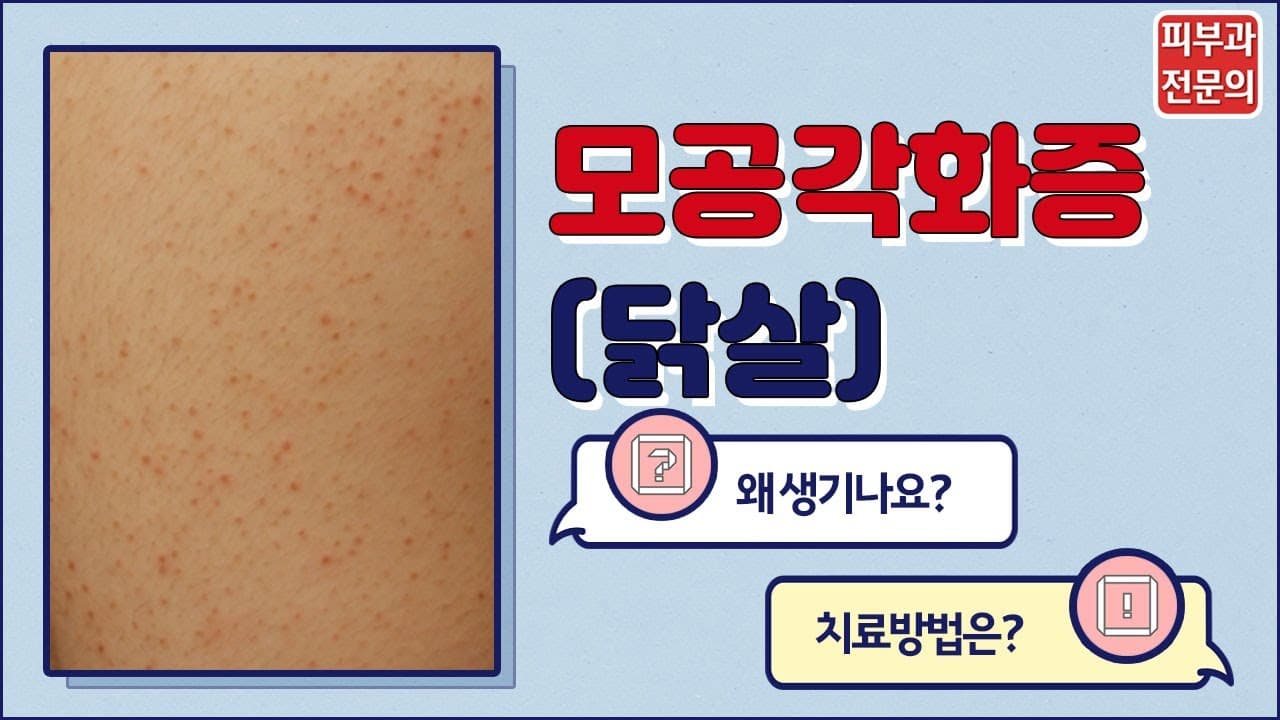
Hello. We will take some time to learn more about a skin concern many people call 'chicken skin,' which is keratosis pilaris. Keratosis pilaris is a condition where keratin builds up in the hair follicles, and it can appear not only on the arms but also on the legs, buttocks, and even the face. Today, we will look at everything from the causes of keratosis pilaris to various treatment methods and home care tips.
What is Keratosis Pilaris?
Keratosis pilaris is medically known as keratosis pilaris. As the name suggests, it is characterized by excessive keratin buildup in the hair follicles, resulting in small, bumpy protrusions. It commonly appears on the arms but can also occur on the legs, buttocks, and occasionally the face.
Why Does Keratosis Pilaris Occur?
The exact cause of keratosis pilaris is not yet clearly understood. However, it is known that several factors contribute to its development.
- Genetic predisposition: If parents have keratosis pilaris, there is a higher chance for their children to develop it.
- Association with other skin conditions: Keratosis pilaris is often accompanied by atopic dermatitis.
- Skin irritation: Frequent irritation to the skin can worsen keratosis pilaris.
How Do Acne Comedones Differ from Keratosis Pilaris Keratin?
The keratin plugs of keratosis pilaris may superficially resemble acne, but their nature and cause are different. Acne is a comedone formed by a mixture of sebum and keratin, whereas keratosis pilaris keratin appears as hard plugs.
While acne comedones, when squeezed, release a lump containing oily components, keratosis pilaris keratin plugs are difficult to separate. Due to this difference, the treatment methods also vary.
How is Keratosis Pilaris Treated?
Since the exact cause of keratosis pilaris is unknown, various treatments focus on symptom improvement rather than a complete cure. Treatments primarily emphasize exfoliation.
Laser Treatment
- GentleMax PRO: This can help remove fine hairs embedded within the stratum corneum and the stratum corneum itself simultaneously.
- V-Beam Perfecta: This is an effective vascular laser for alleviating red inflammation that appears around the keratin plugs.
Microdermabrasion
Methods such as Aladdin Peel or chemical peels are used to remove the accumulated keratin layer.
Topical Ointment Treatment
This method has been used for a long time, with vitamin A cream containing retinoic acid being a representative example. Consistent use is necessary to expect results.
Combination Treatment (Triple Combination Treatment)
Recently, Triple Combination Treatment, which simultaneously improves the three factors that worsen keratosis pilaris (keratin layer, embedded hairs, and red inflammation), has gained attention.
- Hair removal with GentleMax PRO
- Removal of accumulated keratin with Aladdin Peel or similar methods
- Improvement of redness with regenerative lasers like Ventro-IG or vascular lasers like V-Beam Perfecta
Since the causes and symptoms of keratosis pilaris are diverse, combining several methods rather than a single treatment may help enhance treatment effectiveness.
Home Care Tips for Keratosis Pilaris?
Self-care also plays an important role in improving keratosis pilaris symptoms. Remember two key points:
- Help keratin shed naturally:
- Excessive showering or picking at keratin with your hands can cause inflammation and worsen symptoms, so these actions should be avoided.
- Regularly applying ointments like vitamin A cream can also help keratin shed naturally.
- Keep skin moisturized to make remaining keratin less noticeable:
- It is important to consistently use moisturizers to keep the skin hydrated. Moisturizers containing urea may be even more effective for keratin management.